Runte Kilian, Brosien Kay, Salcher-Konrad Maximilian, Schubert Charlotte, Goubergrits Leonid, Kelle Sebastian, Schubert Stephan, Berger Felix, Kuehne Titus, Kelm Marcus
Institute for Imaging Science and Computational Modelling in Cardiovascular Medicine, Charité-Universitätsmedizin Berlin, Berlin, Germany.
Department of Congenital Heart Disease, German Heart Center Berlin, Berlin, Germany.
Front Cardiovasc Med. 2019 Apr 10;6:43. doi: 10.3389/fcvm.2019.00043. eCollection 2019.
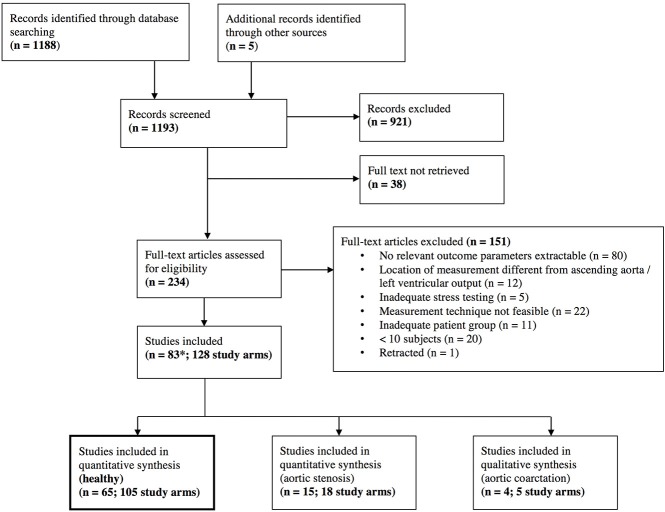
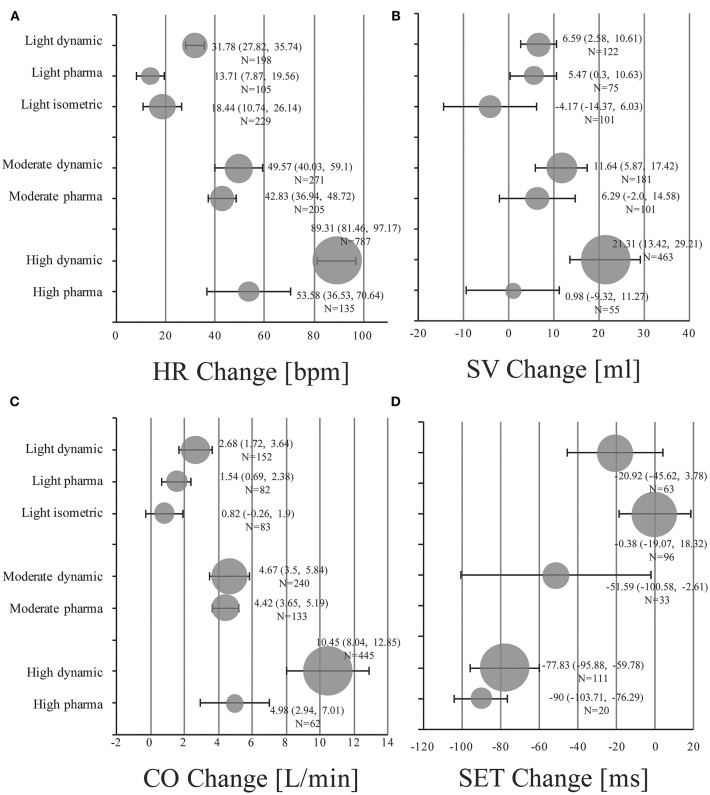
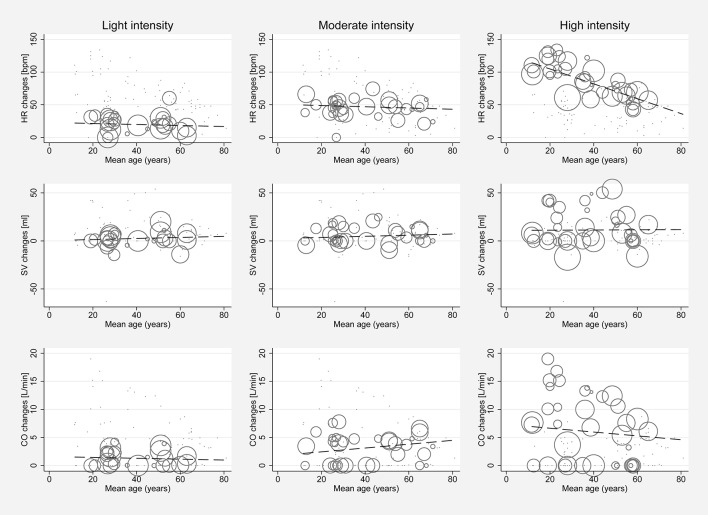
Exercise testing has become a diagnostic standard in the evaluation and management of heart disease. While different methods of exercise and pharmacological stress testing exist, only little is known about their comparability. We aimed to assess hemodynamic changes during dynamic exercise, isometric exercise, and dobutamine stress testing at different stress intensities in healthy subjects and patients with aortic stenosis (AS) and aortic coarctation (CoA). A systematic literature search (PROSPERO 2017:CRD42017078608) in MEDLINE of interventional trials was conducted to identify eligible studies providing evidence of changes in hemodynamic parameters under different stress conditions acquired by MRI or echocardiography. A random effects model was used to estimate pooled mean changes in hemodynamics. One hundred and twenty-eight study arms with a total of 3,139 stress-examinations were included. In healthy subjects/(where available) in AS, pooled mean changes (95% CIs) during light dynamic stress were 31.78 (27.82-35.74) bpm in heart rate (HR) and 6.59 (2.58-10.61) ml in stroke volume (SV). Changes during light pharmacological stress were 13.71 (7.87-19.56)/14.0 (9.82-18.18) bpm in HR, and 5.47 (0.3-10.63)/8.0 (3.82-12.18) ml in SV. Changes during light isometric stress were 18.44 (10.74-26.14)/5.0 (-1.17-11.17) bpm in HR and -4.17 (-14.37-6.03)/-4.0 (-16.43-8.43) ml in SV. Changes during moderate dynamic stress were 49.57 (40.03-59.1)/46.45 (42.63-50.27) bpm in HR and 11.64 (5.87-17.42) ml in SV. During moderate pharmacological stress, changes in HR were 42.83 (36.94-48.72)/18.66 (2.38-34.93) bpm and in SV 6.29 (-2.0-14.58)/13.11 (7.99-18.23) ml. During high intensity dynamic stress changes in HR were 89.31 (81.46-97.17)/55.32 (47.31-63.33) bpm and in SV 21.31 (13.42-29.21)/-0.96 (-5.27-3.35) ml. During high pharmacological stress, changes in HR were 53.58 (36.53-70.64)/42.52 (32.77-52.28) bpm, and in SV 0.98 (-9.32-11.27)/14.06 (-1.62-29.74) ml. HR increase and age were inversely correlated at high stress intensities. In CoA, evidence was limited to single studies. This systematic review and meta-analysis presents pooled hemodynamic changes under light, moderate and high intensity exercise and pharmacological stress, while considering the potential influence of age. Despite limited availability of comparative studies, the reference values presented in this review allow estimation of the expected individual range of a circulatory response in healthy individuals and patients with AS and may contribute to future study planning and patient-specific models even when stress testing is contraindicated.
运动试验已成为心脏病评估和管理中的一项诊断标准。虽然存在不同的运动和药物负荷试验方法,但对于它们之间的可比性了解甚少。我们旨在评估健康受试者、主动脉瓣狭窄(AS)患者和主动脉缩窄(CoA)患者在不同应激强度下进行动态运动、等长运动和多巴酚丁胺负荷试验时的血流动力学变化。在MEDLINE中对干预试验进行了系统的文献检索(PROSPERO 2017:CRD42017078608),以识别符合条件的研究,这些研究提供了通过MRI或超声心动图获得的不同应激条件下血流动力学参数变化的证据。使用随机效应模型来估计血流动力学的合并平均变化。纳入了128个研究组,共3139次应激检查。在健康受试者/(AS患者中可获得数据的情况下),轻度动态应激期间的合并平均变化(95%可信区间)为心率(HR)31.78(27.82 - 35.74)次/分钟,每搏输出量(SV)6.59(2.58 - 10.61)毫升。轻度药物应激期间HR的变化为13.71(7.87 - 19.56)/14.0(9.82 - 18.18)次/分钟,SV的变化为5.47(0.3 - 10.63)/8.0(3.82 - 12.18)毫升。轻度等长应激期间HR的变化为18.44(10.74 - 26.14)/5.0( - 1.17 - 11.17)次/分钟,SV的变化为 - 4.17( - 14.37 - 6.03)/ - 4.0( - 16.43 - 8.43)毫升。中度动态应激期间HR的变化为49.57(40.03 - 59.1)/46.45(42.63 - 50.27)次/分钟,SV的变化为11.64(5.87 - 17.42)毫升。在中度药物应激期间,HR的变化为42.83(36.94 - 48.72)/18.66(2.38 - 34.93)次/分钟,SV的变化为6.29( - 2.0 - 14.58)/13.11(7.99 - 18.23)毫升。高强度动态应激期间HR的变化为89.31(81.46 - 97.17)/55.32(47.31 - 63.33)次/分钟,SV的变化为21.31(13.42 - 29.21)/ - 0.96( - 5.27 - 3.35)毫升。在高药物应激期间,HR的变化为53.58(36.53 - 70.64)/42.52(32.77 - 52.28)次/分钟,SV的变化为0.98( - 9.32 - 11.27)/14.06( - 1.62 - 29.74)毫升。在高应激强度下,HR增加与年龄呈负相关。在CoA患者中,证据仅限于个别研究。本系统评价和荟萃分析呈现了轻度、中度和高强度运动及药物应激下的合并血流动力学变化,同时考虑了年龄的潜在影响。尽管比较研究的可用性有限,但本综述中给出的参考值有助于估计健康个体和AS患者循环反应的预期个体范围,即使在负荷试验禁忌时也可能有助于未来的研究规划和针对患者的模型建立。