Biotherapy Center, The First Affiliated Hospital of Zhengzhou University, Zhengzhou, China.
Department of Respiratory medicine, The First Affiliated Hospital of Zhengzhou University, Zhengzhou, China.
Cancer Med. 2019 Jun;8(6):3059-3071. doi: 10.1002/cam4.2190. Epub 2019 Apr 25.
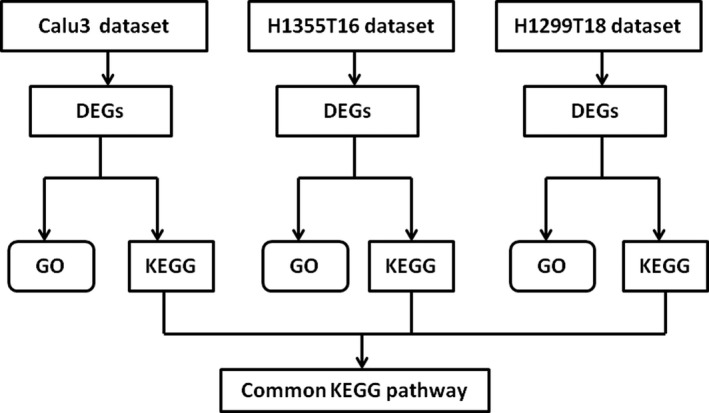
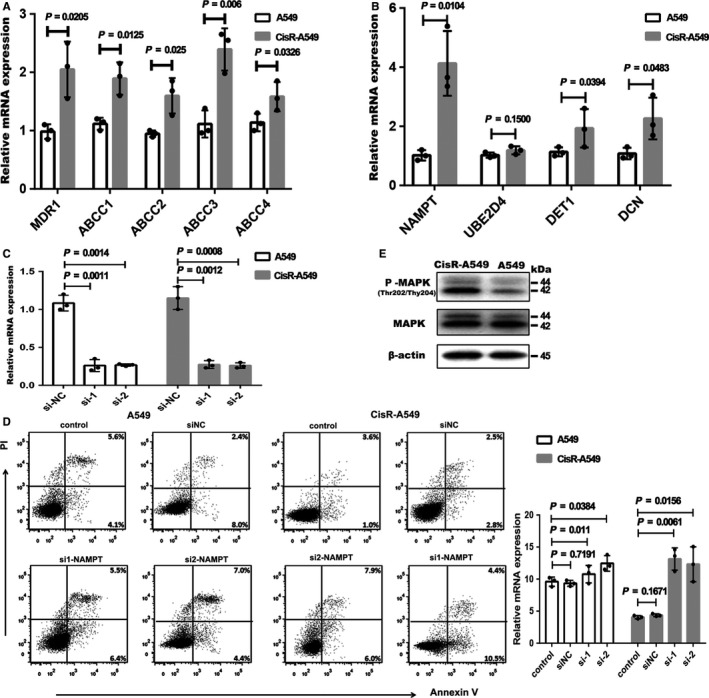
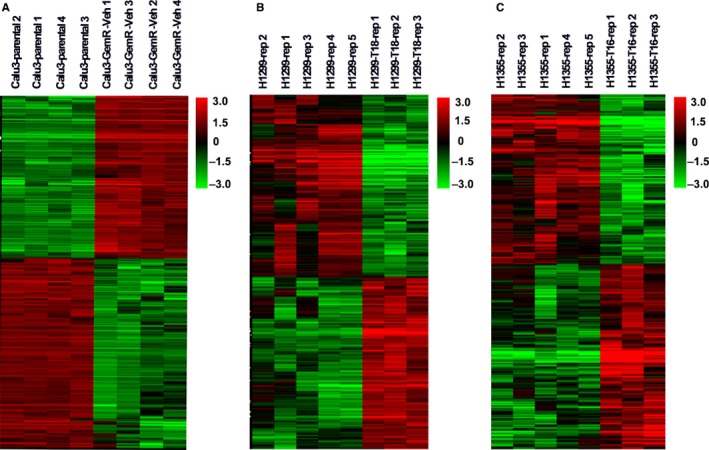
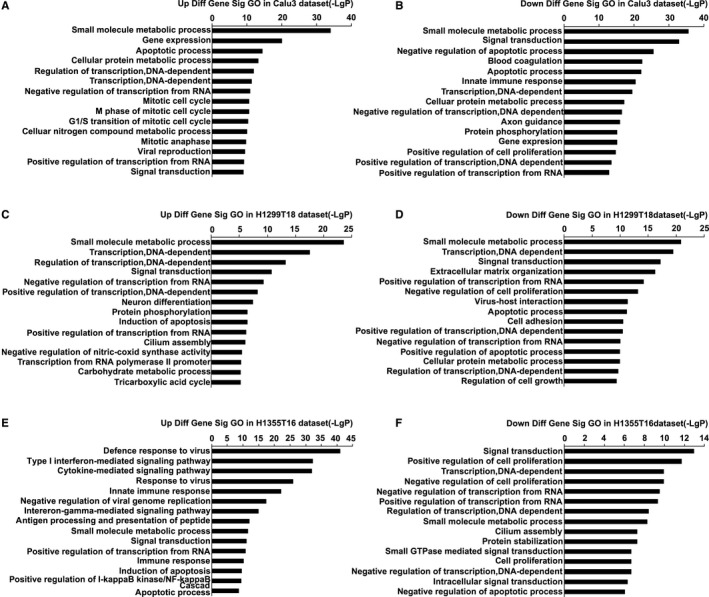
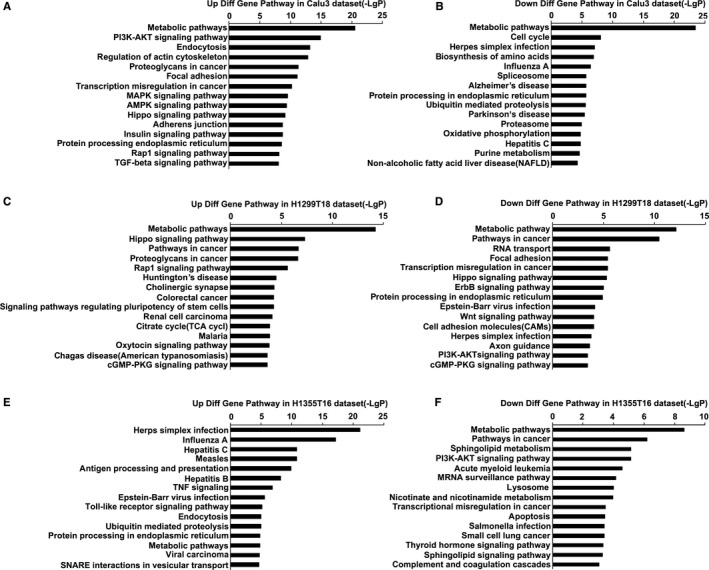
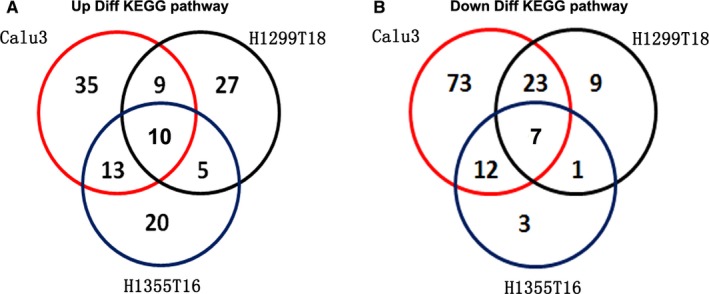
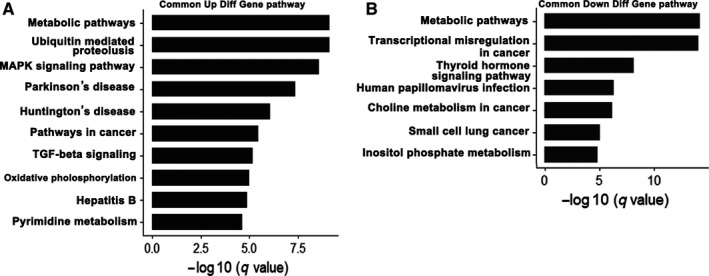
Lung cancer is the leading cause of cancer-related deaths worldwide. Although several therapeutic strategies have been employed to curb lung cancer, the survival rate is still poor owing to the development of drug resistance. The mechanisms underlying drug resistance development are incompletely understood. Here, we aimed to identify the common signaling pathways involved in drug resistance in non-small cell lung cancer (NSCLC). Three published transcriptome microarray data were downloaded from the Gene Expression Omnibus (GEO) database comprising different drug-resistant cell lines and their parental cell lines. Differentially expressed genes (DEGs) were identified and used to perform Gene Ontology (GO) enrichment analysis and Kyoto Encyclopedia of Genes and Genomes (KEGG) pathway analysis. An overlapping analysis was performed for KEGG pathways enriched from all the three datasets to identify the common signaling pathways. As a result, we found that metabolic pathways, ubiquitin-mediated proteolysis, and mitogen-activated protein kinase (MAPK) signaling were the most aberrantly expressed signaling pathways. The knockdown of nicotinamide phosphoribosyltransferase (NAMPT), the gene involved in metabolic pathways and known to be upregulated in drug-resistant tumor cells, was shown to increase the apoptosis of cisplatin-resistant A549 cells following cisplatin treatment. Thus, our results provide an in-depth analysis of the signaling pathways that are commonly altered in drug-resistant NSCLC cell lines and highlight the potential strategy that facilitates the development of interventions to interfere with upregulated signaling pathways as well as to boost downregulated signaling pathways in drug-resistant tumors for the elimination of multiple resistance of NSCLC.
肺癌是全球癌症相关死亡的主要原因。尽管已经采用了几种治疗策略来抑制肺癌,但由于耐药性的发展,生存率仍然很差。耐药性发展的机制尚未完全了解。在这里,我们旨在确定非小细胞肺癌 (NSCLC) 耐药性中涉及的常见信号通路。从基因表达综合数据库 (GEO) 下载了三个已发表的转录组微阵列数据集,其中包含不同的耐药细胞系及其亲本细胞系。鉴定差异表达基因 (DEG),并进行基因本体 (GO) 富集分析和京都基因与基因组百科全书 (KEGG) 途径分析。对来自所有三个数据集的富集 KEGG 途径进行重叠分析,以确定常见的信号通路。结果发现,代谢途径、泛素介导的蛋白水解和丝裂原激活蛋白激酶 (MAPK) 信号通路是表达最异常的信号通路。下调代谢途径中涉及的烟酰胺磷酸核糖转移酶 (NAMPT),该基因在耐药肿瘤细胞中上调,在用顺铂处理后,增加了顺铂耐药 A549 细胞的凋亡。因此,我们的结果深入分析了在耐药 NSCLC 细胞系中普遍改变的信号通路,并强调了一种潜在的策略,该策略有助于开发干预措施来干扰上调的信号通路,并增强耐药肿瘤中下调的信号通路,以消除 NSCLC 的多种耐药性。