Daniel K. Inouye Center for Microbial Oceanography: Research and Education, University of Hawai'i at Mānoa, Honolulu, Hawaii, USA
Daniel K. Inouye Center for Microbial Oceanography: Research and Education, University of Hawai'i at Mānoa, Honolulu, Hawaii, USA.
Appl Environ Microbiol. 2019 Jun 17;85(13). doi: 10.1128/AEM.00289-19. Print 2019 Jul 1.
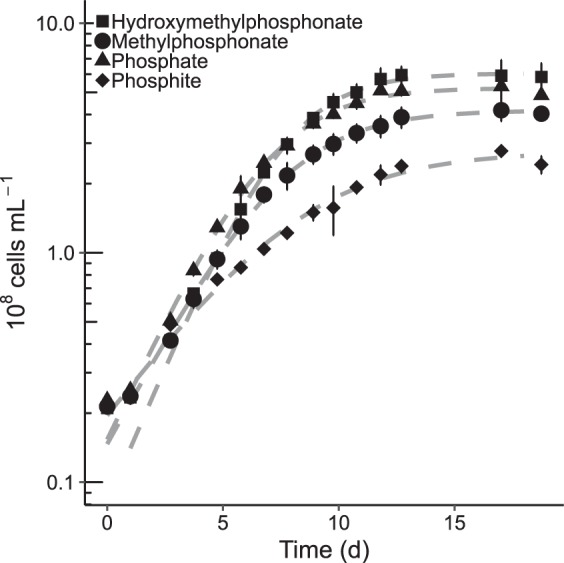
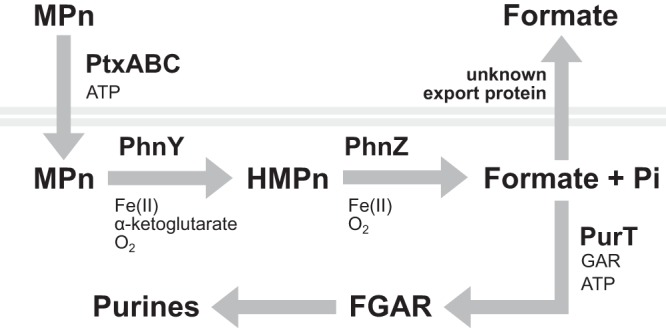
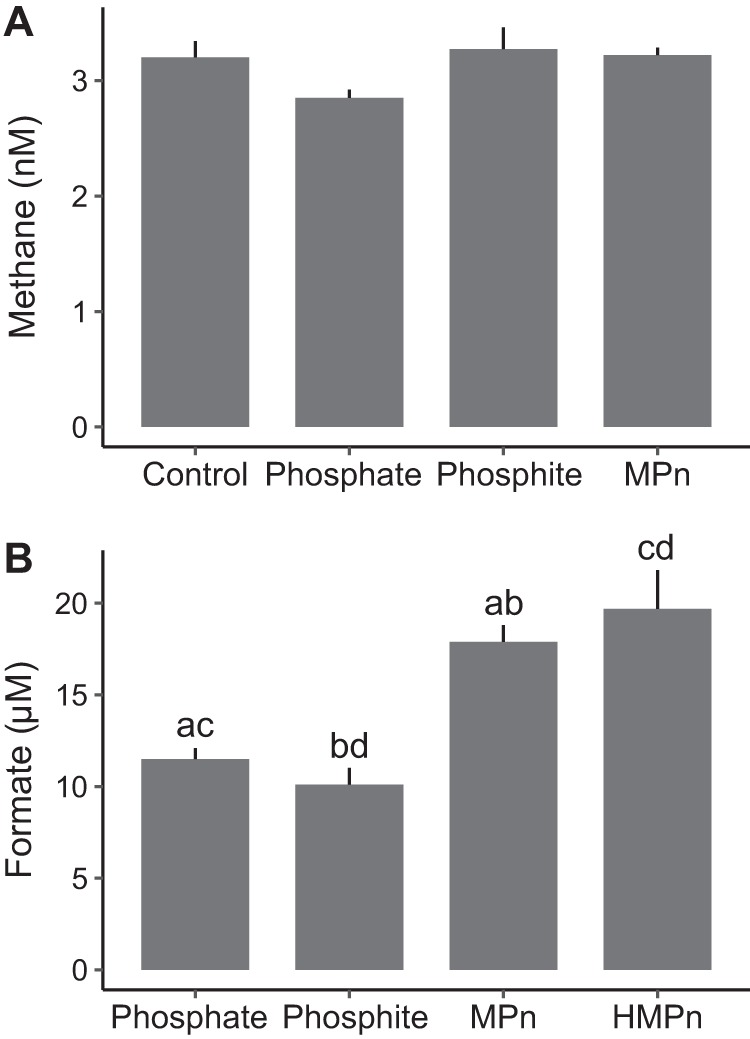
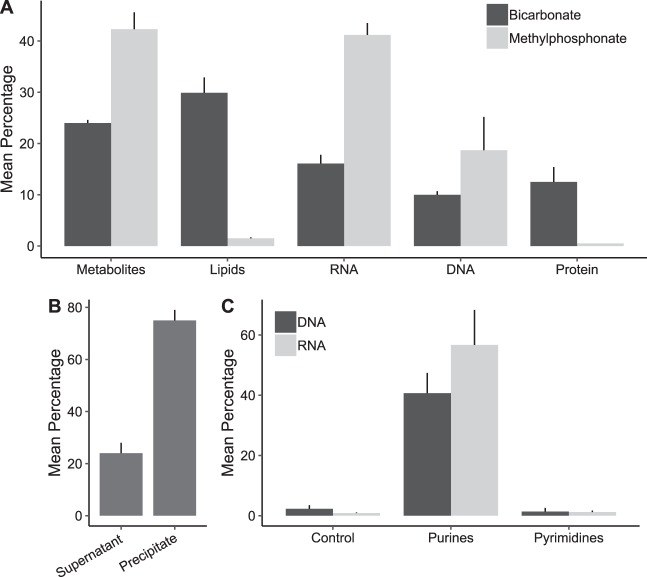
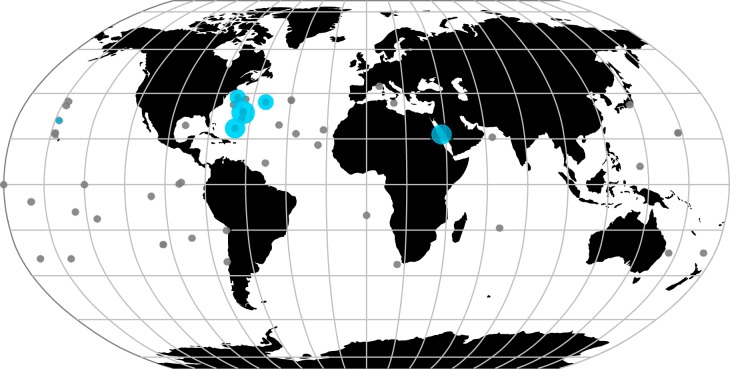
The marine unicellular cyanobacterium is an abundant primary producer and widespread inhabitant of the photic layer in tropical and subtropical marine ecosystems, where the inorganic nutrients required for growth are limiting. In this study, we demonstrate that high-light strain MIT9301, an isolate from the phosphate-depleted subtropical North Atlantic Ocean, can oxidize methylphosphonate (MPn) and hydroxymethylphosphonate (HMPn), two phosphonate compounds present in marine dissolved organic matter, to obtain phosphorus. The oxidation of these phosphonates releases the methyl group as formate, which is both excreted and assimilated into purines in RNA and DNA. Genes encoding the predicted phosphonate oxidative pathway of MIT9301 were predominantly present in genomes from parts of the North Atlantic Ocean where phosphate availability is typically low, suggesting that phosphonate oxidation is an ecosystem-specific adaptation of some populations to cope with phosphate scarcity. Until recently, MPn was only known to be degraded in the environment by the bacterial carbon-phosphorus (CP) lyase pathway, a reaction that releases the greenhouse gas methane. The identification of a formate-yielding MPn oxidative pathway in the marine planctomycete (S. R. Gama, M. Vogt, T. Kalina, K. Hupp, et al., ACS Chem Biol 14:735-741, 2019, https://doi.org/10.1021/acschembio.9b00024) and the presence of this pathway in indicate that this compound can follow an alternative fate in the environment while providing a valuable source of P to organisms. In the ocean, where MPn is a major component of dissolved organic matter, the oxidation of MPn to formate by may direct the flow of this one-carbon compound to carbon dioxide or assimilation into biomass, thus limiting the production of methane.
海洋单细胞蓝藻是热带和亚热带海洋生态系统中光层中丰富的初级生产者和广泛的居住者,那里生长所需的无机营养物是有限的。在这项研究中,我们证明了来自磷酸盐 depleted 的亚热带北大西洋的高光照菌株 MIT9301 可以氧化甲基膦酸(MPn)和羟甲基膦酸(HMPn),这两种膦酸化合物存在于海洋溶解有机物中,以获得磷。这些膦酸的氧化将甲基基团释放为甲酸盐,甲酸盐既被分泌出来,又被同化到 RNA 和 DNA 中的嘌呤中。MIT9301 预测的膦酸氧化途径的基因主要存在于北大西洋的一些区域的基因组中,这些区域的磷酸盐可用性通常较低,这表明膦酸氧化是一些种群适应磷酸盐匮乏的生态系统特异性适应。直到最近,MPn 仅在环境中通过细菌碳-磷(CP)裂解酶途径降解,该反应释放温室气体甲烷。在海洋 Planctomycetes 中鉴定出一种产生甲酸盐的 MPn 氧化途径(S. R. Gama、M. Vogt、T. Kalina、K. Hupp 等人,ACS Chem Biol 14:735-741, 2019, https://doi.org/10.1021/acschembio.9b00024)和该途径在中的存在表明,这种化合物在环境中可以遵循另一种命运,同时为生物体提供有价值的磷源。在海洋中,MPn 是溶解有机物的主要成分,通过 Planctomycetes 氧化 MPn 为甲酸盐可能会将这种一碳化合物的流动导向二氧化碳或同化到生物量中,从而限制甲烷的产生。