Merkin Institute of Transformative Technologies in Healthcare, Broad Institute of Harvard and MIT, Cambridge, MA, 02142, USA.
Department of Chemistry and Chemical Biology, Harvard University, Cambridge, MA, 02138, USA.
Nat Commun. 2019 Apr 26;10(1):1937. doi: 10.1038/s41467-019-09987-0.
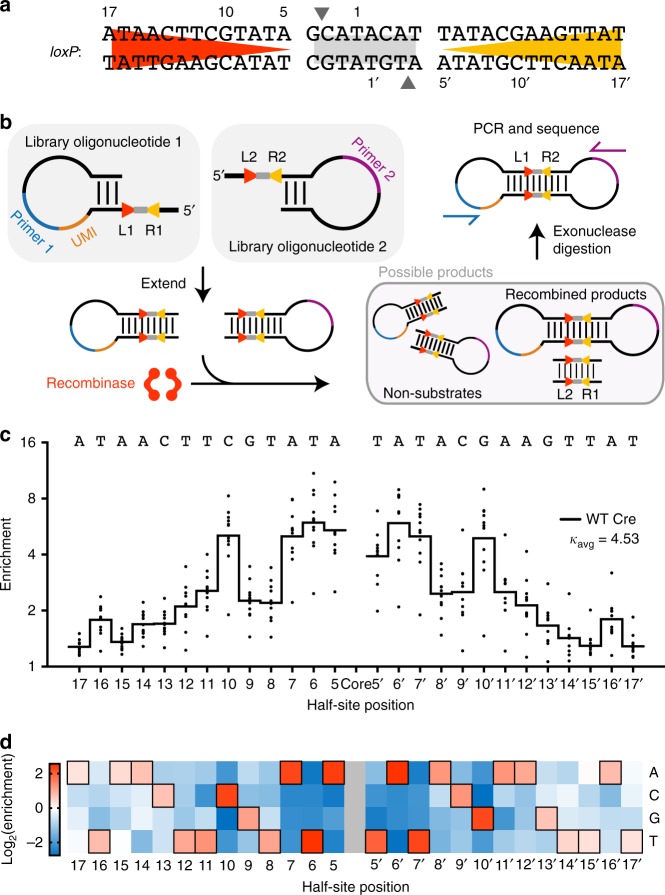
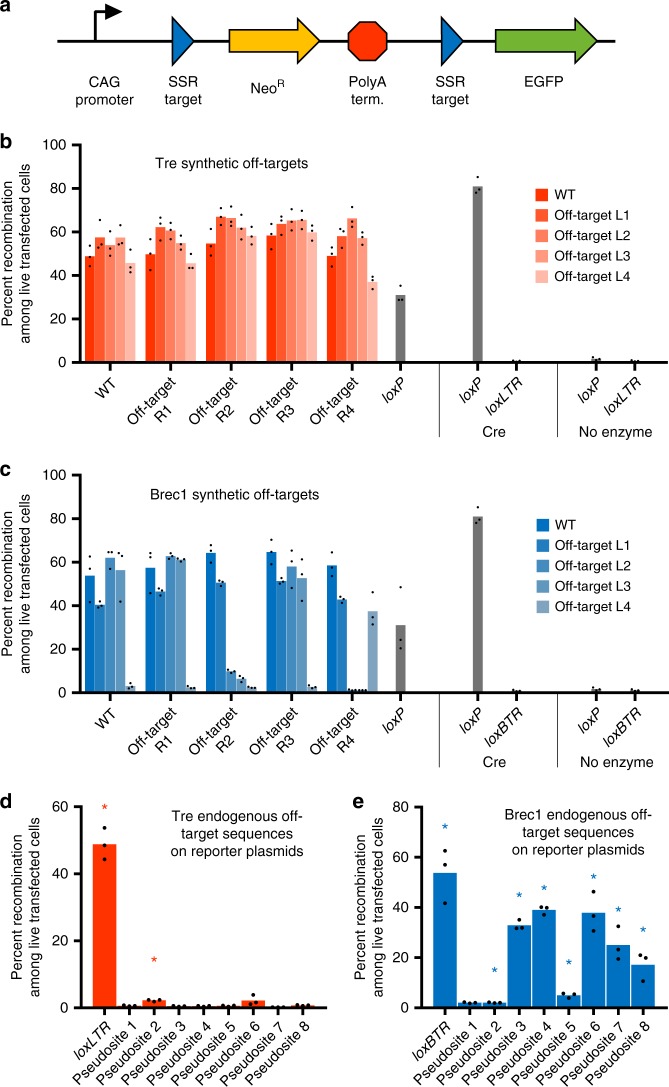
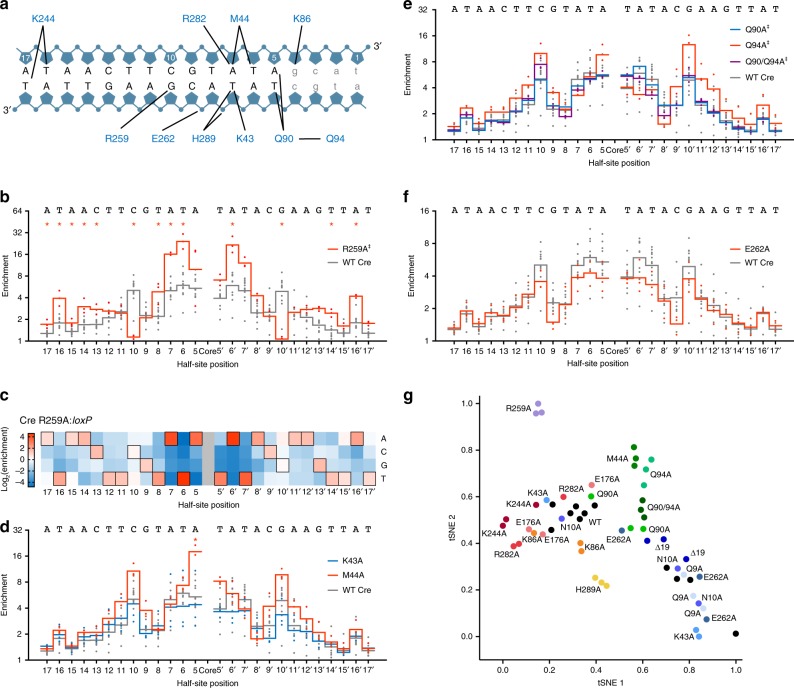
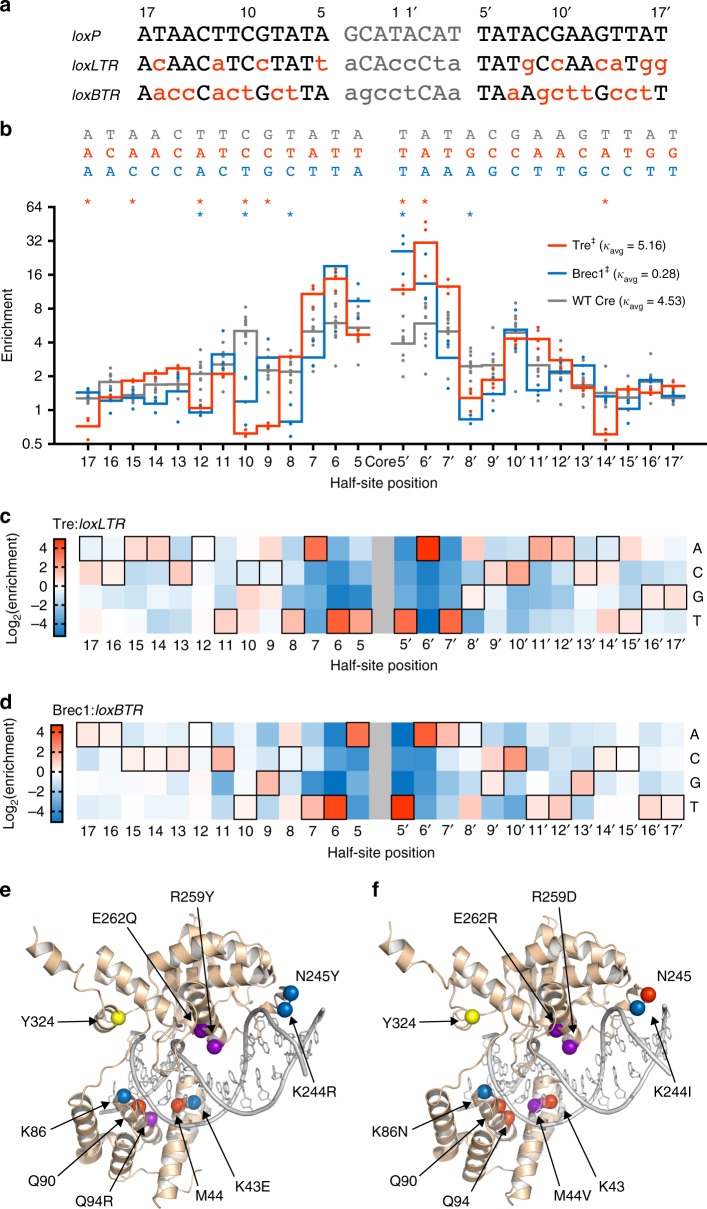
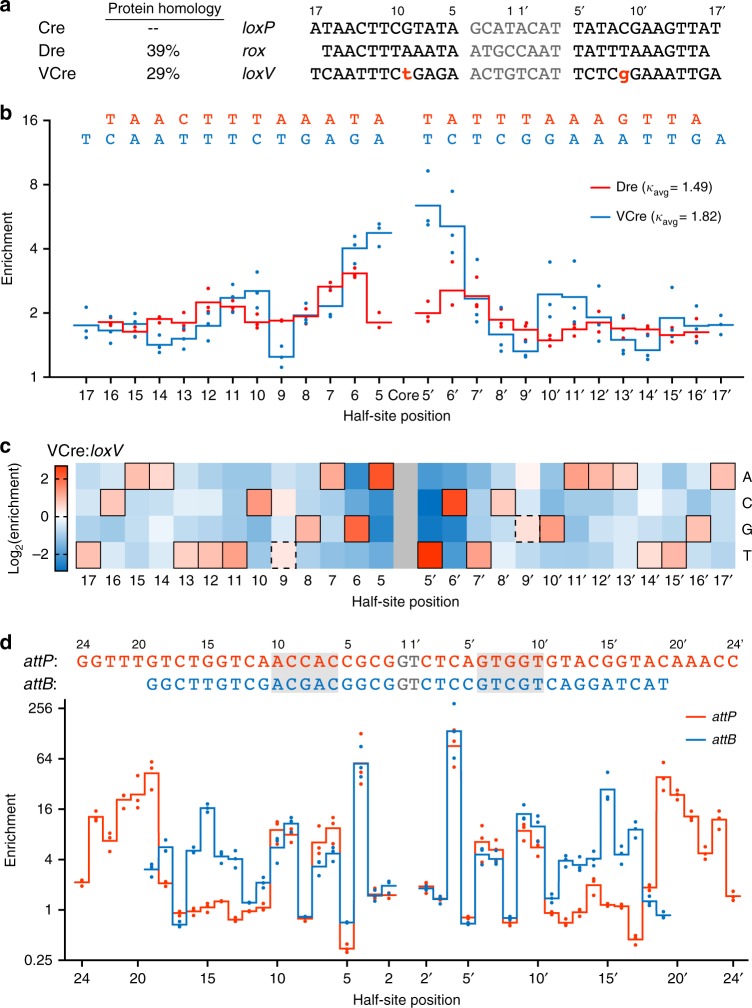
The development of site-specific recombinases (SSRs) as genome editing agents is limited by the difficulty of altering their native DNA specificities. Here we describe Rec-seq, a method for revealing the DNA specificity determinants and potential off-target substrates of SSRs in a comprehensive and unbiased manner. We applied Rec-seq to characterize the DNA specificity determinants of several natural and evolved SSRs including Cre, evolved variants of Cre, and other SSR family members. Rec-seq profiling of these enzymes and mutants thereof revealed previously uncharacterized SSR interactions, including specificity determinants not evident from SSR:DNA structures. Finally, we used Rec-seq specificity profiles to predict off-target substrates of Tre and Brec1 recombinases, including endogenous human genomic sequences, and confirmed their ability to recombine these off-target sequences in human cells. These findings establish Rec-seq as a high-resolution method for rapidly characterizing the DNA specificity of recombinases with single-nucleotide resolution, and for informing their further development.
位点特异性重组酶 (SSR) 的发展受到改变其天然 DNA 特异性的困难的限制。在这里,我们描述了 Rec-seq,这是一种全面而无偏倚地揭示 SSR 的 DNA 特异性决定因素和潜在脱靶底物的方法。我们应用 Rec-seq 来表征几种天然和进化的 SSR 的 DNA 特异性决定因素,包括 Cre、进化的 Cre 变体和其他 SSR 家族成员。这些酶及其突变体的 Rec-seq 分析揭示了以前未表征的 SSR 相互作用,包括从 SSR:DNA 结构中不明显的特异性决定因素。最后,我们使用 Rec-seq 特异性谱来预测 Tre 和 Brec1 重组酶的脱靶底物,包括内源性人类基因组序列,并证实它们能够在人类细胞中重组这些脱靶序列。这些发现确立了 Rec-seq 作为一种快速、高分辨率的方法,用于以单核苷酸分辨率表征重组酶的 DNA 特异性,并为其进一步发展提供信息。