
过氧化物酶体增殖物激活受体,一种心脏病的潜在治疗靶点。
PPAR, a Potential Therapeutic Target for Heart Disease.
作者信息
Yang Qinglin, Long Qinqiang
机构信息
Cardiovascular Center of Excellence, LSU Healther Science Center, 533 Bolivar St, New Orleans, LA 70112, USA.
Division of Cardiology, Department of Internal Medicine, Tongji Hospital, Tongji Medical College, Huazhong University of Science and Technology, 1095 Jiefang Ave, Wuhan, 430030, China.
出版信息
Nucl Receptor Res. 2018;5. doi: 10.32527/2018/101375. Epub 2018 Oct 30.
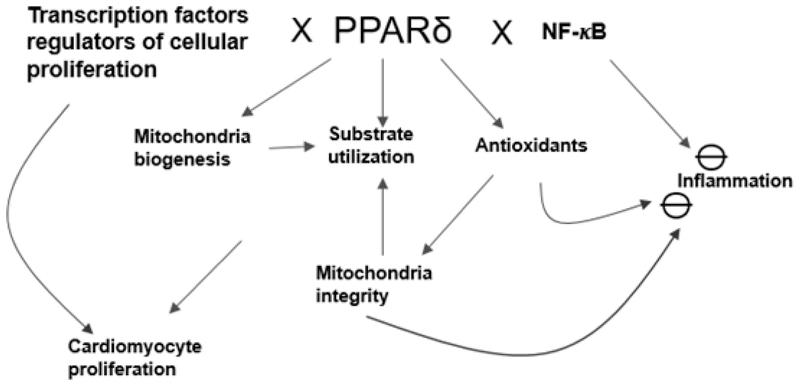
The nuclear receptor peroxisome proliferator-activated receptor (PPAR) can transcriptionally regulate target genes. PPAR exerts essential regulatory functions in the heart, which requires constant energy supply. PPAR plays a key role in energy metabolism, controlling not only fatty acid (FA) and glucose oxidation, but also redox homeostasis, mitochondrial biogenesis, inflammation, and cardiomyocyte proliferation. PPAR signaling is impaired in the heart under various pathological conditions, such as pathological cardiac hypertrophy, myocardial ischemia/reperfusion, doxorubicin cardiotoxicity and diabetic cardiomyopathy. PPAR deficiency in the heart leads to cardiac dysfunction, myocardial lipid accumulation, cardiac hypertrophy/remodeling and heart failure. This article provides an up-today overview of this research area and discusses the role of PPAR in the heart in light of the complex mechanisms of its transcriptional regulation and its potential as a translatable therapeutic target for the treatment of cardiac disorders.
核受体过氧化物酶体增殖物激活受体(PPAR)可对靶基因进行转录调控。PPAR在心脏中发挥着重要的调节功能,而心脏需要持续的能量供应。PPAR在能量代谢中起关键作用,不仅控制脂肪酸(FA)和葡萄糖氧化,还调控氧化还原稳态、线粒体生物发生、炎症以及心肌细胞增殖。在各种病理条件下,如病理性心脏肥大、心肌缺血/再灌注、阿霉素心脏毒性和糖尿病性心肌病,心脏中的PPAR信号传导受损。心脏中PPAR缺乏会导致心脏功能障碍、心肌脂质蓄积、心脏肥大/重塑和心力衰竭。本文提供了该研究领域的最新综述,并根据PPAR转录调控的复杂机制及其作为治疗心脏疾病的可转化治疗靶点的潜力,讨论了PPAR在心脏中的作用。


 Zotero 插件