Rodgers Jennifer L, Jones Jarrod, Bolleddu Samuel I, Vanthenapalli Sahit, Rodgers Lydia E, Shah Kinjal, Karia Krishna, Panguluri Siva K
Department of Pharmaceutical Sciences, College of Pharmacy, University of South Florida, Tampa, FL 33612, USA.
J Cardiovasc Dev Dis. 2019 Apr 27;6(2):19. doi: 10.3390/jcdd6020019.
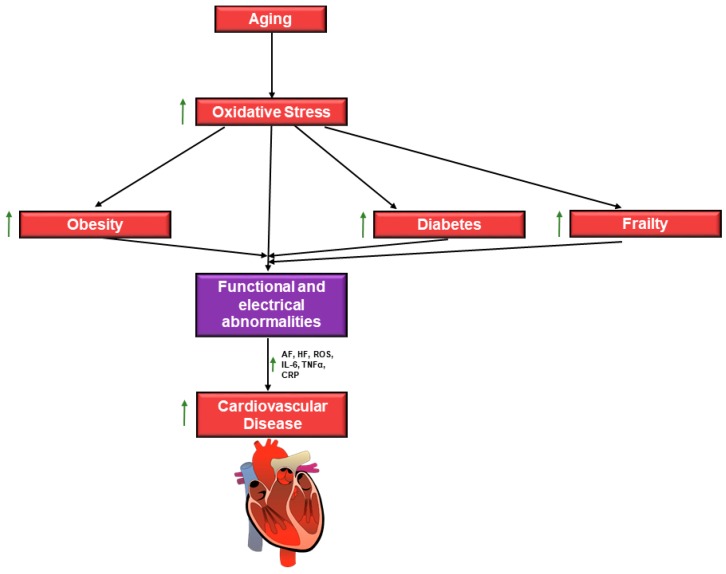
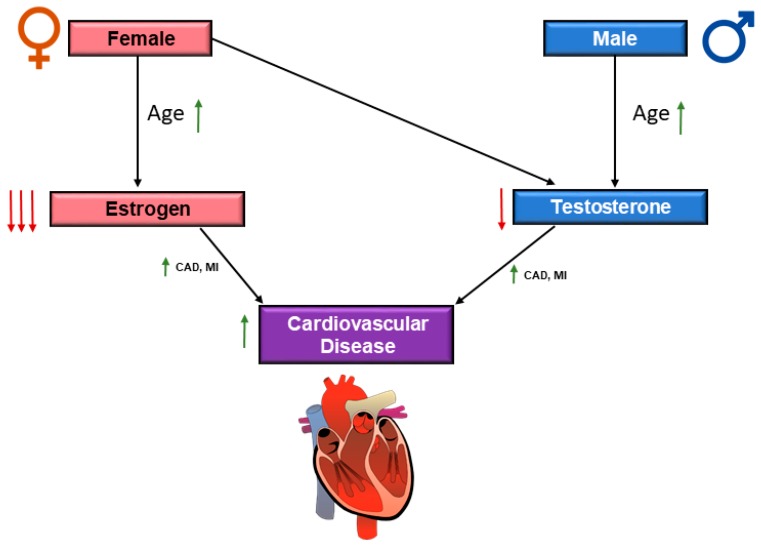
The aging and elderly population are particularly susceptible to cardiovascular disease. Age is an independent risk factor for cardiovascular disease (CVD) in adults, but these risks are compounded by additional factors, including frailty, obesity, and diabetes. These factors are known to complicate and enhance cardiac risk factors that are associated with the onset of advanced age. Sex is another potential risk factor in aging adults, given that older females are reported to be at a greater risk for CVD than age-matched men. However, in both men and women, the risks associated with CVD increase with age, and these correspond to an overall decline in sex hormones, primarily of estrogen and testosterone. Despite this, hormone replacement therapies are largely shown to not improve outcomes in older patients and may also increase the risks of cardiac events in older adults. This review discusses current findings regarding the impacts of age and gender on heart disease.
老年人和高龄人群尤其容易患心血管疾病。年龄是成年人患心血管疾病(CVD)的独立危险因素,但这些风险会因其他因素而加剧,包括身体虚弱、肥胖和糖尿病。已知这些因素会使与高龄相关的心脏危险因素变得复杂并加剧。性别是老年成年人的另一个潜在危险因素,因为据报道老年女性患心血管疾病的风险高于年龄匹配的男性。然而,在男性和女性中,与心血管疾病相关的风险都会随着年龄的增长而增加,这与性激素(主要是雌激素和睾酮)的总体下降相对应。尽管如此,激素替代疗法在很大程度上并未显示能改善老年患者的预后,而且还可能增加老年人发生心脏事件的风险。本综述讨论了关于年龄和性别对心脏病影响的当前研究结果。