Department of Pulmonary and Critical Care Medicine, Chongqing General Hospital, University of Chinese Academy of Science, Chongqing, 404100, China.
Department of Neurology, Qianfoshan Hospital, Shandong University, Jinan, 250014, China.
BMC Infect Dis. 2019 Apr 30;19(1):362. doi: 10.1186/s12879-019-4004-5.
Ischemic stroke is a common complication in patients with tuberculous meningitis (TBM), which is associated with poor clinical outcome. However, risk factors of stroke in TBM patients were not fully understood, especially in those young adults. Therefore, the aim of our study was to identify risk factors for acute ischemic stroke in young adults with TBM.
TBM patients (18 to 50 years) without cerebral vascular risk factors were prospective recruited between Feb 2014 and Dec 2017. Patients were defined as stroke group and non-stroke group by brain magnetic resonance imaging (MRI). Demographic characteristics, clinical presentations, cerebrospinal fluid (CSF) examination, basal meningeal enhancement, hydrocephalus, tuberculoma and clinical outcome were compared between two groups. Binary logistic regression was performed to determine risk factors for acute ischemic stroke in young TBM patients.
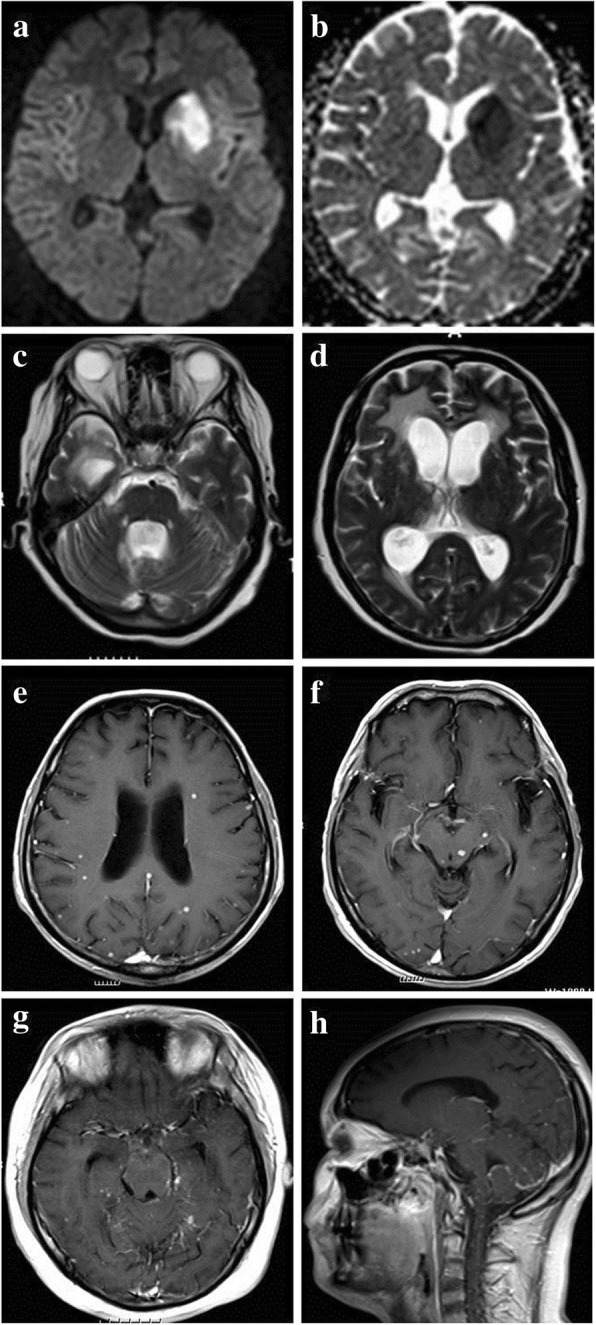
Fifty-two patients with TBM were included and 12 (23.1%) patients were in stroke group. Patients in stroke group were older. Clinical presentations were comparable between two groups except headache was more common in TBM patients with stroke. In CSF examination, TBM patients with stroke had higher CSF white blood cell. By MRI, patients in stroke group were more likely to have basal meningeal enhancement but less likely to present tuberculoma. Compared to non-stroke group, patients in stroke group had worse short-term clinical outcome. In logistic regression, age (OR = 1.297; 95%CI 1.067, 1.576), CSF white blood cell (OR = 1.023; 95%CI 1.005, 1.042) and basal meningeal enhancement (OR = 23.913; 95%CI 1.398, 408.975) were independent risk factors for stroke. However, tuberculoma (OR = 0.005; 95%CI 0.000, 0.254) was negative related with stroke.
About a quarter of young adults with TBM have acute ischemic stroke which may lead to poor clinical outcome. Age, CSF white blood cell and basal meningeal enhancement are risk factors for acute ischemic stroke in young adults with TBM.
结核性脑膜炎(TBM)患者常并发缺血性脑卒中,这与不良临床结局相关。然而,TBM 患者发生脑卒中的危险因素尚未完全阐明,尤其是在年轻成人中。因此,本研究旨在确定年轻 TBM 患者发生急性缺血性脑卒中的危险因素。
2014 年 2 月至 2017 年 12 月前瞻性招募了无脑血管危险因素的 TBM 患者(18~50 岁)。根据脑磁共振成像(MRI)结果,将患者分为脑卒中组和非脑卒中组。比较两组患者的人口统计学特征、临床表现、脑脊液(CSF)检查、基底脑膜强化、脑积水、结核瘤和临床结局。采用二元逻辑回归分析确定年轻 TBM 患者发生急性缺血性脑卒中的危险因素。
共纳入 52 例 TBM 患者,其中 12 例(23.1%)为脑卒中组。脑卒中组患者年龄较大。两组患者临床表现相似,除脑卒中患者头痛更为常见。CSF 检查结果显示,脑卒中组患者 CSF 白细胞计数较高。MRI 结果显示,基底脑膜强化在脑卒中组患者中更为常见,而结核瘤在非脑卒中组患者中更为常见。与非脑卒中组相比,脑卒中组患者短期临床结局更差。二元逻辑回归分析结果显示,年龄(OR=1.297;95%CI 1.0671.576)、CSF 白细胞计数(OR=1.023;95%CI 1.0051.042)和基底脑膜强化(OR=23.913;95%CI 1.398408.975)是脑卒中的独立危险因素。然而,结核瘤(OR=0.005;95%CI 0.0000.254)与脑卒中呈负相关。
约四分之一的年轻 TBM 患者发生急性缺血性脑卒中,可能导致不良临床结局。年龄、CSF 白细胞计数和基底脑膜强化是年轻 TBM 患者发生急性缺血性脑卒中的危险因素。