Márquez-Valadez Berenice, Aquino-Miranda Guillermo, Quintero-Romero Mijail-Oliver, Papacostas-Quintanilla Helena, Bueno-Nava Antonio, López-Rubalcava Carolina, Díaz Néstor Fabián, Arias-Montaño José-Antonio, Molina-Hernández Anayansi
Departamento de Fisiología, Biofísica y Neurociencias, Centro de Investigación y de Estudios Avanzados del Instituto Politécnico Nacional, Mexico City, Mexico.
Laboratorio de Investigación en Células Troncales y Biología del Desarrollo, Departamento de Fisiología y Desarrollo Celular, Instituto Nacional de Perinatología Isidro Espinosa de los Reyes, Mexico City, Mexico.
Front Neurosci. 2019 Apr 16;13:360. doi: 10.3389/fnins.2019.00360. eCollection 2019.
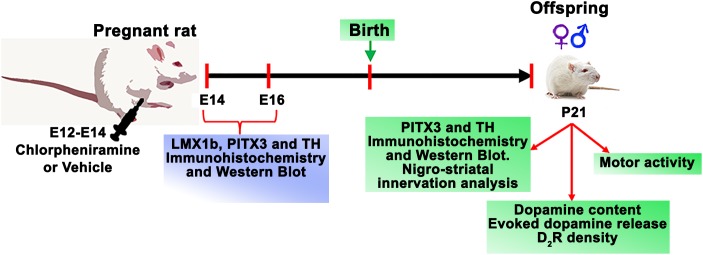
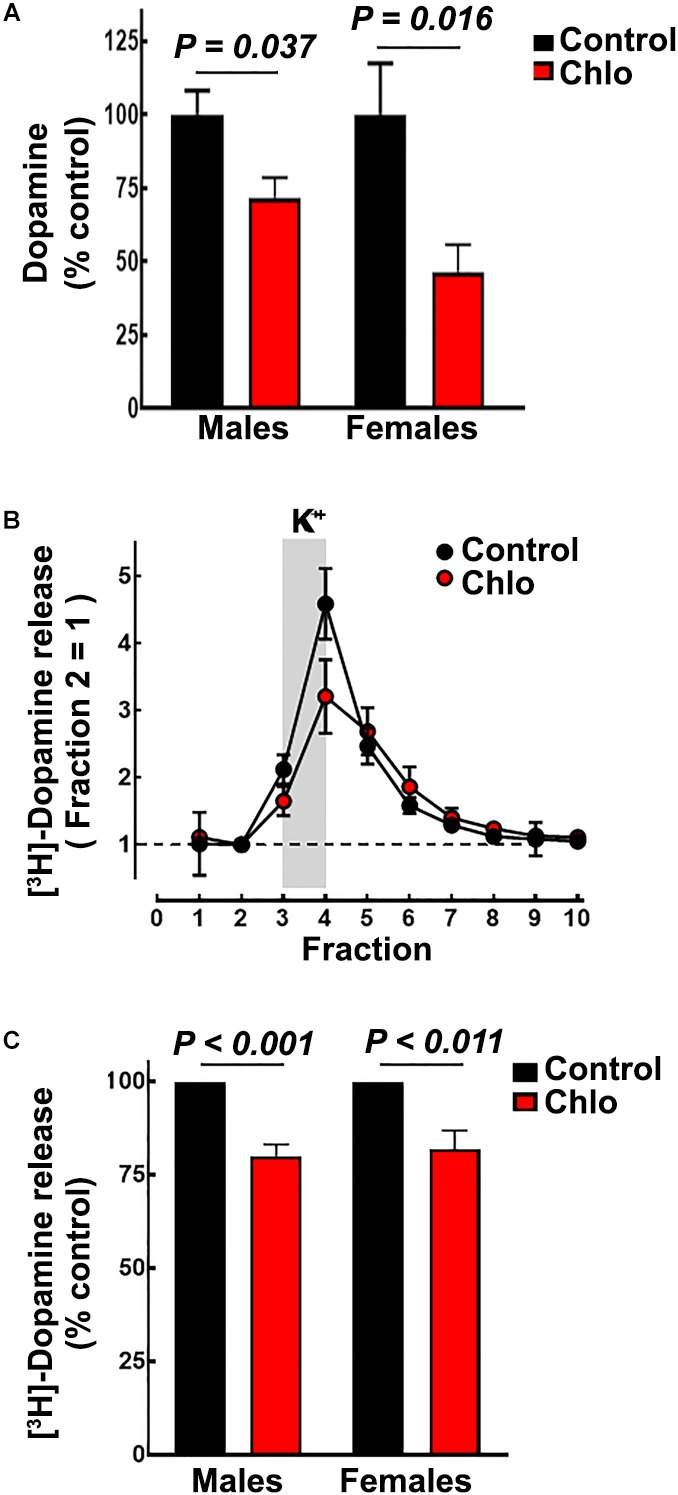
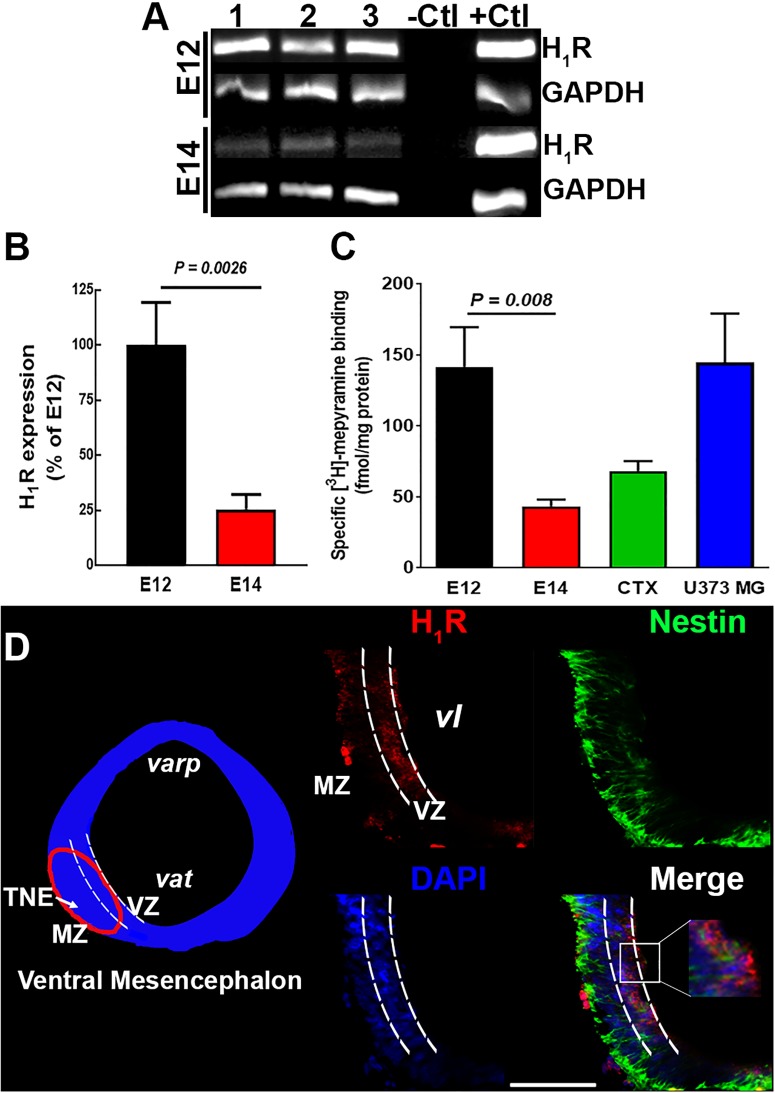
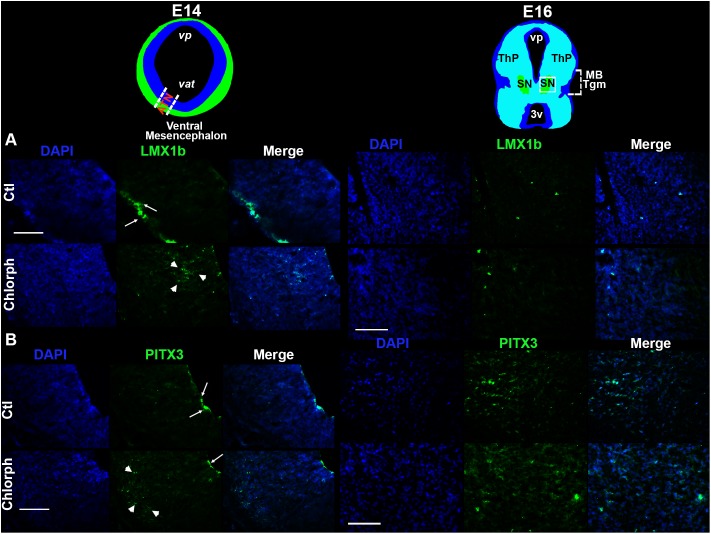
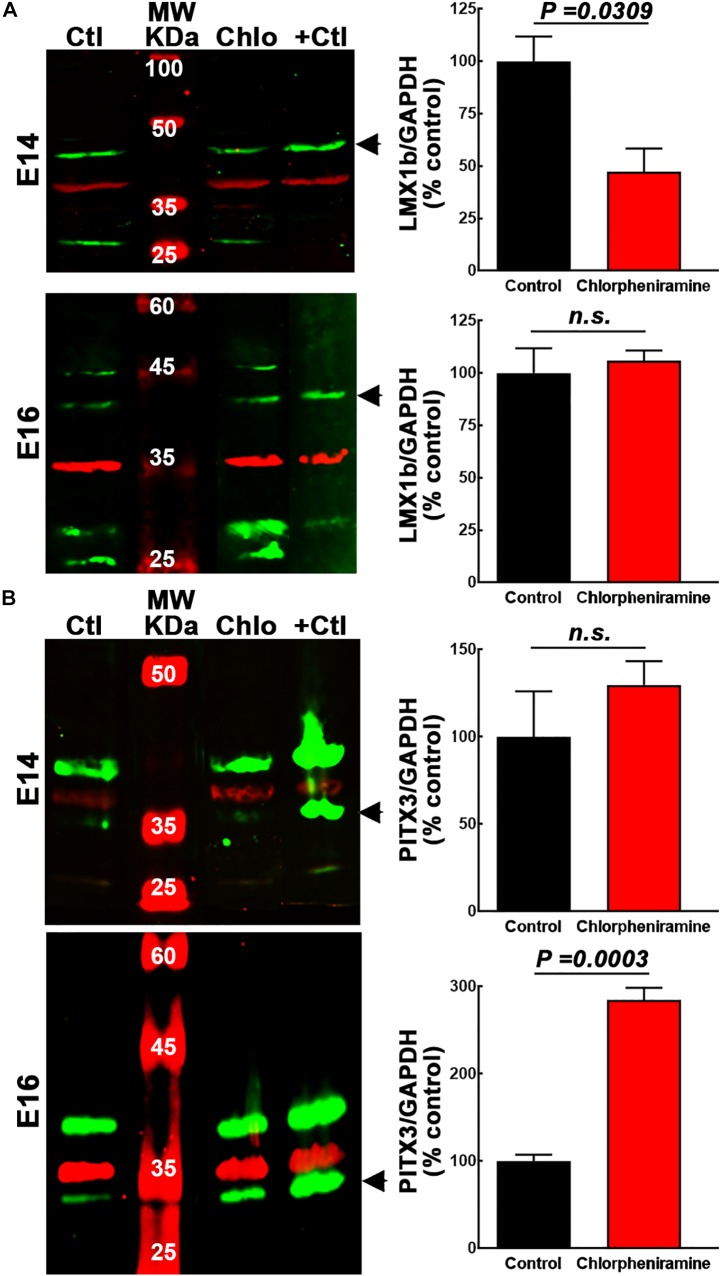
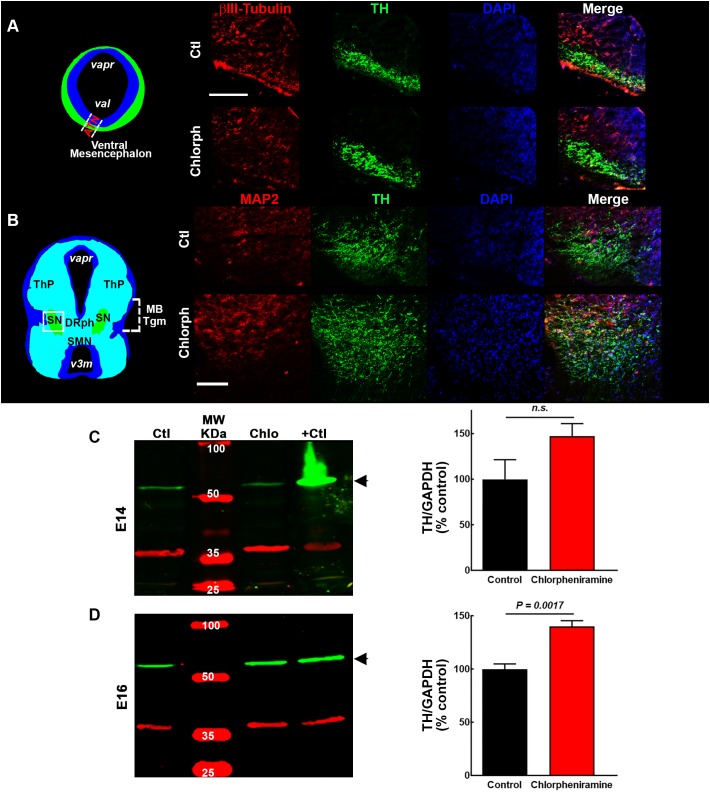
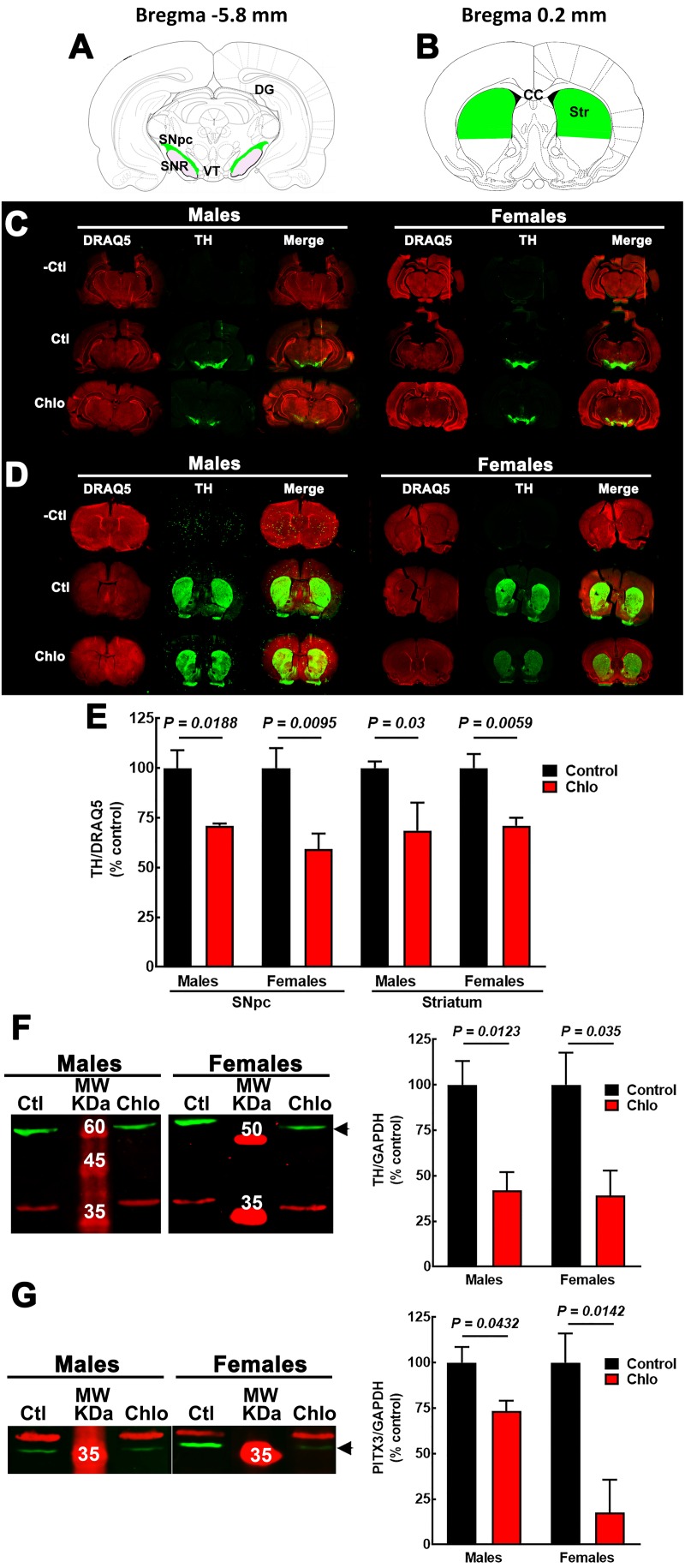
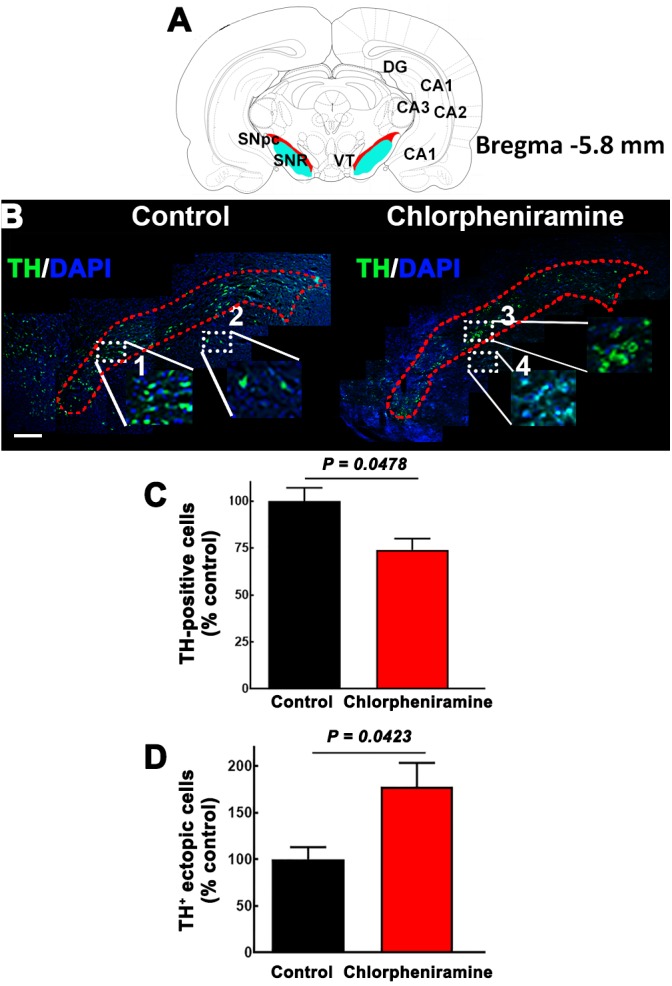
The dopaminergic and histaminergic systems are the first to appear during the development of the nervous system. Through the activation of H receptors (HRs), histamine increases neurogenesis of the cortical deep layers, while reducing the dopaminergic phenotype (cells immunoreactive to tyrosine hydroxylase, TH) in embryo ventral mesencephalon. Although the function of histamine in neuronal differentiation has been studied, the role of HRs in neurogenesis has not been addressed. For this purpose, the HR antagonist/inverse agonist chlorpheniramine was systemically administered (5 mg/kg, i.p.) to pregnant Wistar rats (gestational days 12-14, E12-14), and control and experimental embryos (E14 and E16) and pups (21-day-old) were evaluated for changes in nigro-striatal development. Western blot and immunohistochemistry determinations showed a significant increase in the dopaminergic markers' TH and PITX3 in embryos from chlorpheniramine-treated rats at E16. Unexpectedly, 21-day-old pups from the chlorpheniramine-treated group, showed a significant reduction in TH immunoreactivity in the substantia nigra and dorsal striatum. Furthermore, striatal dopamine content, evoked [H]-dopamine release and methamphetamine-stimulated motor activity were significantly lower compared to the control group. These results indicate that HR blockade at E14-E16 favors the differentiation of dopaminergic neurons, but hampers their migration, leading to a decrease in dopaminergic innervation of the striatum in post-natal life.
多巴胺能系统和组胺能系统是神经系统发育过程中最早出现的系统。组胺通过激活组胺受体(HRs)增加皮质深层的神经发生,同时减少胚胎腹侧中脑的多巴胺能表型(对酪氨酸羟化酶TH免疫反应的细胞)。尽管已经研究了组胺在神经元分化中的功能,但HRs在神经发生中的作用尚未得到探讨。为此,将HR拮抗剂/反向激动剂氯苯那敏以5mg/kg的剂量腹腔注射给怀孕的Wistar大鼠(妊娠第12 - 14天,E12 - 14),并对对照和实验胚胎(E14和E16)以及幼崽(21日龄)的黑质纹状体发育变化进行评估。蛋白质免疫印迹和免疫组织化学测定显示,在E16时,氯苯那敏处理的大鼠胚胎中多巴胺能标志物TH和PITX3显著增加。出乎意料的是,氯苯那敏处理组的21日龄幼崽黑质和背侧纹状体中TH免疫反应性显著降低。此外,与对照组相比,纹状体多巴胺含量、诱发的[H] - 多巴胺释放和甲基苯丙胺刺激的运动活性显著降低。这些结果表明,在E14 - E16阻断HRs有利于多巴胺能神经元的分化,但阻碍其迁移,导致出生后纹状体多巴胺能神经支配减少。