Nishiguchi Yukiko, Fujiwara-Tani Rina, Sasaki Takamitsu, Luo Yi, Ohmori Hitoshi, Kishi Shingo, Mori Shiori, Goto Kei, Yasui Wataru, Sho Masayuki, Kuniyasu Hiroki
Department of Molecular Pathology, Nara Medical University, Kashihara, Nara 634-8521, Japan.
Department of Surgery, Nara Medical University, Kashihara, Nara 634-8522, Japan.
Oncotarget. 2019 Mar 15;10(22):2189-2202. doi: 10.18632/oncotarget.26758.
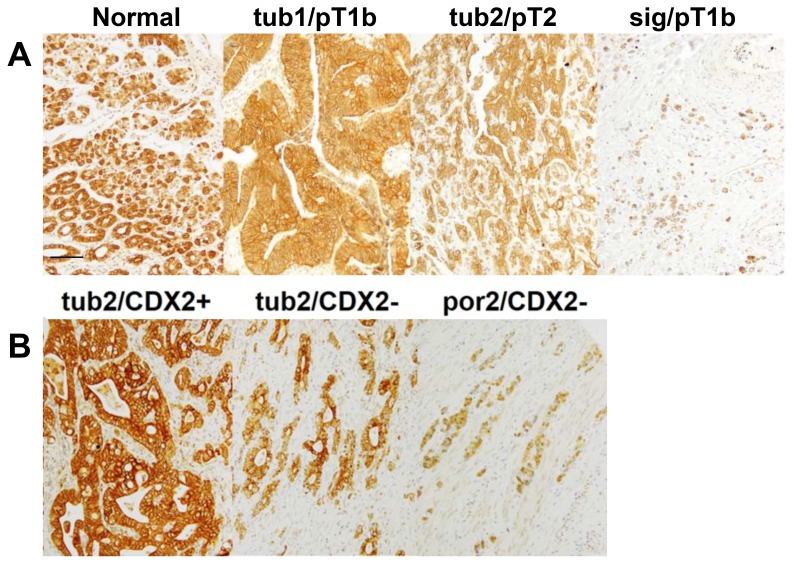
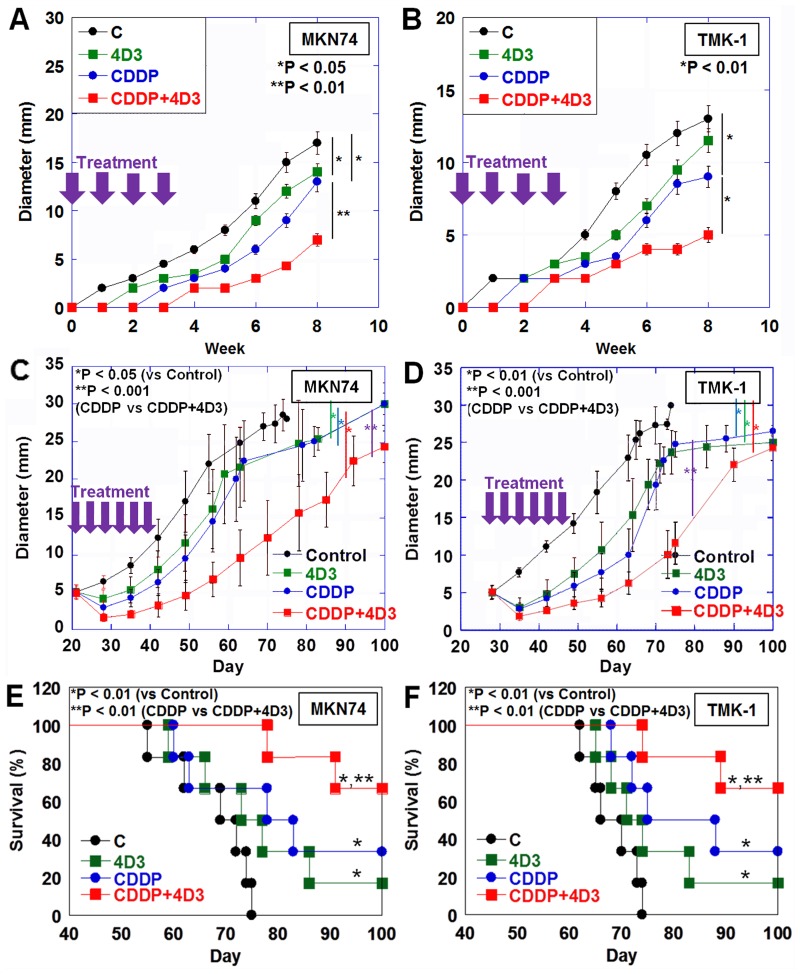
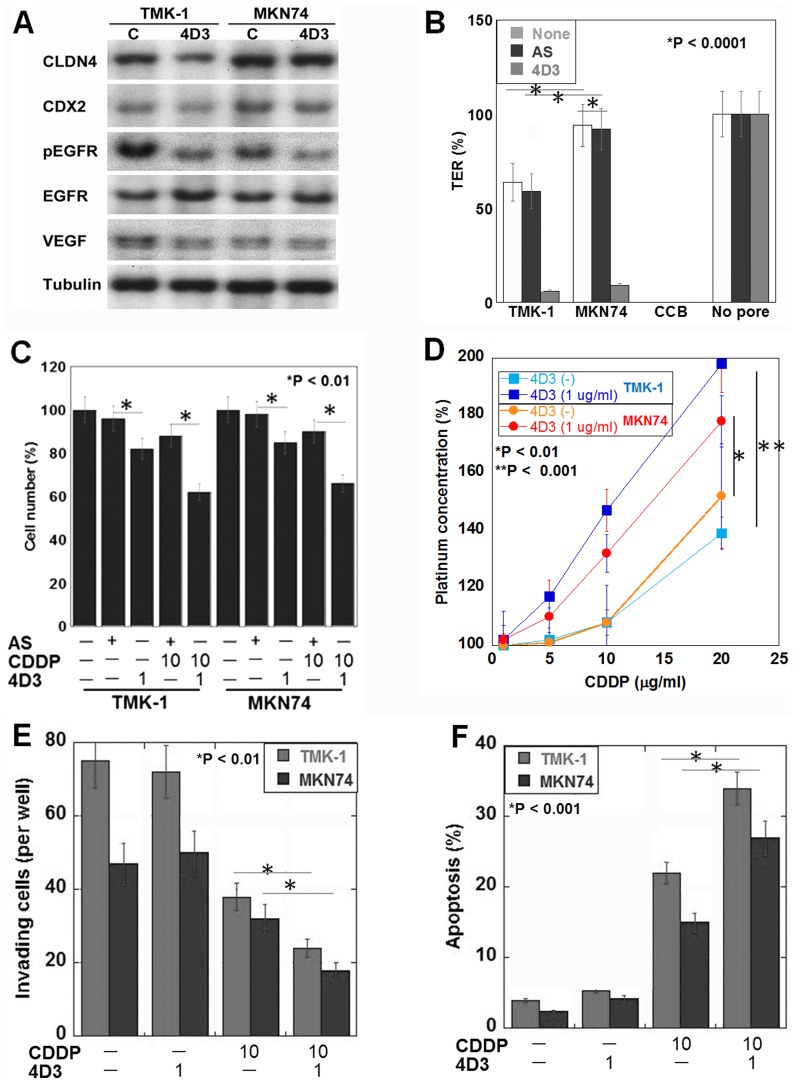
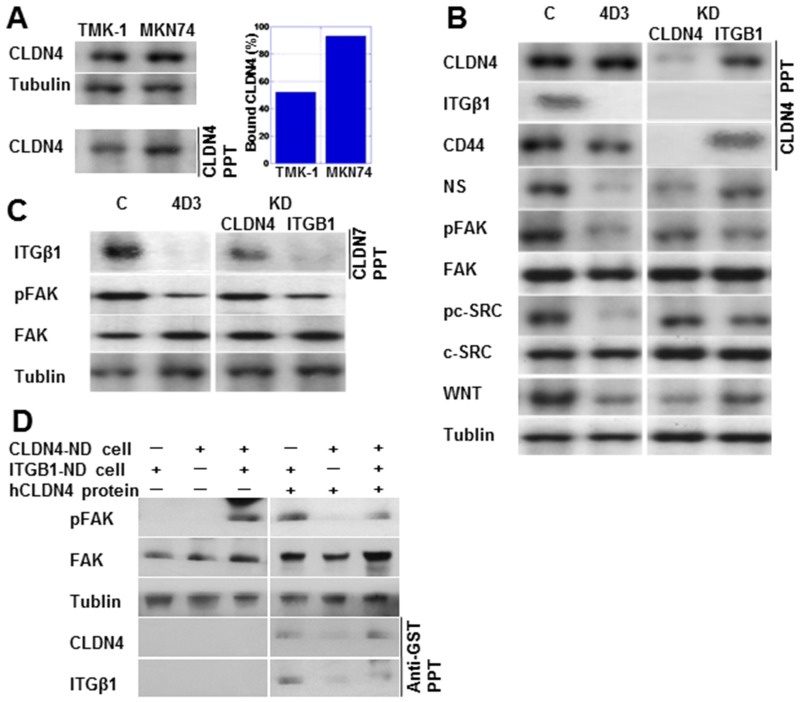
Claudins are major tight-junction proteins that mediate cellular polarity and differentiation. The present study investigated whether the 4D3 antibody to the human CLDN4 extracellular domain (that we previously established) is capable of modulating chemotherapeutic sensitivity in gastric cancer (GC). The results of the present study showed that CLDN4 was overexpressed in 137 of the 192 analyzed GC cases, and that CLDN4 expression was retained in tumors of a lower histological grade (more differentiated), and/or those that were caudal-type homeobox protein 2 (CDX2)-positive, but was reduced in more highly undifferentiated, and CDX2-negative GC cases. The study also compared the synergic effects of combining 4D3 with CDDP treatment and knocking down expression in MKN74 and TMK-1 human GC cells. Co-treatment with 4D3 increased anti-tumor effects of CDDP, whereas knockdown did not. In the TMK-1 cells, non-tight junction CLDN4 associated with integrin β1, increasing stem cell-associated proteins via FAK-c-SRC signals. The anti-tumoral effect of CDDP and 4D3 was examined in a nude mouse subcutaneous tumor model. In the two GC cell lines, concurrent treatment with 4D3 and CDDP synergistically inhibited cell proliferation and increased tumor necrosis and apoptosis to a greater degree than CDDP treatment alone. These findings suggest that 4D3 might increase chemotherapeutic sensitivity by evoking structural disintegration of tight-junction CLDN4 expressed in gastric cancer.
Claudin蛋白是介导细胞极性和分化的主要紧密连接蛋白。本研究调查了我们之前制备的针对人CLDN4胞外结构域的4D3抗体是否能够调节胃癌(GC)的化疗敏感性。本研究结果显示,在192例分析的GC病例中,有137例CLDN4过表达,且CLDN4表达在组织学分级较低(分化程度较高)和/或尾型同源框蛋白2(CDX2)阳性的肿瘤中得以保留,但在分化程度更高、CDX2阴性的GC病例中降低。该研究还比较了4D3与顺铂(CDDP)联合治疗以及敲低MKN74和TMK-1人GC细胞中CLDN4表达的协同效应。4D3与CDDP联合治疗增强了CDDP的抗肿瘤作用,而敲低CLDN4表达则没有这种效果。在TMK-1细胞中,非紧密连接的CLDN4与整合素β1相关联,通过黏着斑激酶(FAK)-c-SRC信号增加干细胞相关蛋白。在裸鼠皮下肿瘤模型中检测了CDDP和4D3的抗肿瘤作用。在两种GC细胞系中,4D3与CDDP联合治疗比单独使用CDDP治疗更能协同抑制细胞增殖,并增加肿瘤坏死和凋亡。这些发现表明,4D3可能通过引起胃癌中表达的紧密连接CLDN4的结构解体来提高化疗敏感性。