Huang Xin, Tang Fen, Weng Zeping, Zhou Mengyao, Zhang Qing
1Department of Breast Surgery, The First Affiliated Hospital of Jinan University, 613 West Huangpu Road, Guangzhou, 510630 Guangdong People's Republic of China.
2Department of Pathology, The First Affiliated Hospital of Jinan University, Guangzhou, 510630 Guangdong People's Republic of China.
Cancer Cell Int. 2019 Apr 24;19:108. doi: 10.1186/s12935-019-0818-x. eCollection 2019.
MicroRNAs have been involved in regulating crucial biological function in some tumors. However, the clinical role and functional effects of miR-591 in breast cancer remain unknown.
The expression of miR-591 was detected in breast cancer tissues and their paired normal tissues by qRT-PCR. Functional assays were performed to confirm the effects of miR-591 on the proliferation and invasion of breast cancer. Bioinformatics analysis, luciferase reporter assays, western blot and in vitro assays were used to confirm that TCF4 was a target gene of miR-591. Western blot analysis was carried out to analyze the relationship between miR-591 expression and YAP1 expression in breast cancer.
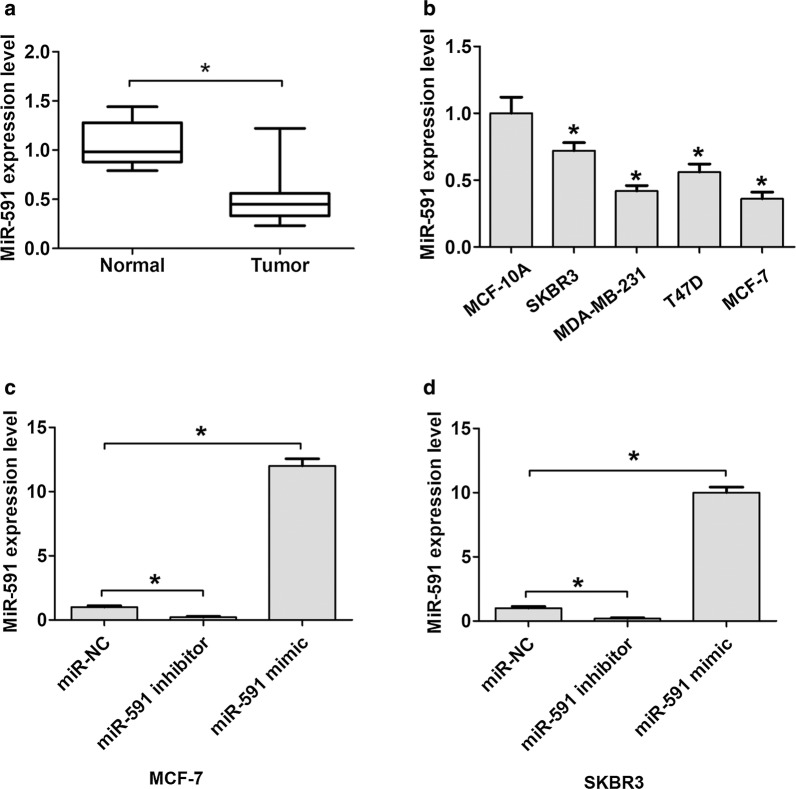
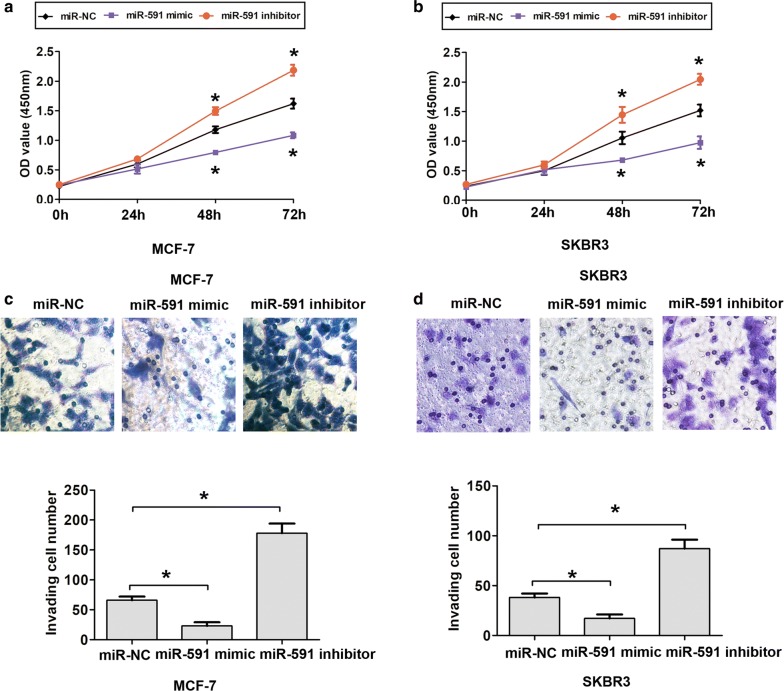
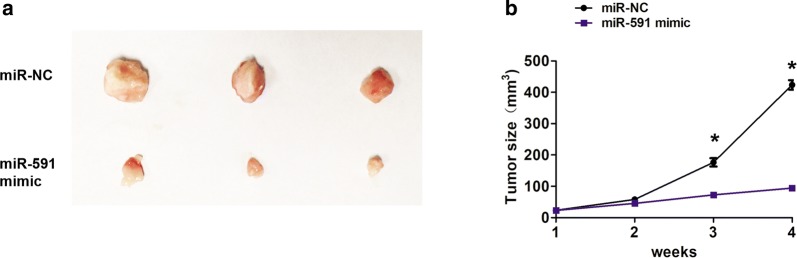
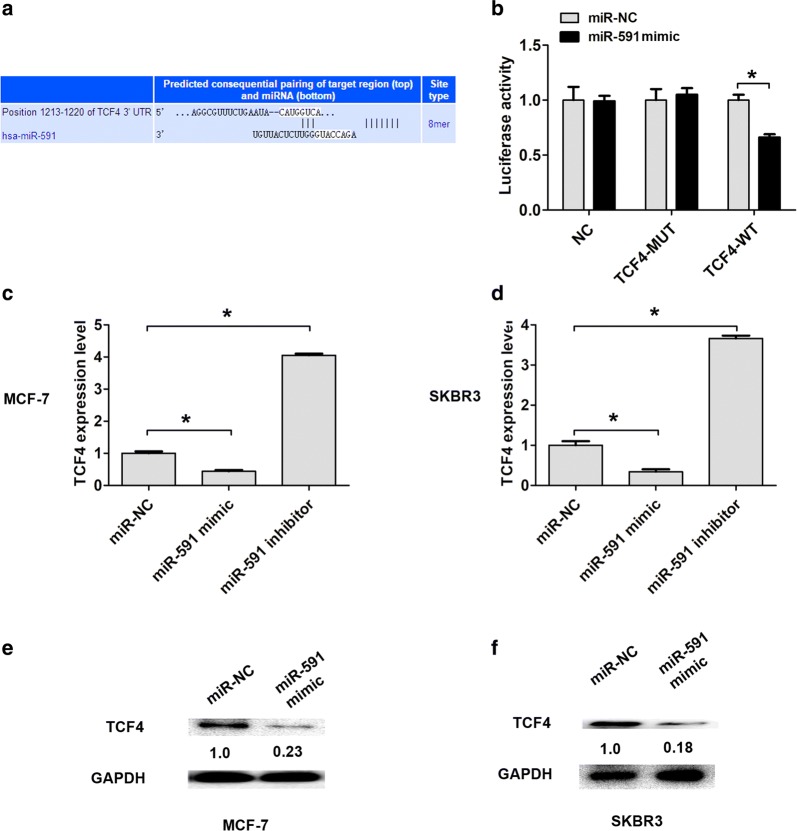
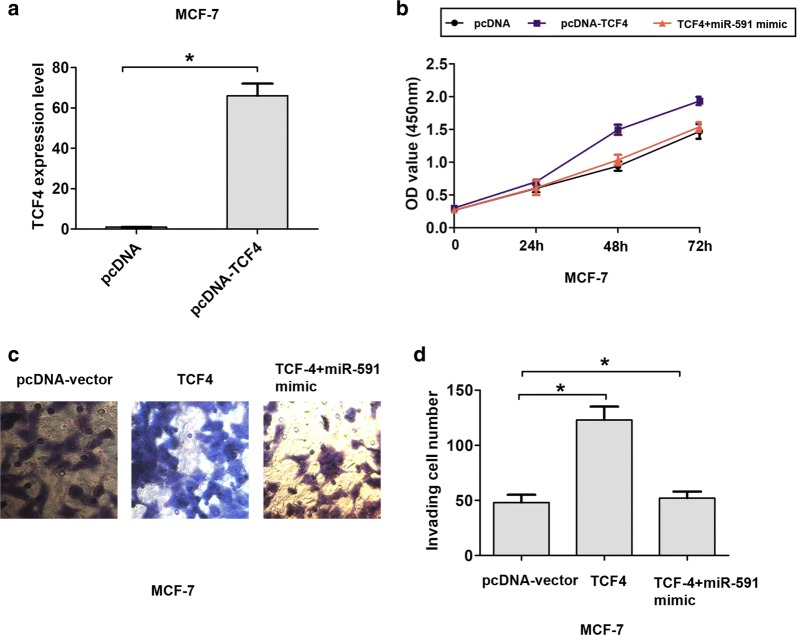
We found that miR-591 expression levels were significantly downregulated in breast cancer tissues compared to adjacent normal tumor tissues. Lower miR-591 expression notably related to lymph node metastasis and advanced TNM stage in patients with breast cancer. In vitro, cell proliferation and invasion were inhibited by transfection of miR-591 mimic in breast cancer cells, but were promoted by transfection of miR-591 inhibitor, compared to the controls. In vivo, we also found that miR-591 mimic significantly inhibited cell proliferation ability. Moreover, we identified that TCF4 was a direct target of miR-591 in breast cancer. TCF4 mediated the inhibiting effects of miR-591 on cell proliferation and invasion in breast cancer cells. In additional, we revealed that miR-591 overexpression significantly inhibited the Hippo-YAP/TAZ signaling pathway in breast cells by downregulated YAP1 expression in breast cells.
Together, these results indicated that miR-591 is downregulated in breast cancer and could act as a potential target of breast cancer treatment.
微小RNA参与调控某些肿瘤的关键生物学功能。然而,miR-591在乳腺癌中的临床作用和功能影响仍不清楚。
采用qRT-PCR检测乳腺癌组织及其配对的正常组织中miR-591的表达。进行功能试验以证实miR-591对乳腺癌增殖和侵袭的影响。利用生物信息学分析、荧光素酶报告基因试验、蛋白质免疫印迹法和体外试验来证实TCF4是miR-591的靶基因。通过蛋白质免疫印迹分析来分析miR-591表达与乳腺癌中YAP1表达之间的关系。
我们发现,与相邻正常肿瘤组织相比,乳腺癌组织中miR-591的表达水平显著下调。较低的miR-591表达与乳腺癌患者的淋巴结转移和晚期TNM分期显著相关。在体外,与对照组相比,转染miR-591模拟物可抑制乳腺癌细胞的增殖和侵袭,但转染miR-591抑制剂则促进其增殖和侵袭。在体内,我们还发现miR-591模拟物显著抑制细胞增殖能力。此外,我们确定TCF4是乳腺癌中miR-591的直接靶标。TCF4介导了miR-591对乳腺癌细胞增殖和侵袭的抑制作用。此外,我们发现miR-591的过表达通过下调乳腺癌细胞中YAP1的表达,显著抑制了乳腺癌细胞中的Hippo-YAP/TAZ信号通路。
总之,这些结果表明miR-591在乳腺癌中表达下调,可能成为乳腺癌治疗的潜在靶点。