Faralli Michele, Cockram James, Ober Eric, Wall Shellie, Galle Alexander, Van Rie Jeroen, Raines Christine, Lawson Tracy
School of Biological Sciences, University of Essex, Colchester, United Kingdom.
The John Bingham Laboratory, NIAB, Cambridge, United Kingdom.
Front Plant Sci. 2019 Apr 17;10:492. doi: 10.3389/fpls.2019.00492. eCollection 2019.
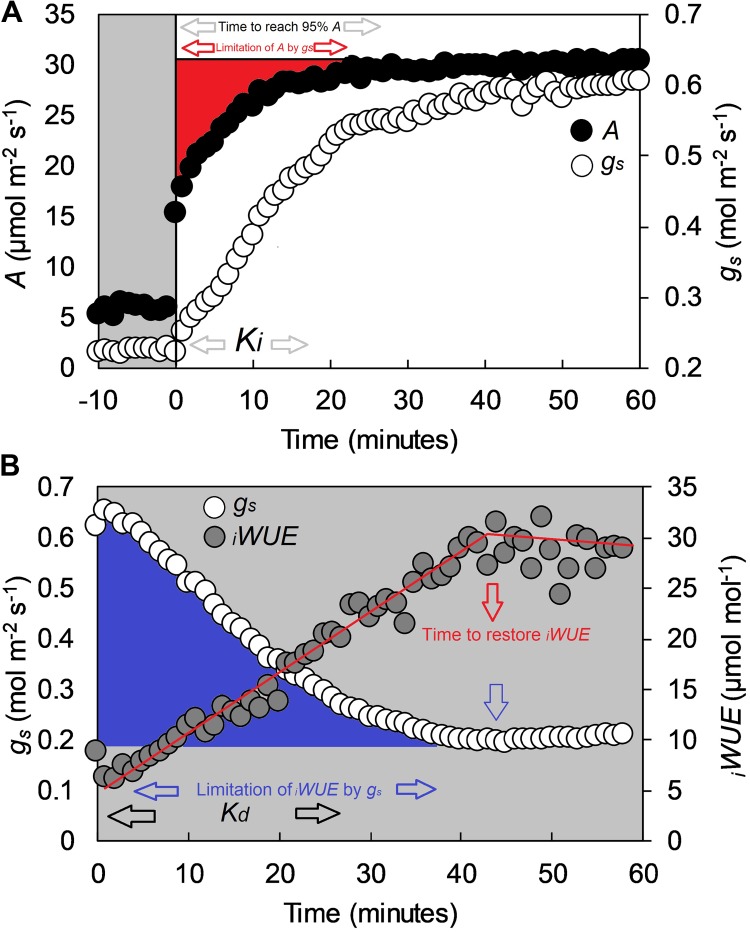
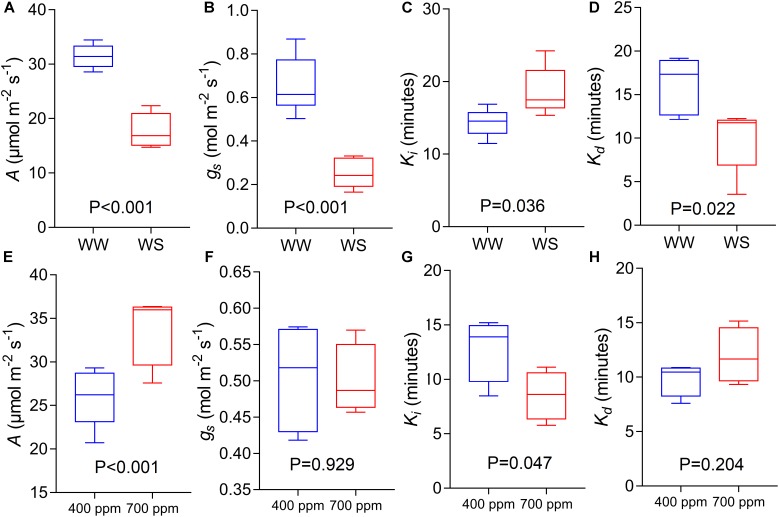
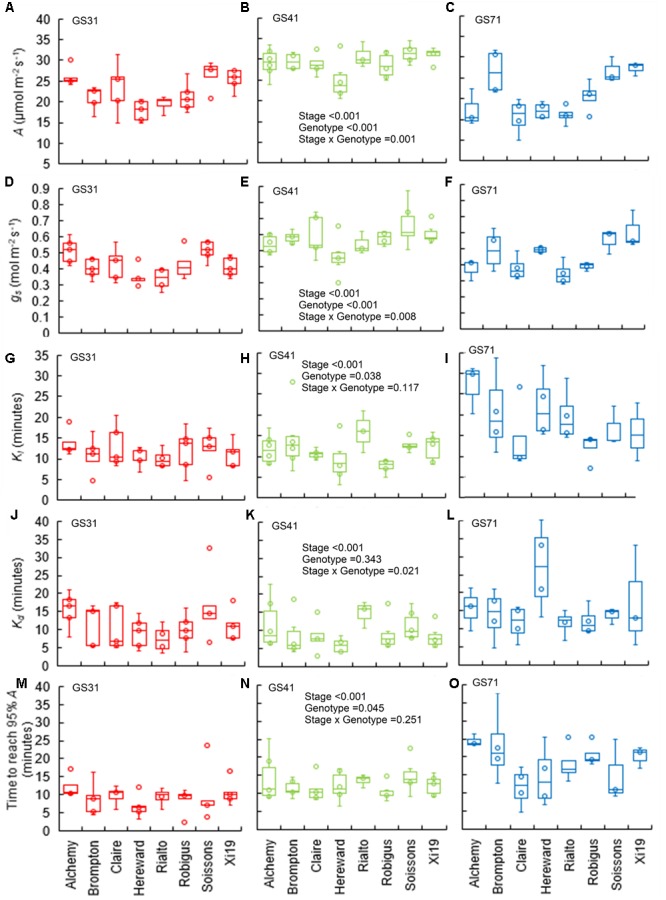
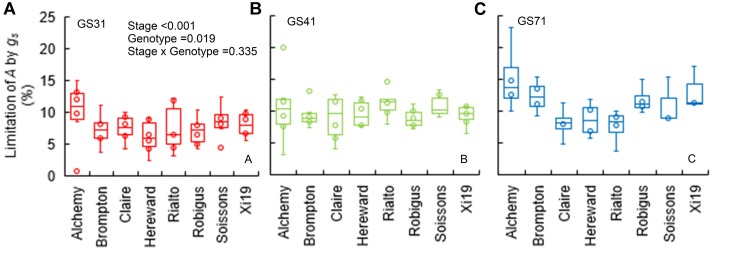
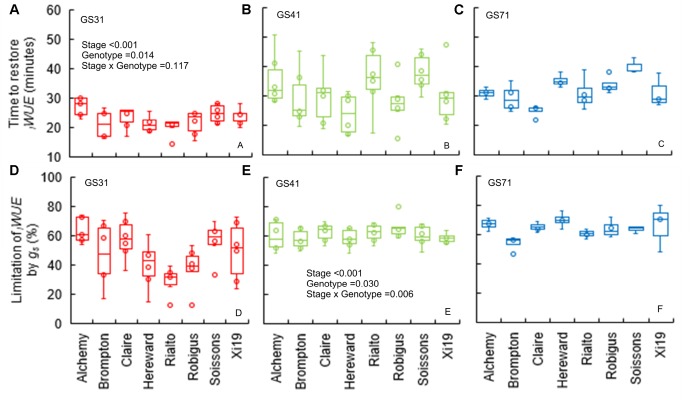
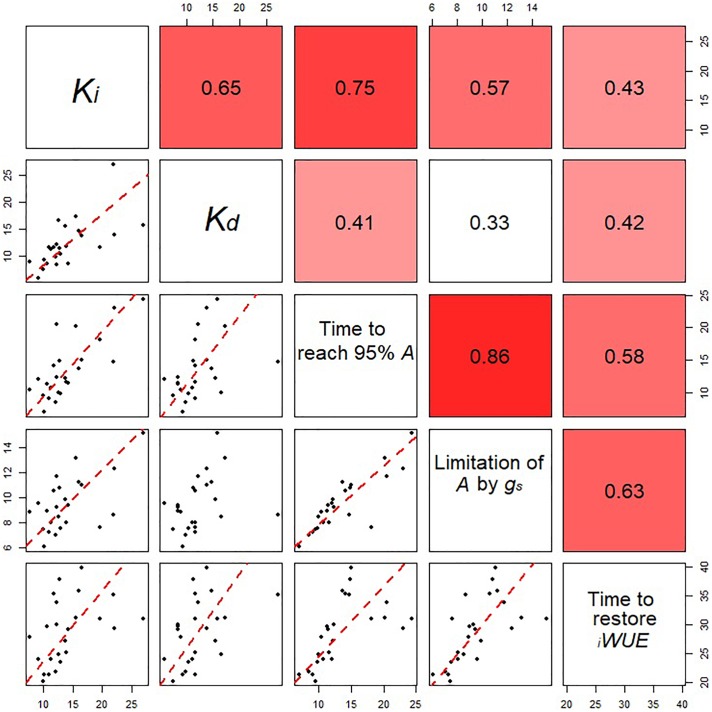
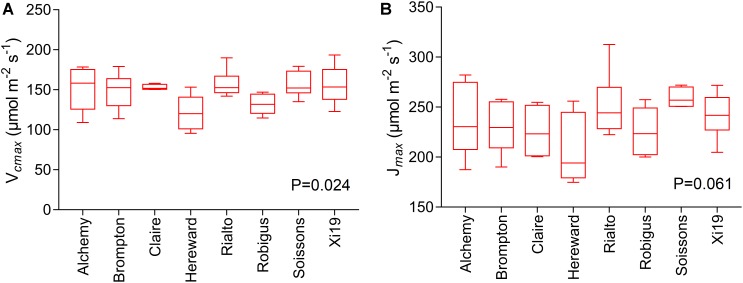
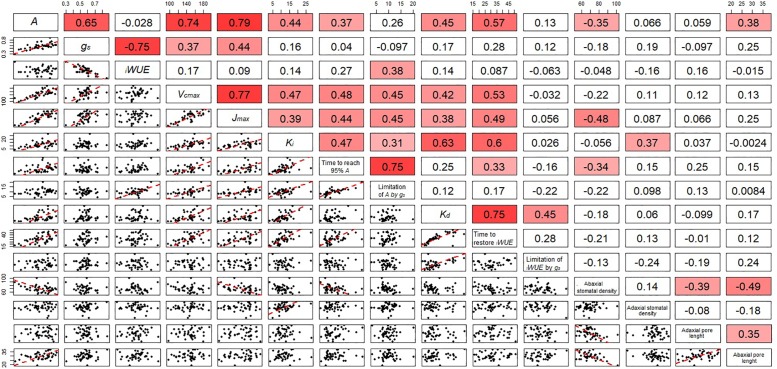
Stomata are the primary gatekeepers for CO uptake for photosynthesis and water loss via transpiration and therefore play a central role in crop performance. Although stomatal conductance ( ) and assimilation rate () are often highly correlated, studies have demonstrated an uncoupling between and that can result in sub-optimal physiological processes in dynamic light environments. Wheat ( L.) is exposed to changes in irradiance due to leaf self-shading, moving clouds and shifting sun angle to which both and respond. However, stomatal responses are generally an order of magnitude slower than photosynthetic responses, leading to non-synchronized and responses that impact CO uptake and water use efficiency ( ). Here we phenotyped a panel of eight wheat cultivars (estimated to capture 80% of the single nucleotide polymorphism variation in North-West European bread wheat) for differences in the speed of stomatal responses (to changes in light intensity) and photosynthetic performance at different stages of development. The impact of water stress and elevated [CO] on stomatal kinetics was also examined in a selected cultivar. Significant genotypic variation was reported for the time constant for stomatal opening ( = 0.038) and the time to reach 95% steady state ( = 0.045). Slow opening responses limited by ∼10% and slow closure reduced , with these impacts found to be greatest in cultivars Soissons, Alchemy and Xi19. A decrease in stomatal rapidity (and thus an increase in the limitation of photosynthesis) ( < 0.001) was found during the post-anthesis stage compared to the early booting stage. Reduced water availability triggered stomatal closure and asymmetric stomatal opening and closing responses, while elevated atmospheric [CO] conditions reduced the time for stomatal opening during a low to high light transition, thus suggesting a major environmental effect on dynamic stomatal kinetics. We discuss these findings in terms of exploiting various traits to develop ideotypes for specific environments, and suggest that intraspecific variation in the rapidity of stomatal responses could provide a potential unexploited breeding target to optimize the physiological responses of wheat to dynamic field conditions.
气孔是光合作用吸收二氧化碳以及通过蒸腾作用散失水分的主要通道,因此在作物生长表现中起着核心作用。尽管气孔导度( )和同化率( )通常高度相关,但研究表明 与 之间存在解耦现象,这可能导致动态光照环境下生理过程次优。小麦( L.)会因叶片自我遮荫、云层移动和太阳角度变化而受到光照强度变化的影响,气孔导度和同化率对此都会做出响应。然而,气孔响应通常比光合响应慢一个数量级,导致气孔导度和同化率响应不同步,进而影响二氧化碳吸收和水分利用效率( )。在此,我们对一组八个小麦品种(估计涵盖了西北欧面包小麦单核苷酸多态性变异的80%)进行表型分析,以研究不同发育阶段气孔响应速度(对光照强度变化)和光合性能的差异。还在一个选定品种中研究了水分胁迫和升高的[CO]对气孔动力学的影响。报告了气孔开放时间常数( = 0.038)和达到95%稳态时间( = 0.045)存在显著的基因型变异。气孔开放响应缓慢使 受限约10%,关闭缓慢则降低了 ,这些影响在苏瓦松、炼金术和西19品种中最为明显。与孕穗早期相比,在开花后期发现气孔快速性降低(从而光合作用受限增加)( < 0.001)。水分可利用性降低会引发气孔关闭以及不对称的气孔开闭响应,而大气[CO]浓度升高会减少低光到高光转换期间气孔开放的时间,因此表明环境对动态气孔动力学有重大影响。我们从利用各种性状来培育特定环境理想型的角度讨论了这些发现,并提出气孔响应快速性的种内变异可能提供一个潜在的未被开发的育种目标,以优化小麦对动态田间条件的生理响应。