Han SeongJun, Toker Aras, Liu Zhe Qi, Ohashi Pamela S
Princess Margaret Cancer Centre, Campbell Family Institute for Breast Cancer Research, University Health Network, Toronto, ON, Canada.
Department of Immunology, Faculty of Medicine, University of Toronto, Toronto, ON, Canada.
Front Oncol. 2019 Apr 16;9:279. doi: 10.3389/fonc.2019.00279. eCollection 2019.
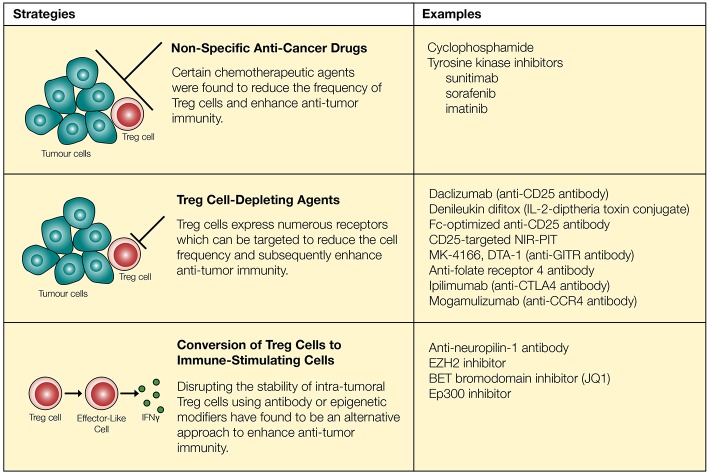
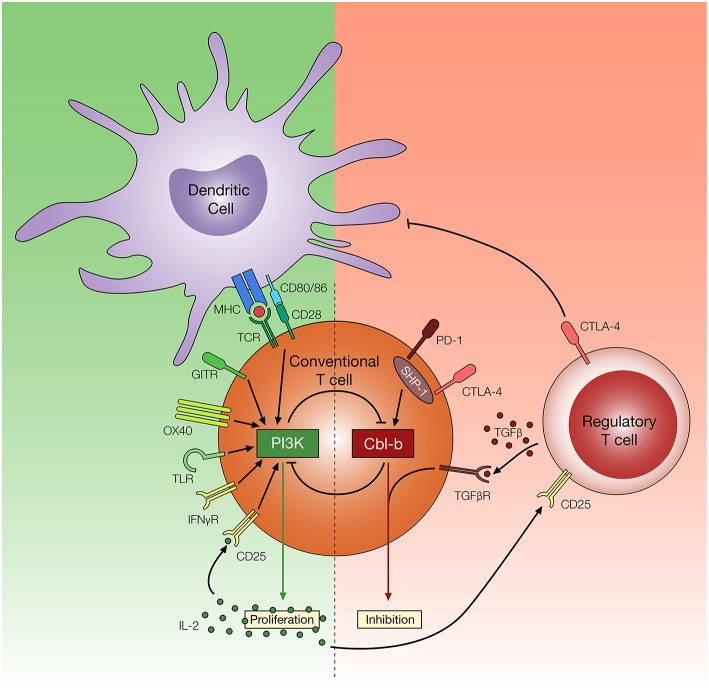
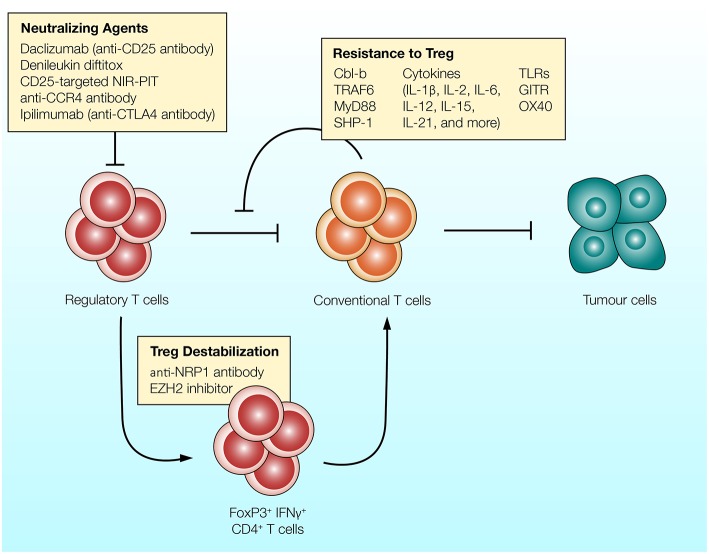
Regulatory T (Treg) cells play crucial roles in health and disease through their immunosuppressive properties against various immune cells. In this review we will focus on the inhibitory role of Treg cells in anti-tumor immunity. We outline how Treg cells restrict T cell function based on our understanding of T cell biology, and how we can shift the equilibrium against regulatory T cells. To date, numerous strategies have been proposed to limit the suppressive effects of Treg cells, including Treg cell neutralization, destabilizing Treg cells and rendering T cells resistant to Treg cells. Here, we focus on key mechanisms which render T cells resistant to the suppressive effects of Treg cells. Lastly, we also examine current limitations and caveats of overcoming the inhibitory activity of Treg cells, and briefly discuss the potential to target Treg cell resistance in the context of anti-tumor immunity.
调节性T(Treg)细胞通过其对各种免疫细胞的免疫抑制特性在健康和疾病中发挥关键作用。在本综述中,我们将重点关注Treg细胞在抗肿瘤免疫中的抑制作用。基于我们对T细胞生物学的理解,我们概述了Treg细胞如何限制T细胞功能,以及我们如何改变针对调节性T细胞的平衡。迄今为止,已经提出了许多策略来限制Treg细胞的抑制作用,包括Treg细胞中和、破坏Treg细胞的稳定性以及使T细胞对Treg细胞产生抗性。在这里,我们重点关注使T细胞对Treg细胞的抑制作用产生抗性的关键机制。最后,我们还研究了克服Treg细胞抑制活性的当前局限性和注意事项,并简要讨论了在抗肿瘤免疫背景下靶向Treg细胞抗性的潜力。