Silva Leandro S, Pinheiro Alessandro S, Teixeira Douglas E, Silva-Aguiar Rodrigo P, Peruchetti Diogo B, Scharfstein Julio, Caruso-Neves Celso, Pinheiro Ana Acacia S
Instituto de Biofísica Carlos Chagas Filho, Universidade Federal do Rio de Janeiro, Rio de Janeiro, Brazil.
Instituto Nacional de Ciência e Tecnologia em Medicina Regenerativa, INCT-Regenera, Conselho Nacional de Pesquisa e Desenvolvimento (CNPq), Rio de Janeiro, Brazil.
Front Med (Lausanne). 2019 Apr 16;6:75. doi: 10.3389/fmed.2019.00075. eCollection 2019.
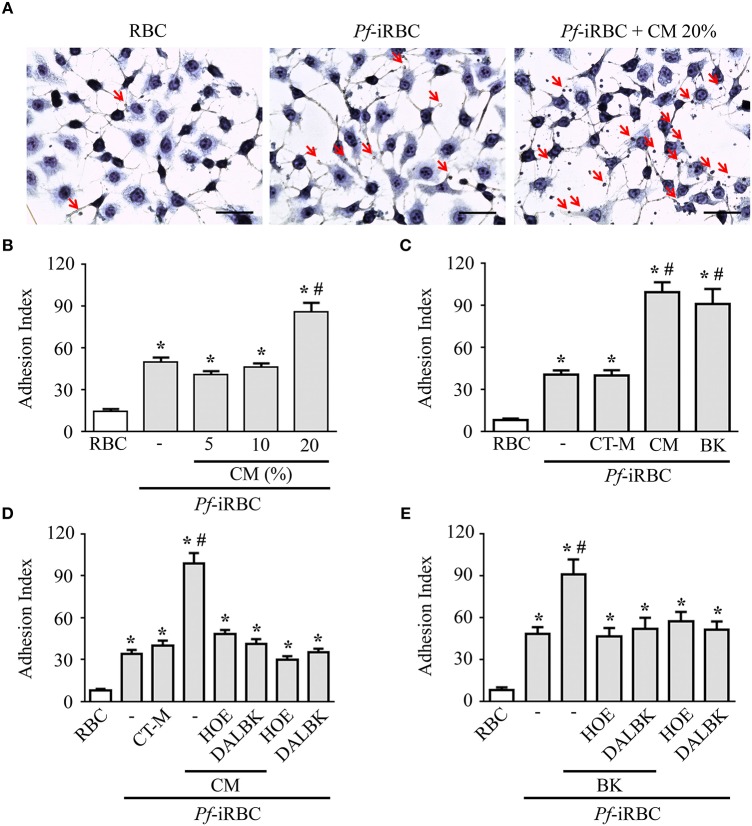
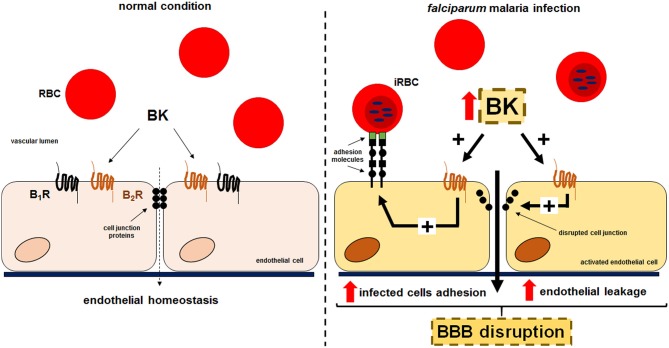
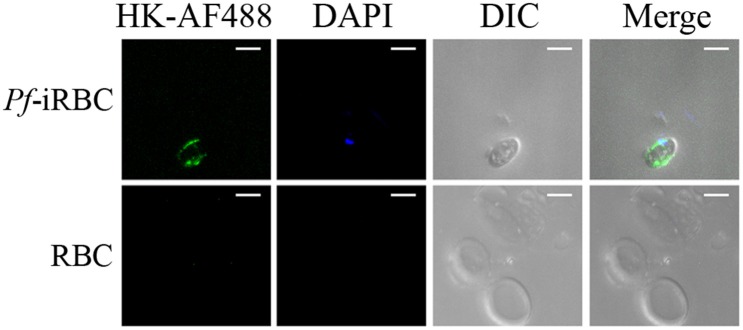
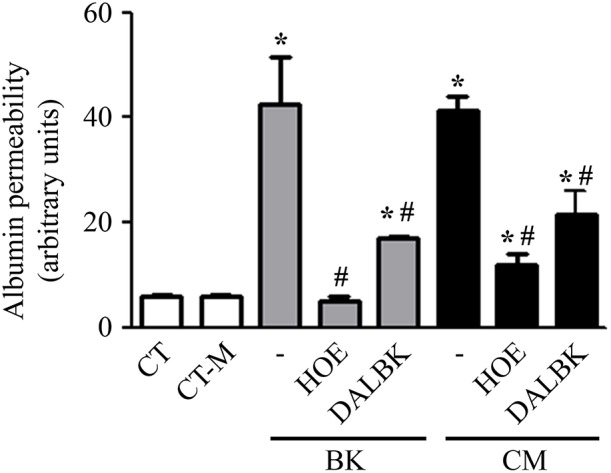
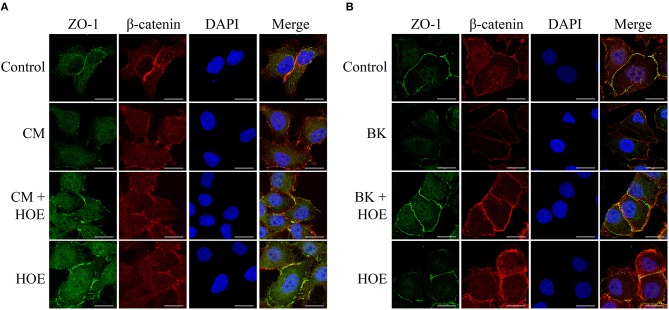
, the etiologic agent of malaria, is a major cause of infant death in Africa. Although research on the contact system has been revitalized by recent discoveries in the field of thrombosis, limited efforts were done to investigate the role of its proinflammatory arm, the kallikrein kinin system (KKS), in the pathogenesis of neglected parasitic diseases, such as malaria. Owing to the lack of animal models, the dynamics of central nervous system (CNS) pathology caused by the sequestration of erythrocytic stages of is not fully understood. Given the precedent that kinins destabilize the blood brain barrier (BBB) in ischemic stroke, here we sought to determine whether infected erythrocytes (-iRBC) conditioned medium enhances parasite sequestration and impairs BBB integrity via activation of the kallikrein kinin system (KKS). Monolayers of human brain endothelial cell line (BMECs) are preincubated with the conditioned medium from -iRBCs or RBCs (controls) in the presence or absence of HOE-140 or DALBK, antagonists of bradykinin receptor B2 (B2R) and bradykinin receptor B1 (B1R), respectively. Following washing, the treated monolayers are incubated with erythrocytes, infected or not with mature forms, to examine whether the above treatment (i) has impact on the adhesion of -iRBC to BMEC monolayer, (ii) increases the macromolecular permeability of the tracer BSA-FITC, and (iii) modifies the staining pattern of junctional proteins (ZO-1 and β-catenin). We found that kinins generated in the parasite conditioned medium, acting via bradykinin B2 and/or B1 receptors (i) enhanced -iRBC adhesion to the endothelium monolayer and (ii) impaired the endothelial junctions formed by ZO-1 and β-catenin, consequently disrupting the integrity of the BBB. Our studies raise the possibility that therapeutic targeting of kinin forming enzymes and/or endothelial bradykinin receptors might reduce extent of -iRBC sequestration and help to preserve BBB integrity in cerebral malaria (CM).
疟原虫是非洲婴儿死亡的主要原因。尽管血栓形成领域的最新发现使对接触系统的研究重新焕发生机,但在研究其促炎分支激肽释放酶激肽系统(KKS)在疟疾等被忽视的寄生虫病发病机制中的作用方面所做的努力有限。由于缺乏动物模型,疟原虫红细胞阶段的滞留所导致的中枢神经系统(CNS)病理学动态尚未完全了解。鉴于激肽在缺血性中风中会破坏血脑屏障(BBB)这一先例,我们在此试图确定疟原虫感染的红细胞(-iRBC)条件培养基是否通过激活激肽释放酶激肽系统(KKS)来增强寄生虫滞留并损害血脑屏障的完整性。人脑血管内皮细胞系(BMECs)单层在存在或不存在HOE - 140或DALBK(分别为缓激肽受体B2(B2R)和缓激肽受体B1(B1R)的拮抗剂)的情况下,用来自-iRBC或红细胞(对照)的条件培养基进行预孵育。洗涤后,将处理过的单层与感染或未感染疟原虫成熟形式的红细胞一起孵育,以检查上述处理是否(i)对-iRBC与BMEC单层的粘附产生影响,(ii)增加示踪剂BSA - FITC的大分子通透性,以及(iii)改变连接蛋白(ZO - 1和β - 连环蛋白)的染色模式。我们发现寄生虫条件培养基中产生的激肽通过缓激肽B2和/或B1受体起作用,(i)增强了-iRBC与内皮单层的粘附,并且(ii)损害了由ZO - 1和β - 连环蛋白形成的内皮连接,从而破坏了血脑屏障的完整性。我们的研究提出了一种可能性,即针对激肽形成酶和/或内皮缓激肽受体的治疗靶点可能会减少-iRBC的滞留程度,并有助于在脑型疟疾(CM)中维持血脑屏障的完整性。