Bernardi Sara, Bianchi Serena, Tomei Anna Rita, Continenza Maria Adelaide, Macchiarelli Guido
Department of Life, Health and Environmental Sciences, University of L'Aquila, 67100 L'Aquila, Italy.
"San Salvatore" City Hospital, 67100 L'Aquila, Italy.
Materials (Basel). 2019 May 4;12(9):1448. doi: 10.3390/ma12091448.
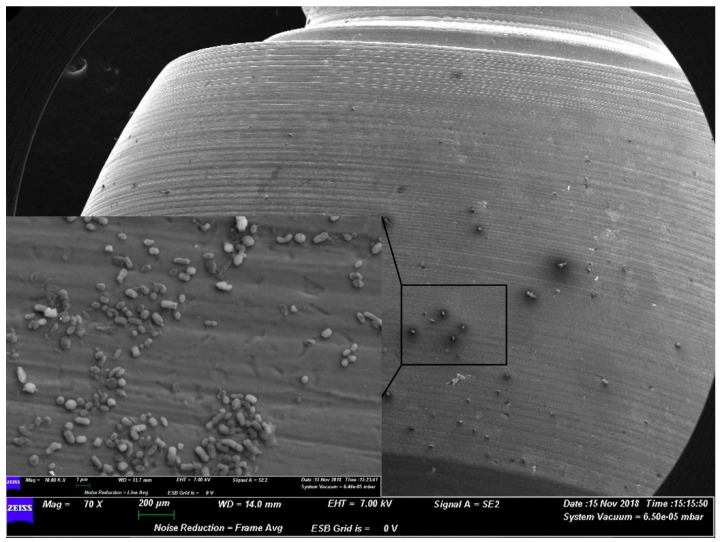
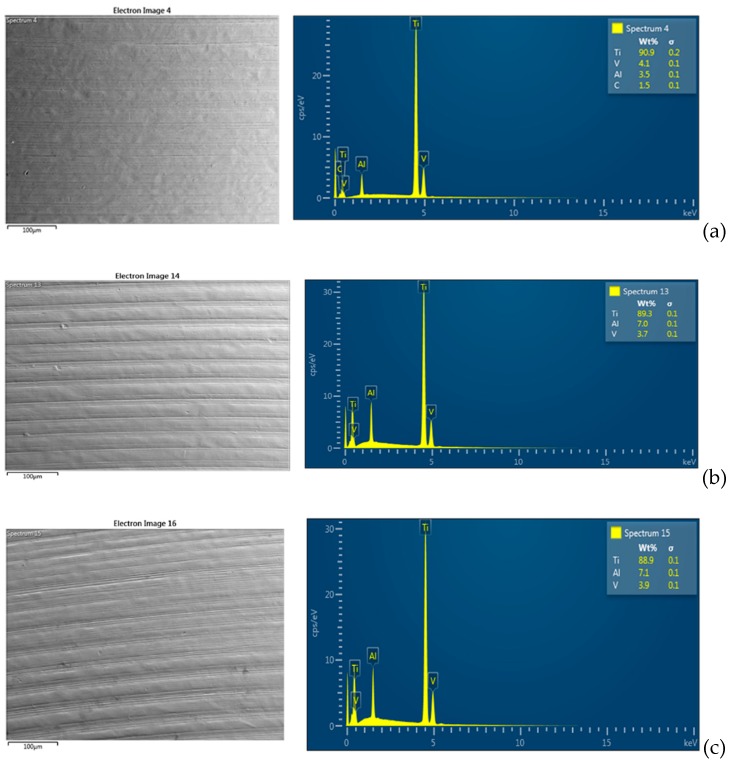
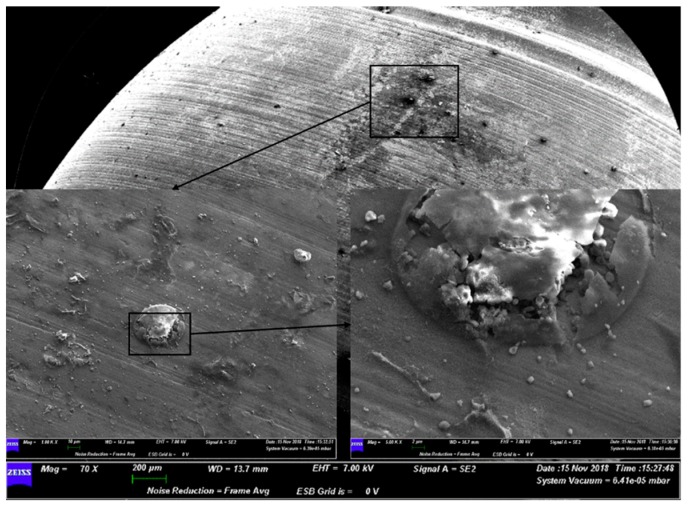
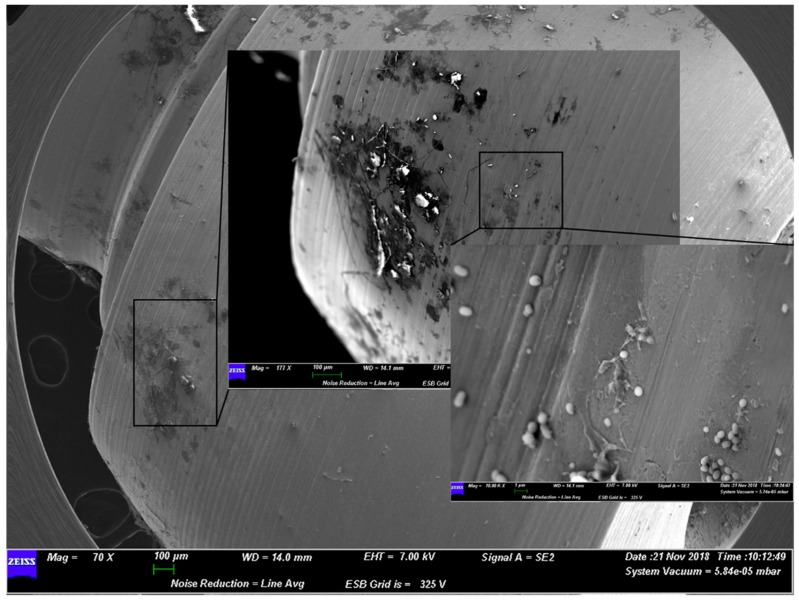
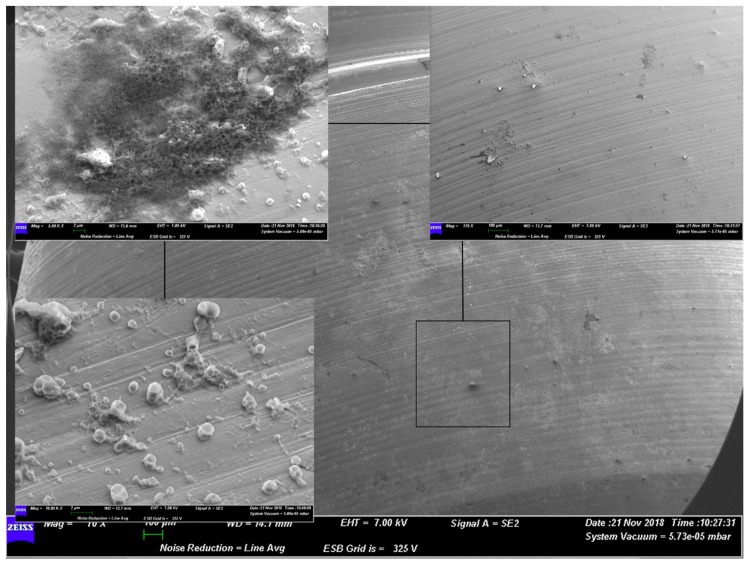
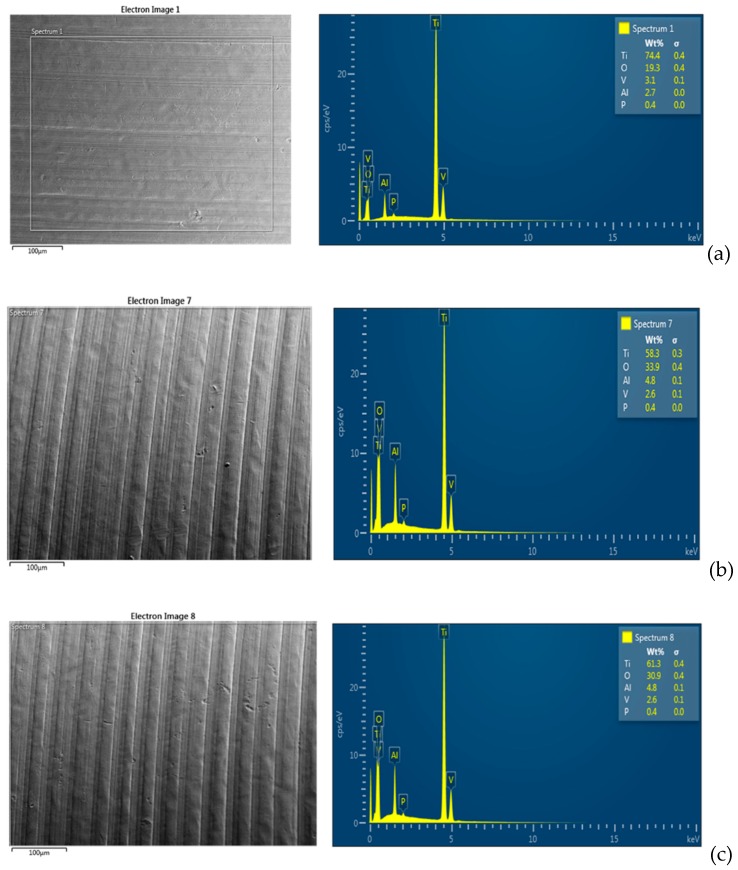
Inflammatory diseases affecting the soft and hard tissues surrounding an implant represent a new challenge in contemporary implant dentistry. Among several methods proposed for the decontamination of titanium surfaces, the administration of topical 14% doxycycline gel seems to be a reliable option. In the present study, we evaluated the microbial effect of 14% doxycycline gel applied on titanium surfaces and exposed to human salivary microbes in anaerobic conditions. We also examined the composition of the exposed surfaces to assess the safe use of periodontal gel on titanium surfaces. Six anatase and six type 5 alloy titanium surfaces were used and divided into two groups: The test group and the positive control group. Both were cultured with human salivary samples in anaerobic conditions. On the test groups, 240 mg of periodontal gel was applied. The microbial assessment was performed with a colony-forming unit (CFU) count and matrix-assisted laser desorption ionization-time of flight (MALDI-TOF) to identify the species. The surface integrity was assessed using scanning electron microscopy-energy dispersive X-ray spectrometry (SEM-EDS). The results demonstrated the microbial efficacy of the 14% doxycycline periodontal gel and its safe use on titanium surfaces. However, the SEM observations revealed the permanence of the gel on the titanium surfaces due to the physical composition of the gel. This permanence needs to be further investigated in vivo and a final polishing protocol on the titanium surface is recommended.
影响种植体周围软硬组织的炎症性疾病是当代种植牙科面临的新挑战。在提出的几种钛表面去污方法中,局部应用14%强力霉素凝胶似乎是一种可靠的选择。在本研究中,我们评估了在厌氧条件下,将14%强力霉素凝胶应用于钛表面并暴露于人类唾液微生物中的抗菌效果。我们还检查了暴露表面的成分,以评估牙周凝胶在钛表面的安全使用情况。使用了六个锐钛矿型和六个5型合金钛表面,并将其分为两组:试验组和阳性对照组。两组均在厌氧条件下用人唾液样本进行培养。在试验组上,应用了240毫克牙周凝胶。通过菌落形成单位(CFU)计数和基质辅助激光解吸电离飞行时间(MALDI-TOF)进行微生物评估以鉴定菌种。使用扫描电子显微镜-能量色散X射线光谱仪(SEM-EDS)评估表面完整性。结果证明了14%强力霉素牙周凝胶的抗菌效果及其在钛表面的安全使用。然而,扫描电子显微镜观察显示,由于凝胶的物理组成,凝胶在钛表面持续存在。这种持续性需要在体内进一步研究,建议对钛表面采用最终的抛光方案。