Department of Neuroscience, University of Connecticut School of Medicine, Farmington, CT 06030.
Department of Immunology, University of Connecticut School of Medicine, Farmington, CT 06030.
Proc Natl Acad Sci U S A. 2019 May 21;116(21):10488-10493. doi: 10.1073/pnas.1816911116. Epub 2019 May 8.
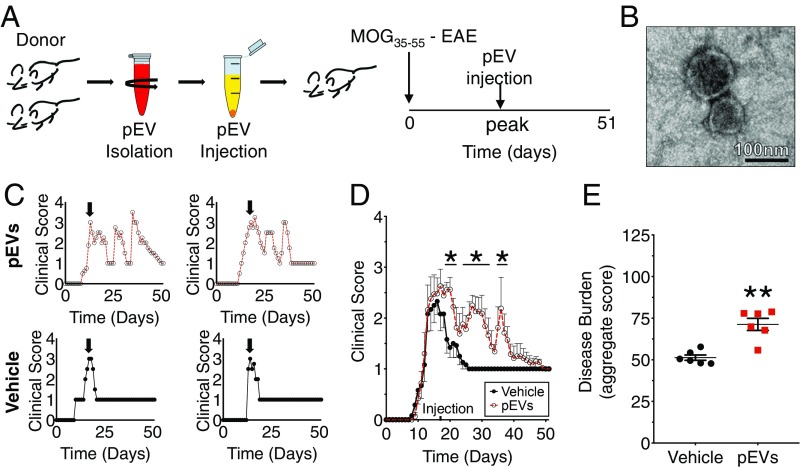
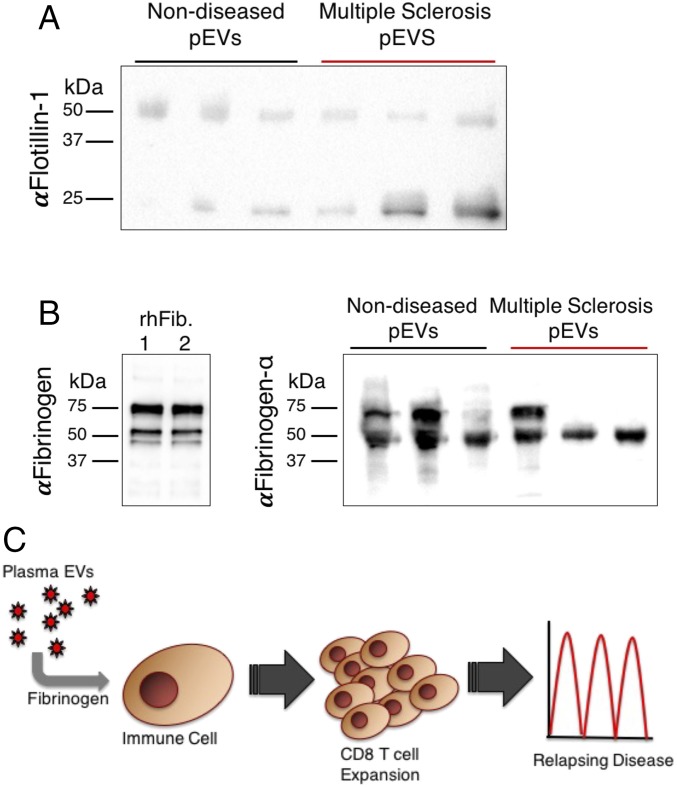
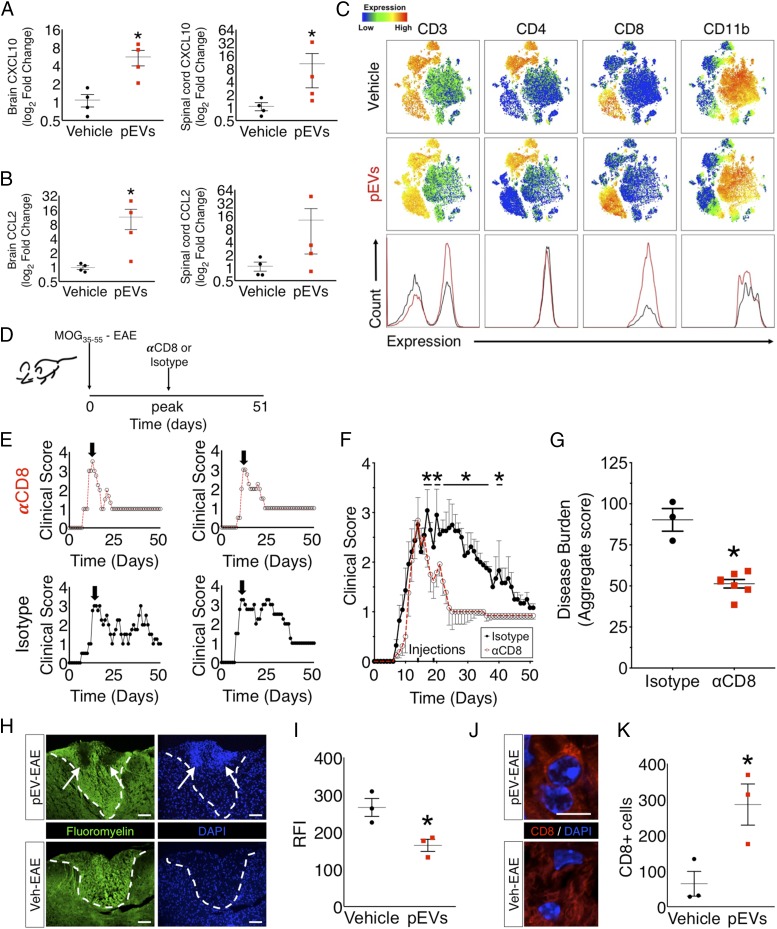
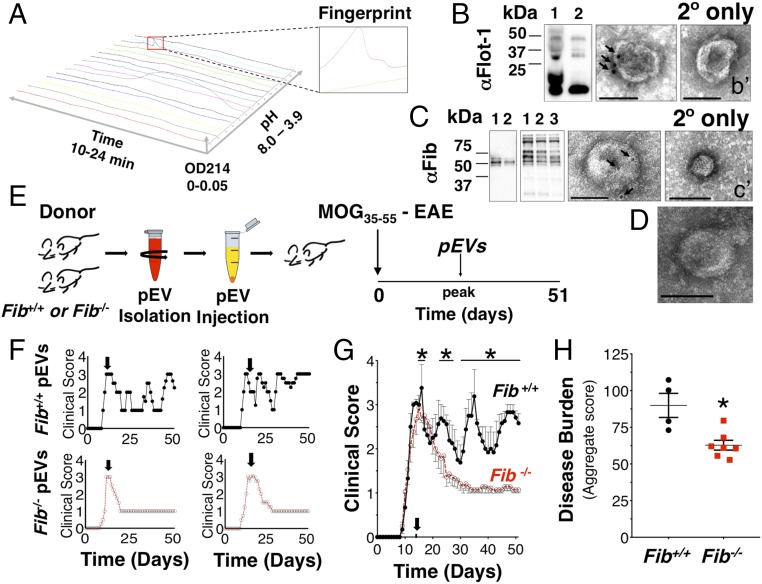
Extracellular vesicles (EVs) are emerging as potent mediators of intercellular communication with roles in inflammation and disease. In this study, we examined the role of EVs from blood plasma (pEVs) in an experimental autoimmune encephalomyelitis mouse model of central nervous system demyelination. We determined that pEVs induced a spontaneous relapsing-remitting disease phenotype in MOG-immunized C57BL/6 mice. This modified disease phenotype was found to be driven by CD8+ T cells and required fibrinogen in pEVs. Analysis of pEVs from relapsing-remitting multiple sclerosis patients also identified fibrinogen as a significant portion of pEV cargo. Together, these data suggest that fibrinogen in pEVs contributes to the perpetuation of neuroinflammation and relapses in disease.
细胞外囊泡 (EVs) 作为细胞间通讯的有力介质而出现,在炎症和疾病中发挥作用。在这项研究中,我们研究了来自血浆 (pEVs) 的 EV 在中枢神经系统脱髓鞘的实验性自身免疫性脑脊髓炎小鼠模型中的作用。我们发现 pEV 诱导 MOG 免疫的 C57BL/6 小鼠自发出现复发缓解疾病表型。发现这种改变的疾病表型是由 CD8+ T 细胞驱动的,pEV 中的纤维蛋白原是必需的。对复发缓解型多发性硬化症患者的 pEV 分析也鉴定出纤维蛋白原是 pEV 货物的重要组成部分。这些数据表明,pEV 中的纤维蛋白原有助于神经炎症的持续存在和疾病的复发。