Molecular Oncology Laboratory. Departamento de Fisioloxia, Facultade de Medicina and Centro de Investigación en Medicina Molecular y Enfermedades Crónicas (CiMUS). Instituto de Investigación Sanitaria de Santiago de Compostela (IDIS), Universidade de Santiago de Compostela, Santiago de Compostela, Spain.
Centro Singular de Investigación en Química Biolóxica e Materiais Moleculares (CiQUS), Departamento de Química Orgánica, Universidade de Santiago de Compostela, 15782, Santiago de Compostela, Spain.
Sci Rep. 2019 May 8;9(1):7117. doi: 10.1038/s41598-019-43618-4.
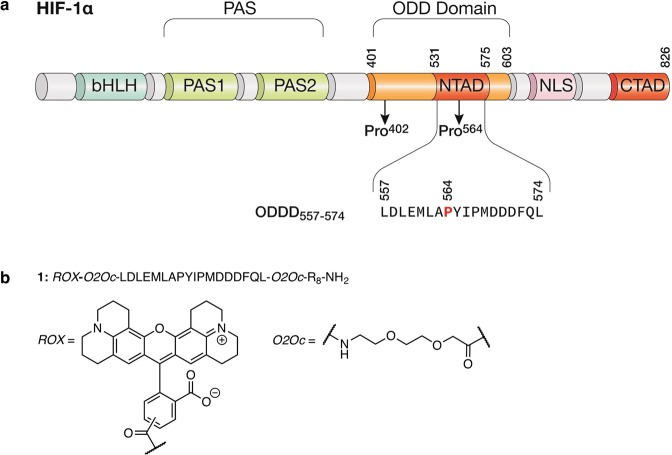
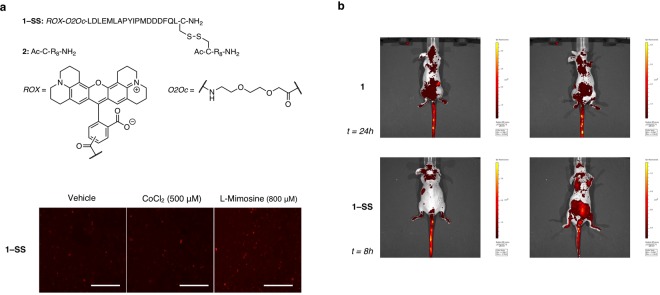
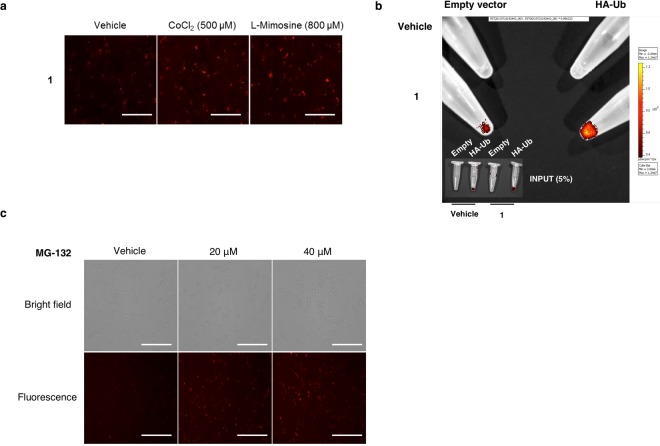
Functional imaging has become an important tool in oncology because it not only provides information about the size and localization of the tumour, but also about the pathophysiological features of the tumoural cells. One of the characteristic features of some tumour types is that their fast growth leads to deficient intratumoral vascularization, which results in low oxygen availability. To overcome this lack of oxygen, tumoural cells activate the neoangiogenic program by upregulating the transcription factor HIF-1α. Herein we report a non-invasive in vitro detection method of hypoxia using designed fluorescent peptide probes based on the oxygen-dependent degradation domain of HIF-1α. The fluorescent probe retains the oxygen-sensing capability of HIF-1α, so that it is stabilized under hypoxia and readily degraded by the proteasome under normoxia, thus providing direct information of the cellular oxygen availability.
功能成像已成为肿瘤学中的重要工具,因为它不仅提供了关于肿瘤大小和定位的信息,还提供了肿瘤细胞病理生理学特征的信息。一些肿瘤类型的特征之一是,它们的快速生长导致肿瘤内血管化不足,从而导致氧气供应不足。为了克服这种缺氧,肿瘤细胞通过上调转录因子 HIF-1α 来激活新血管生成程序。在这里,我们报告了一种使用基于 HIF-1α 的氧依赖性降解结构域设计的荧光肽探针进行体外缺氧检测的非侵入性方法。该荧光探针保留了 HIF-1α 的氧感应能力,因此在缺氧条件下稳定,而在常氧条件下易被蛋白酶体降解,从而提供了细胞氧气供应的直接信息。