De Meyst Laurence, Mannekens Els, Araújo Maria, Snoeck Didier, Van Tittelboom Kim, Van Vlierberghe Sandra, De Belie Nele
Magnel Laboratory for Concrete Research, Department of Structural Engineering, Ghent University, Tech Lane Ghent Science Park, Campus A, Technologiepark Zwijnaarde 60, B-9052 Ghent, Belgium.
ChemStream bvba, Drie Eikenstraat 661, B-2650 Edegem, Belgium.
Materials (Basel). 2019 May 10;12(9):1541. doi: 10.3390/ma12091541.
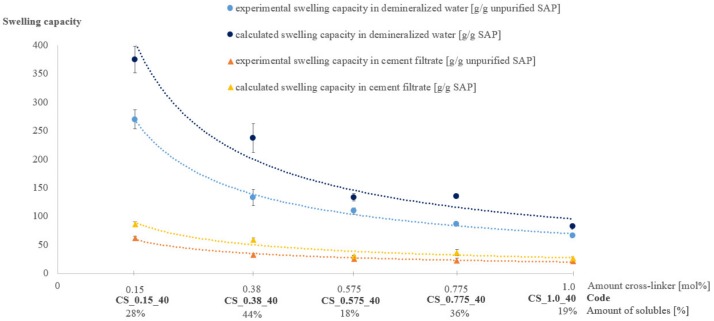
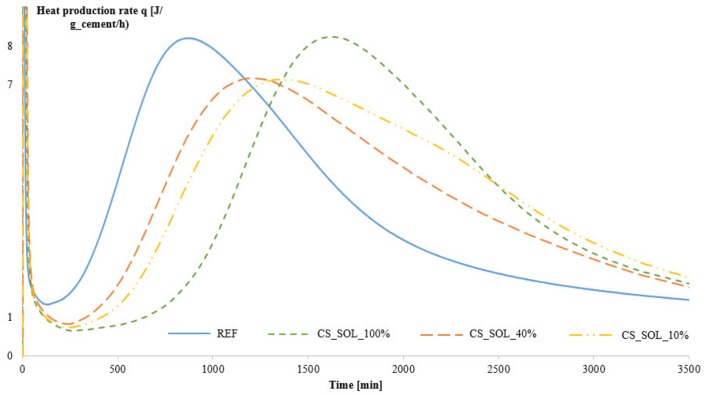
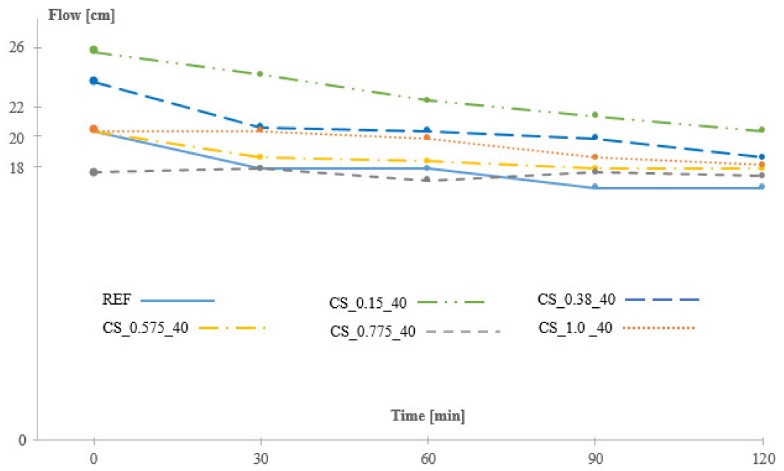
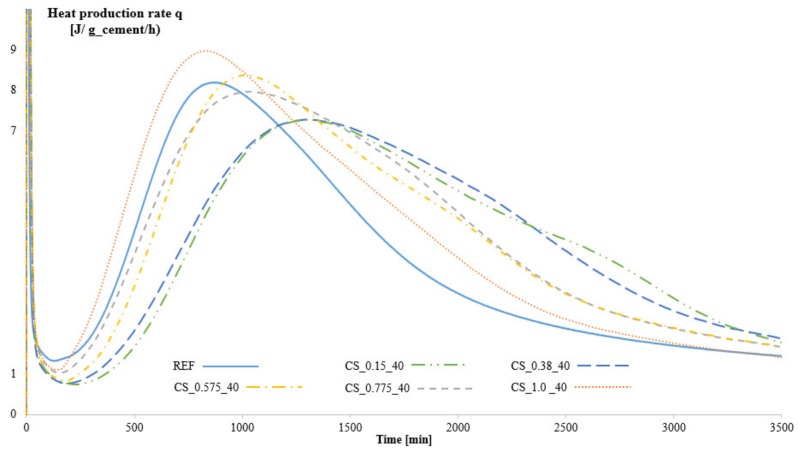
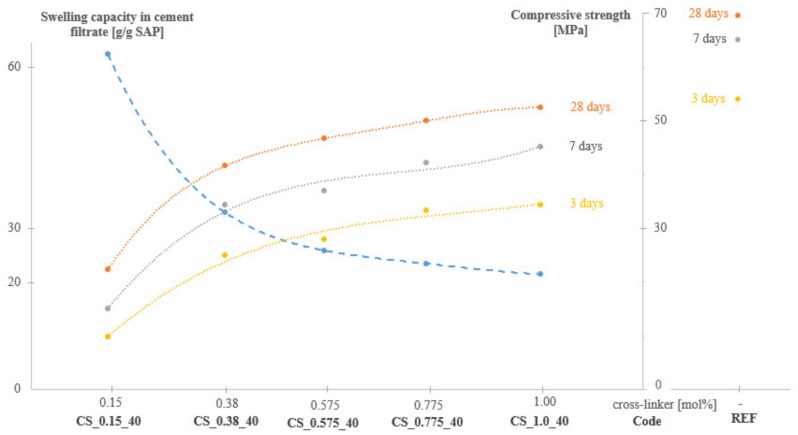
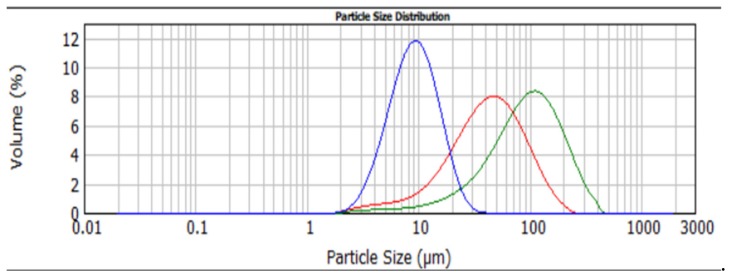
Superabsorbent polymers (SAPs) can be added to a concrete mixture to provide internal curing and reduce the risk for early-age shrinkage cracking. Hence, they can help to increase the overall durability of concrete structures. The type, swelling characteristics, kinetics of water release, amount and particle size of the SAPs will dictate their effectiveness for this purpose. In this paper, SAPs with different cross-linking degrees, particle sizes and amount of solubles are investigated. By varying these parameters, insight can be gained on the influence of each of these parameters on SAP properties such as the swelling capacity. In a next step, the SAPs can be implemented in mortar to assess their influence on mortar properties like workability, compressive strength or hydration kinetics. Based on these results, the 'ideal' SAP with tunable properties for a specific concrete application can be selected. For this purpose, an anionic SAP was synthesized with varying amounts of cross-linker and ground to particle sizes with d varying between 10 and 100 µm. The swelling capacity in demineralised water of 40 µm SAP particles increased with a decreasing degree of cross-linker from 66 g/g SAP with 1 mol% cross-linker to 270 g/g SAP in case of 0.15 mol% cross-linker, and was about three to four times larger than the swelling capacity in the prepared cement filtrate. The SAPs were tested for their effect on mortar workability, cement hydration kinetics and mechanical properties of the hardened mortar. With proper compensation for the absorbed water by the SAPs, the mortar workability was not negatively affected and the reduction in flow over the first two hours remained limited. The SAPs with the lowest swelling capacity, resulting in the smallest total amount of macro pores formed, showed the smallest negative effect on mortar compressive strength (a reduction of 23% compared to the reference after 28 days for an addition of 0.5 m% SAP) and a negligible effect on cement hydration. The difference in strength with the reference decreased as a function of mortar age. When using SAPs with particle sizes in the range of 10-100 µm, no significant differences between the studied particle sizes were found concerning the mortar properties. With the ease of upscaling in mind, the need to purify the SAPs and to remove the non-cross-linked soluble fraction was further investigated. It was shown that the solubles had no effect on the mortar properties, except for increasing the setting time with almost 100%.
高吸水性聚合物(SAPs)可添加到混凝土混合物中,以提供内部养护并降低早期收缩开裂的风险。因此,它们有助于提高混凝土结构的整体耐久性。SAPs的类型、膨胀特性、水分释放动力学、用量和粒径将决定其在这方面的有效性。本文研究了具有不同交联度、粒径和可溶物含量的SAPs。通过改变这些参数,可以深入了解每个参数对SAP性能(如膨胀能力)的影响。下一步,可以将SAPs应用于砂浆中,以评估它们对砂浆性能(如工作性、抗压强度或水化动力学)的影响。基于这些结果,可以选择具有特定混凝土应用所需可调性能的“理想”SAP。为此,合成了具有不同交联剂用量的阴离子型SAP,并研磨成粒径d在10至100 µm之间的颗粒。40 µm SAP颗粒在去离子水中的膨胀能力随着交联剂用量的降低而增加,从含1 mol%交联剂时的66 g/g SAP增加到含0.15 mol%交联剂时的270 g/g SAP,且在制备的水泥滤液中的膨胀能力约为其3至4倍。测试了SAPs对砂浆工作性、水泥水化动力学和硬化砂浆力学性能的影响。在对SAPs吸收的水分进行适当补偿后,砂浆工作性未受到负面影响,前两小时内流动度的降低仍然有限。膨胀能力最低的SAPs形成的大孔总量最少,对砂浆抗压强度的负面影响最小(添加0.5 m% SAP后28天,与参考值相比降低了23%),对水泥水化的影响可忽略不计。与参考值的强度差异随砂浆龄期而减小。当使用粒径在10 - 100 µm范围内的SAPs时,在所研究的粒径之间未发现砂浆性能有显著差异。考虑到扩大规模的便利性,进一步研究了纯化SAPs和去除未交联可溶部分的必要性。结果表明,可溶物对砂浆性能没有影响,只是凝结时间增加了近100%。