Departamento de Biología Celular, Universidad Complutense de Madrid, Instituto de Investigación Sanitaria Hospital 12 de Octubre (imas12), Madrid, Spain.
Servicio de Reumatología, Instituto de Investigación Sanitaria Hospital La Princesa (IIS-IP), Madrid, Spain.
Sci Rep. 2019 May 14;9(1):7383. doi: 10.1038/s41598-019-43717-2.
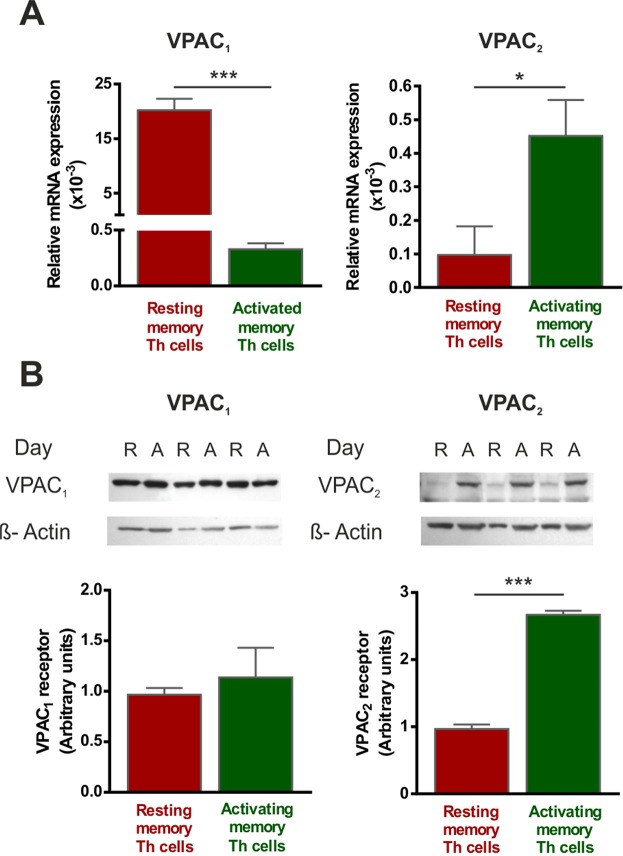
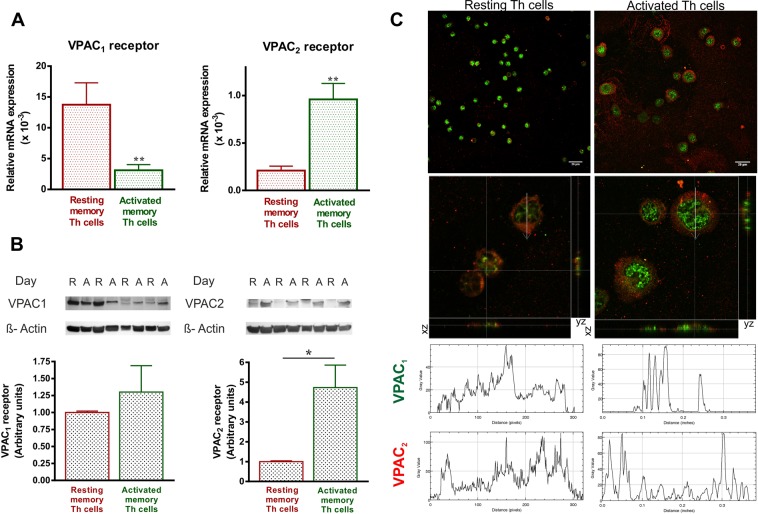
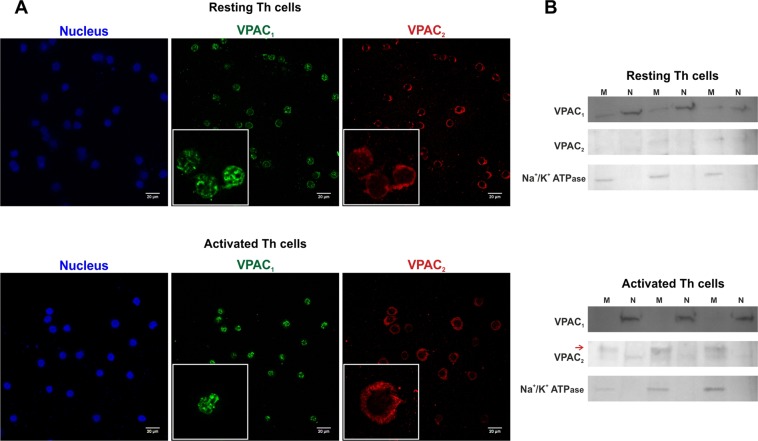
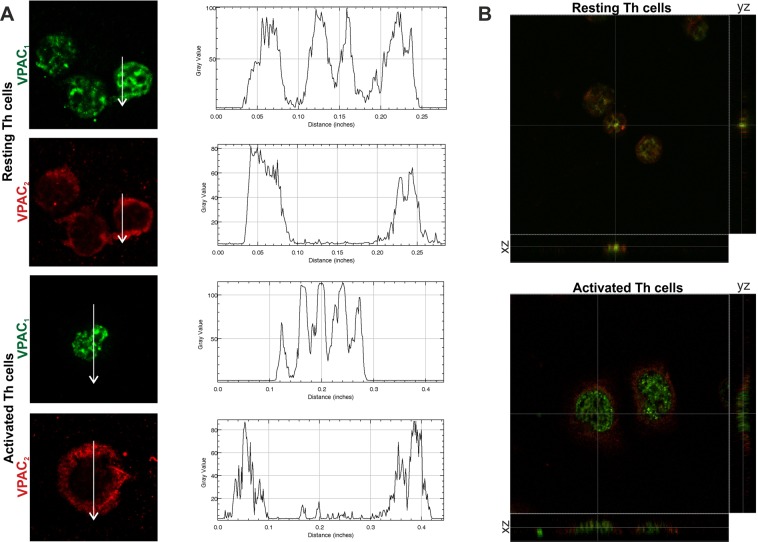
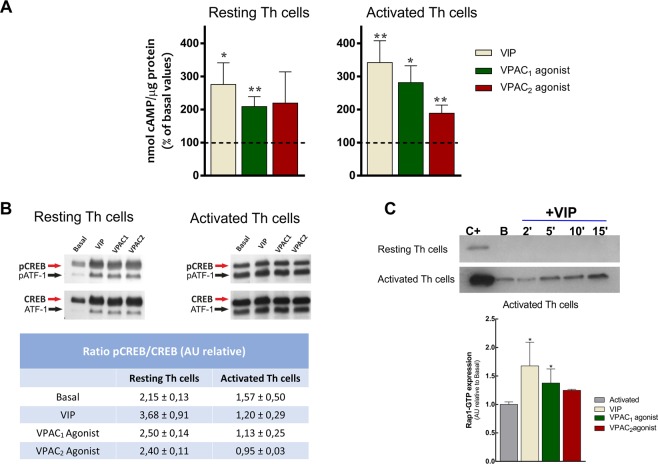
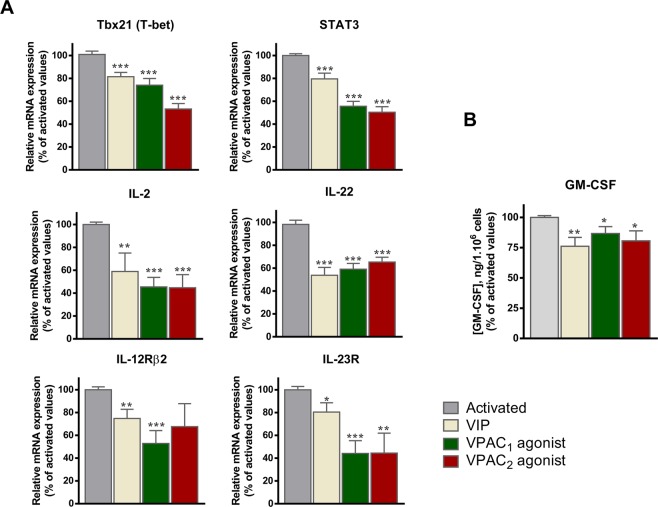
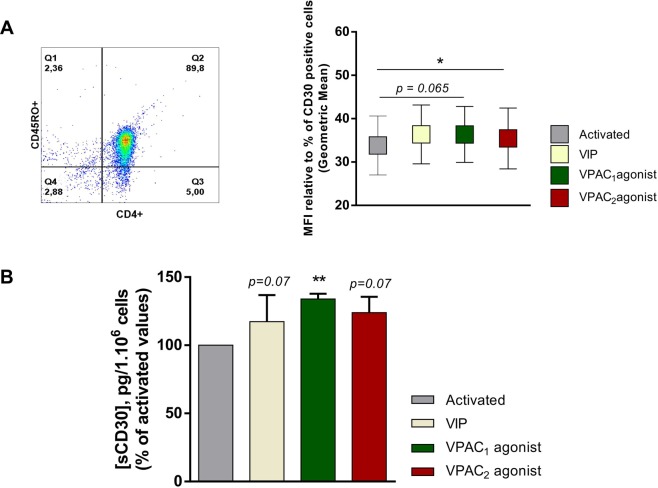
Vasoactive Intestinal Peptide (VIP) is an important immunomodulator of CD4 cells in normal and pathological conditions, which exerts its anti-inflammatory and immunomodulatory actions through VPAC receptors, VPAC and VPAC. Only a decrease in the expression of VPAC mRNA on Th cells upon activation has been reported. Thus, the deepening in the knowledge of the behavior of these receptors may contribute to the design of new therapies based on their activation and/or blockade. In this study, we describe the expression pattern, cellular location and functional role of VIP receptors during the activation of human Th cells in healthy conditions and in early arthritis (EA). The protein expression pattern of VPAC did not change with the activation of Th lymphocytes, whereas VPAC was up-regulated. In resting cells, VPAC was located on the plasma membrane and nucleus, whereas it only appeared in the nucleus in activated cells. VPAC was always found in plasma membrane location. VIP receptors signaled through a PKA-dependent pathway in both conditions, and also by a PKA-independent pathway in activated cells. Both receptors exhibit a potent immunomodulatory capacity by controlling the pathogenic profile and the activation markers of Th cells. These results highlight a novel translational view in inflammatory/autoimmune diseases.
血管活性肠肽(VIP)是正常和病理条件下 CD4 细胞的重要免疫调节剂,通过 VPAC 受体、VPAC 和 VPAC 发挥其抗炎和免疫调节作用。据报道,只有在 Th 细胞激活时 VPAC mRNA 的表达减少。因此,加深对这些受体行为的认识可能有助于基于其激活和/或阻断设计新的治疗方法。在这项研究中,我们描述了 VIP 受体在健康条件和早期关节炎(EA)下人类 Th 细胞激活过程中的表达模式、细胞位置和功能作用。VPAC 的蛋白表达模式没有随着 Th 淋巴细胞的激活而改变,而 VPAC 则上调。在静止细胞中,VPAC 位于质膜和核内,而在激活的细胞中仅出现在核内。VPAC 始终位于质膜位置。VIP 受体在两种情况下均通过 PKA 依赖性途径以及激活细胞中的 PKA 非依赖性途径发出信号。两种受体通过控制 Th 细胞的致病谱和激活标志物来发挥强大的免疫调节能力。这些结果突出了炎症/自身免疫性疾病的一种新的转化观点。