Samborski Sylwester, Gliszczynski Adrian, Rzeczkowski Jakub, Wiacek Nina
Department of Applied Mechanics, Faculty of Mechanical Engineering, Lublin University of Technology, Nadbystrzycka 36, 20-618 Lublin, Poland.
Department of Strength of Materials, Faculty of Mechanical Engineering, Lodz University of Technology, Stefanowskiego 1/15, 90-924 Lodz, Poland.
Materials (Basel). 2019 May 16;12(10):1607. doi: 10.3390/ma12101607.
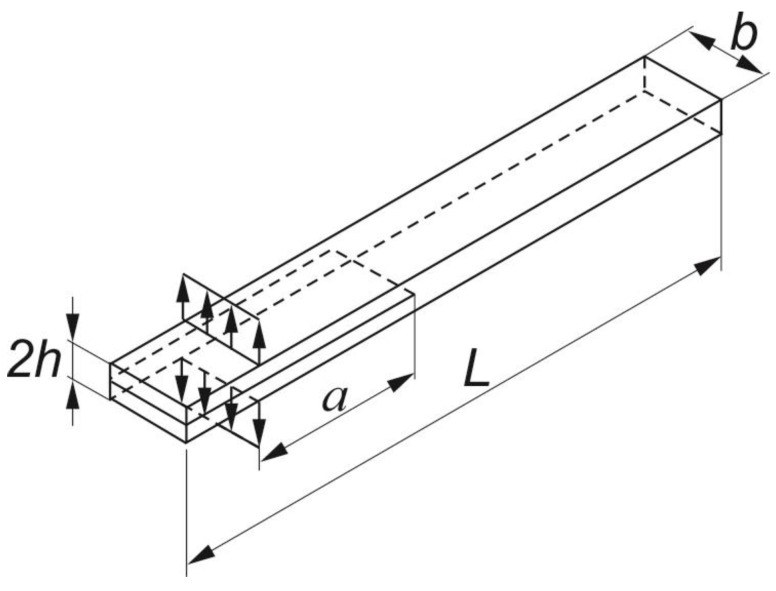
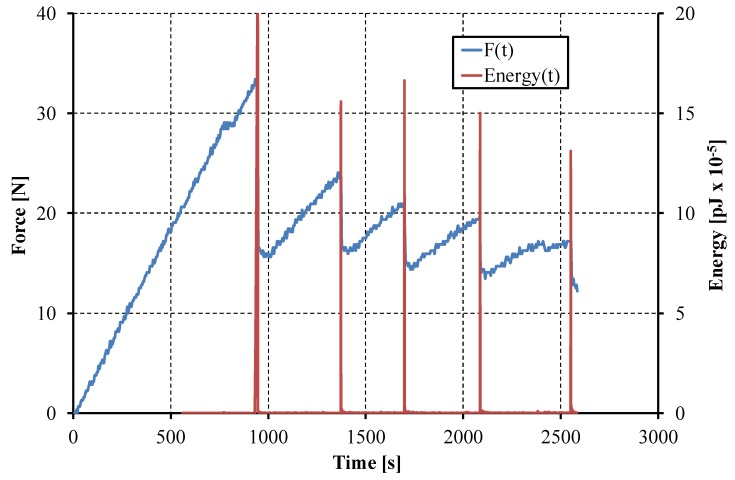
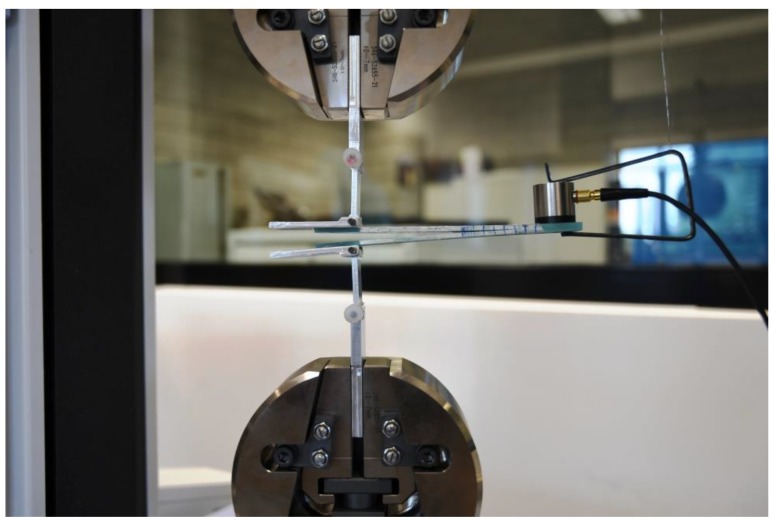
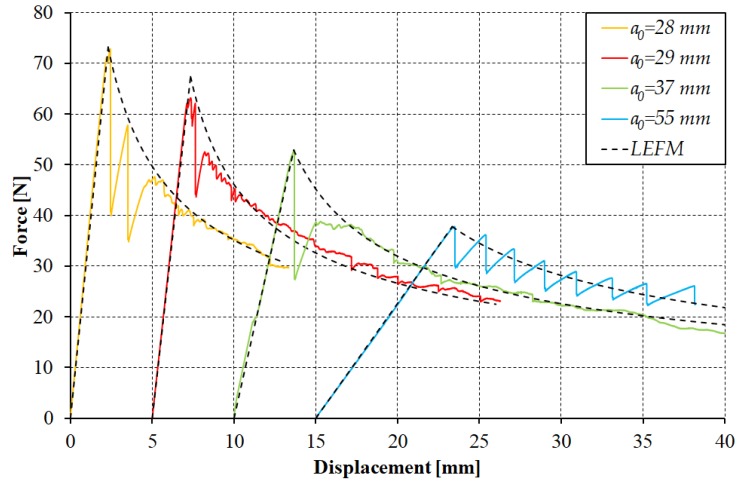
The paper presents experimental tests of unidirectional double cantilever beams made of a glass fiber reinforced (GFRP) laminate. The critical value of the strain energy release rate (c-SERR or ), i.e., the mode I fracture toughness of the considered material was determined with three different methods: the compliance calibration method (CC), the modified compliance calibration method (MCC), and the corrected beam theory (CBT). Due to the common difficulties in precise definition of delamination initiation force, the Acoustic Emission (AE) technique was applied as an auxiliary source of data. The failure process was monitored, as well, in order to detect and identify different damage phenomena. This was achieved through a detailed analysis of the raw AE signal subjected to fast Fourier transformation (FFT). The frequency spectra revealed three dominating frequency bands with the basic one described by the average value of 63.1 kHz, revealing intensive delamination processes. This way, not only precise values of the critical SERR, but also the information on damage evolution during propagation of delamination, was obtained.
本文介绍了由玻璃纤维增强(GFRP)层压板制成的单向双悬臂梁的实验测试。采用三种不同方法确定了应变能释放率的临界值(c-SERR或 ),即所考虑材料的I型断裂韧性:柔度校准法(CC)、改进柔度校准法(MCC)和修正梁理论(CBT)。由于在精确界定分层起始力方面存在常见困难,采用声发射(AE)技术作为辅助数据来源。同时监测了失效过程,以检测和识别不同的损伤现象。这是通过对经过快速傅里叶变换(FFT)的原始AE信号进行详细分析来实现的。频谱显示出三个主要频带,其中基本频带的平均值为63.1 kHz,表明存在强烈的分层过程。通过这种方式,不仅获得了临界SERR的精确值,还获得了分层扩展过程中损伤演化的信息。