Meyer-Dombard D'Arcy R, Osburn Magdelena R, Cardace Dawn, Arcilla Carlo A
Department of Earth and Environmental Sciences, The University of Illinois at Chicago, Chicago, IL, United States.
Department of Earth and Planetary Sciences, Northwestern University, Evanston, IL, United States.
Front Microbiol. 2019 May 1;10:761. doi: 10.3389/fmicb.2019.00761. eCollection 2019.
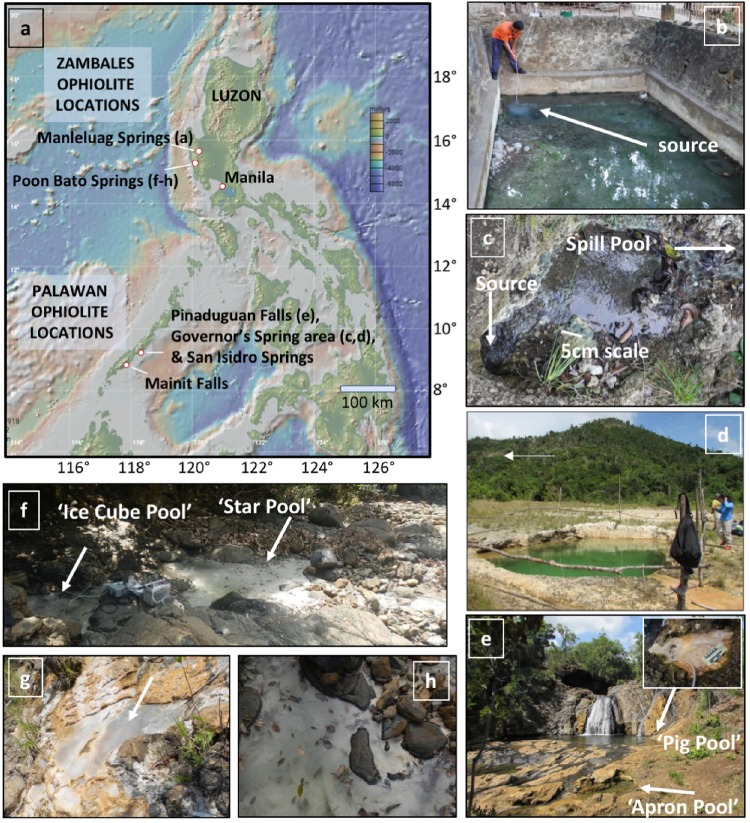
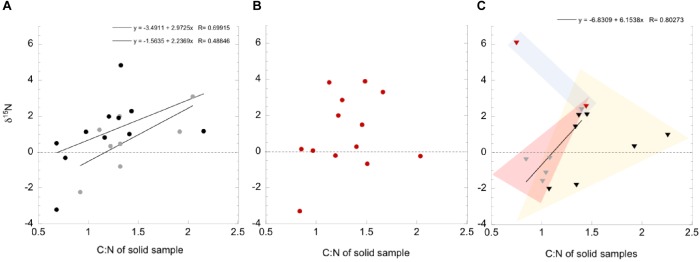
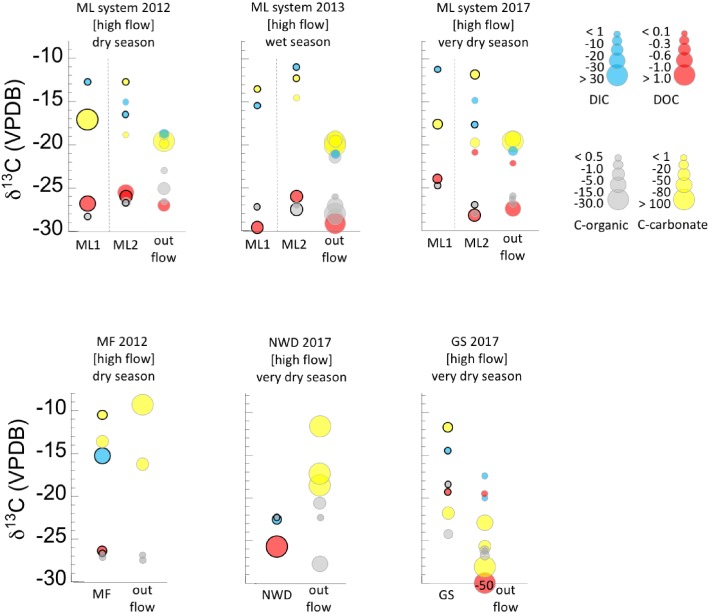
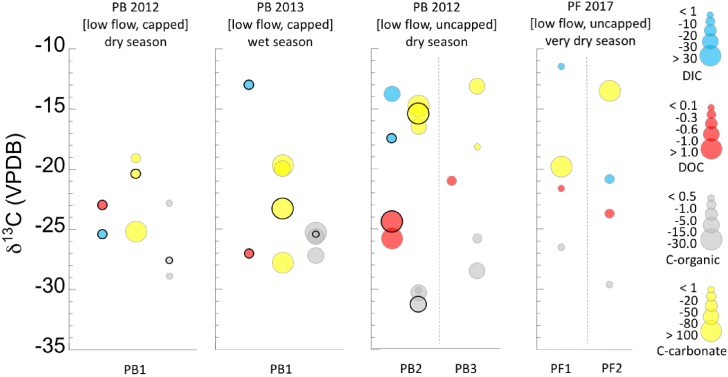
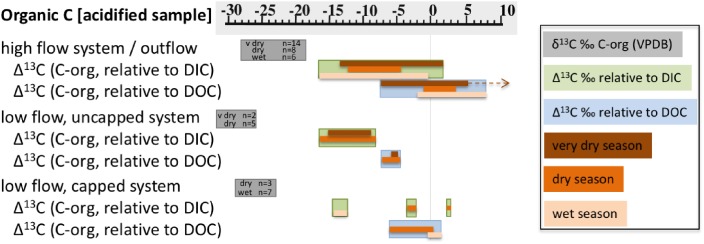
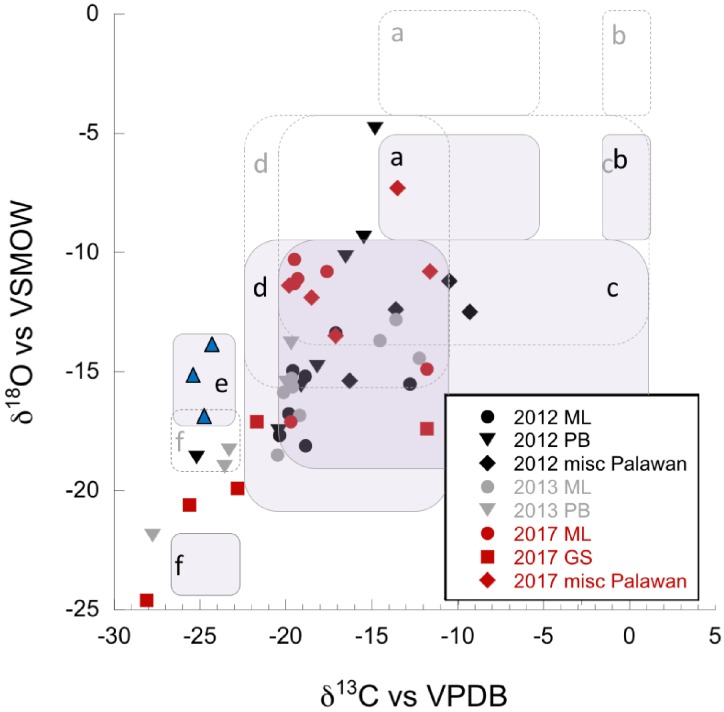
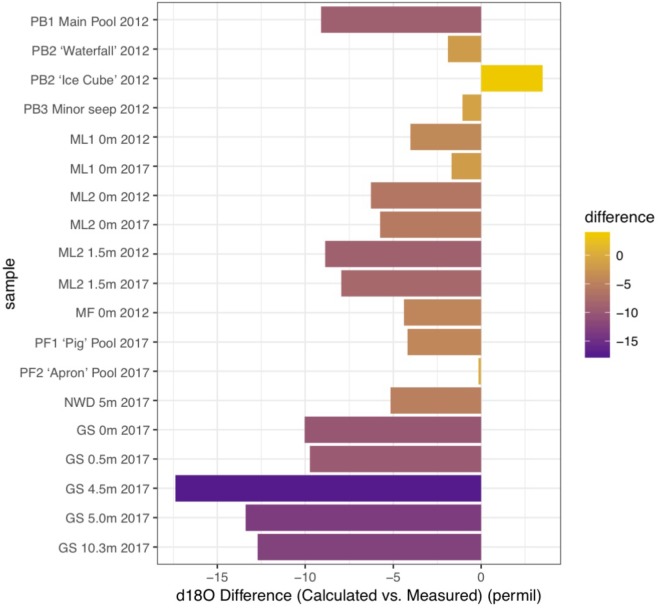
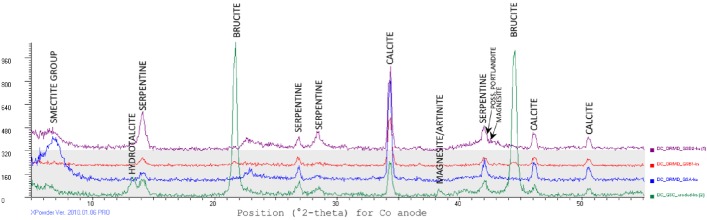
Springs hosted in ophiolites are often affected by serpentinization processes. The characteristically low DIC and high CH and H gas concentrations of serpentinizing ecosystems have led to interest in hydrogen based metabolisms in these subsurface biomes. However, a true subsurface signature can be difficult to identify in surface expressions such as serpentinizing springs. Here, we explore carbon and nitrogen resources in serpentinization impacted springs in the tropical climate of the Zambales and Palawan ophiolites in the Philippines, with a focus on surface vs. subsurface processes and exogenous vs. endogenous nutrient input. Isotopic signatures in spring fluids, biomass, and carbonates were examined to identify sources and sinks of carbon and nitrogen, carbonate geochemistry, and the effect of seasonal precipitation. Seasonality affected biomass production in both low flow and high flow spring systems. Changes in meteorological precipitation affected δC and δC values of the spring fluids, which reflected seasonal gain/loss of atmospheric influence and changes in exogenous DOC input. The primary carbon source in high flow systems was variable, with DOC contributing to biomass in many springs, and a mix of DIC and carbonates contributing to biomass in select locations. However, primary carbon resources in low flow systems may depend more on endogenous than exogenous carbon, even in high precipitation seasons. Isotopic evidence for nitrogen fixation was identified, with seasonal influence only seen in low flow systems. Carbonate formation was found to occur as a mixture of recrystallization/recycling of older carbonates and rapid mineral precipitation (depending on the system), with highly δC and δO depleted carbonates occurring in many locations. Subsurface signatures (e.g., low DOC influence on C) were most apparent in the driest seasons and lowest flow systems, indicating locations where metabolic processes divorced from surface influences (including hydrogen based metabolisms) are most likely to be occurring.
蛇绿岩中的泉水常常受到蛇纹石化过程的影响。蛇纹石化生态系统中典型的低溶解无机碳(DIC)以及高甲烷(CH)和氢气(H₂)浓度,引发了人们对这些地下生物群落中基于氢的新陈代谢的兴趣。然而,在诸如蛇纹石化泉水这样的地表表现形式中,很难识别出真正的地下特征。在这里,我们探索了菲律宾三描礼士和巴拉望蛇绿岩热带气候中受蛇纹石化影响的泉水的碳和氮资源,重点关注地表与地下过程以及外源与内源养分输入。对泉水流体、生物量和碳酸盐中的同位素特征进行了研究,以确定碳和氮的来源与汇、碳酸盐地球化学以及季节性降水的影响。季节性影响了低流量和高流量泉水系统中的生物量生产。气象降水的变化影响了泉水流体的δ¹³C和δ¹⁸C值,这反映了大气影响的季节性增减以及外源溶解有机碳(DOC)输入的变化。高流量系统中的主要碳源各不相同,许多泉水中的DOC为生物量做出了贡献,而在特定地点,溶解无机碳和碳酸盐的混合物为生物量做出了贡献。然而,即使在高降水季节,低流量系统中的主要碳资源可能更多地依赖内源碳而非外源碳。发现了固氮的同位素证据,仅在低流量系统中观察到季节性影响。发现碳酸盐的形成是较老碳酸盐的重结晶/再循环与快速矿物沉淀(取决于系统)的混合过程,许多地点出现了碳和氧同位素高度亏损的碳酸盐。地下特征(例如,低DOC对碳的影响)在最干燥的季节和最低流量的系统中最为明显,表明最有可能发生与地表影响(包括基于氢的新陈代谢)分离的代谢过程的地点。