Allen Paul, Moore Holly, Corcoran Cheryl M, Gilleen James, Kozhuharova Petya, Reichenberg Avi, Malaspina Dolores
Department of Psychology, University of Roehampton, London, United Kingdom.
Department of Psychiatry, Icahn School of Medicine at Mount Sinai, New York, NY, United States.
Front Psychiatry. 2019 May 13;10:298. doi: 10.3389/fpsyt.2019.00298. eCollection 2019.
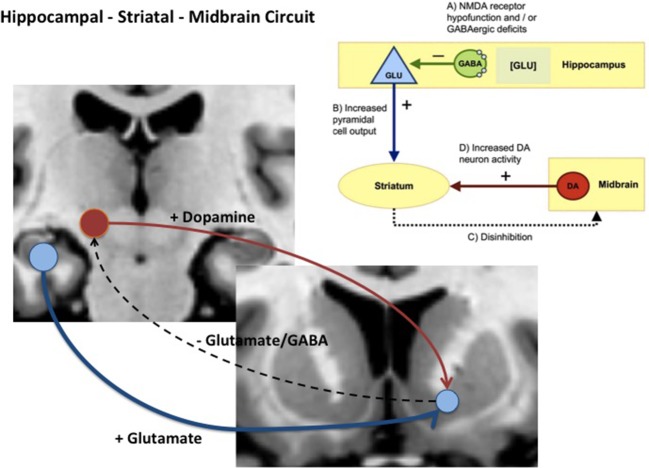
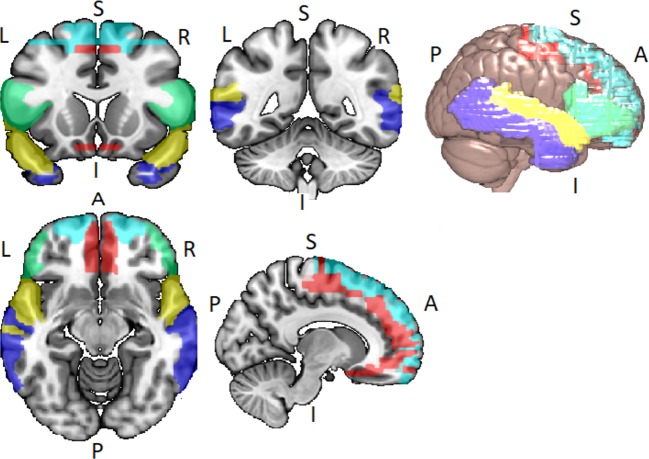
Clinical high-risk (CHR) individuals have been increasingly utilized to investigate the prodromal phases of psychosis and progression to illness. Research has identified medial and lateral temporal lobe abnormalities in CHR individuals. Dysfunction in the medial temporal lobe, particularly the hippocampus, is linked to dysregulation of glutamate and dopamine a hippocampal-striatal-midbrain network that may lead to aberrant signaling of salience underpinning the . Similarly, lateral temporal dysfunction may be linked to the observed in the CHR stage. Here, we summarize the significance of these neurobiological findings in terms of emergent psychotic symptoms and conversion to psychosis in CHR populations. We propose key questions for future work with the aim to identify the neural mechanisms that underlie the development of psychosis.
临床高危(CHR)个体越来越多地被用于研究精神病的前驱期和疾病进展。研究已确定CHR个体存在内侧和外侧颞叶异常。内侧颞叶功能障碍,尤其是海马体功能障碍,与谷氨酸和多巴胺的调节异常有关,这是一个海马体-纹状体-中脑网络,可能导致突显信号异常,从而成为精神病的基础。同样,外侧颞叶功能障碍可能与CHR阶段观察到的[此处原文缺失相关内容]有关。在此,我们总结了这些神经生物学发现对于CHR人群中出现的精神病性症状及转化为精神病的意义。我们提出了未来研究的关键问题,旨在确定精神病发展的神经机制。