La Vignera Sandro, Cannarella Rossella, Duca Ylenia, Barbagallo Federica, Burgio Giovanni, Compagnone Michele, Di Cataldo Andrea, Calogero Aldo E, Condorelli Rosita A
Section of Endocrinology, Department of Clinical and Experimental Medicine, University of Catania, Catania, Italy.
Unit of Pediatric Hematology and Oncology, Department of Clinical and Experimental Medicine, University of Catania, Catania, Italy.
Front Endocrinol (Lausanne). 2019 May 7;10:264. doi: 10.3389/fendo.2019.00264. eCollection 2019.
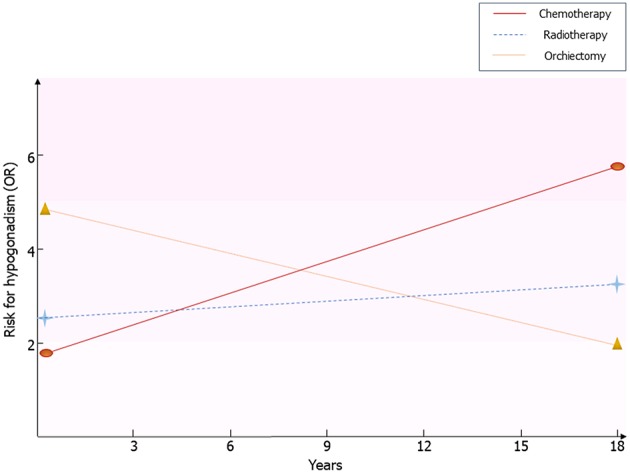
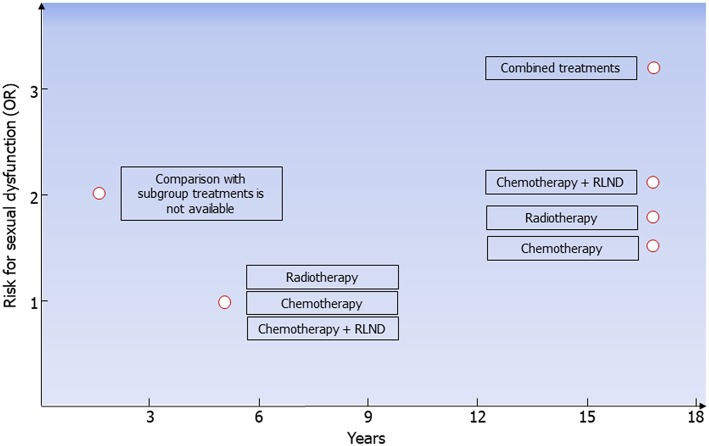
Testicular tumor is the most common malignancy in men of reproductive age. According to the tumor histology and staging, current treatment options include orchiectomy alone or associated with adjuvant chemo- and/or radiotherapy. Although these treatments have considerably raised the percentage of survivors compared to the past, they have been identified as risk factors for testosterone deficiency and sexual dysfunction in this subgroup of men. Male hypogonadism, in turn, predisposes to the development of metabolic and cardiovascular impairment that negatively affects general health. Accordingly, longitudinal studies report a long-term risk for cardiovascular diseases after radiotherapy and/or cisplatin-based chemotherapy in testicular tumor survivors. The aim of this review was to summarize the current evidence on hypogonadism and sexual dysfunction in long-term cancer survivors, including the epidemiology of cardiovascular and metabolic disorders, to increase the awareness that serum testosterone levels, sexual function, and general health should be evaluated during the endocrinological management of these patients.
睾丸肿瘤是育龄男性中最常见的恶性肿瘤。根据肿瘤组织学和分期,目前的治疗选择包括单纯睾丸切除术或联合辅助化疗和/或放疗。尽管与过去相比,这些治疗方法显著提高了生存率,但它们已被确定为该亚组男性睾酮缺乏和性功能障碍的危险因素。反过来,男性性腺功能减退易导致代谢和心血管损害的发生,从而对整体健康产生负面影响。因此,纵向研究报告称,睾丸肿瘤幸存者接受放疗和/或基于顺铂的化疗后存在心血管疾病的长期风险。本综述的目的是总结长期癌症幸存者性腺功能减退和性功能障碍的现有证据,包括心血管和代谢紊乱的流行病学,以提高人们的认识,即在这些患者的内分泌管理过程中应评估血清睾酮水平、性功能和整体健康状况。