Department of Pathology, Microbiology and Immunology, School of Medicine, University of South Carolina, Columbia, SC, United States.
Front Immunol. 2019 May 10;10:1049. doi: 10.3389/fimmu.2019.01049. eCollection 2019.
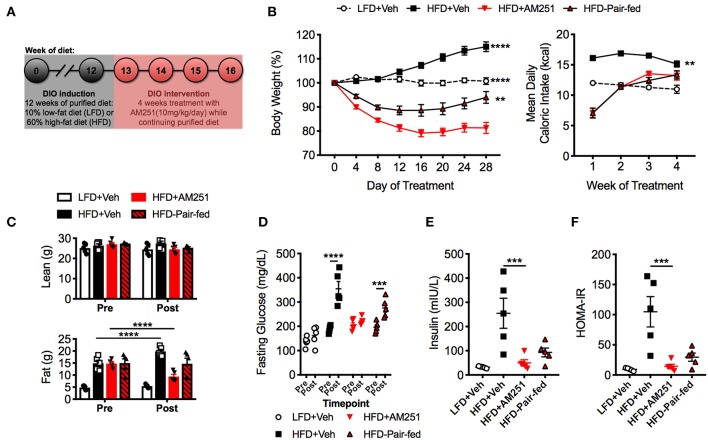
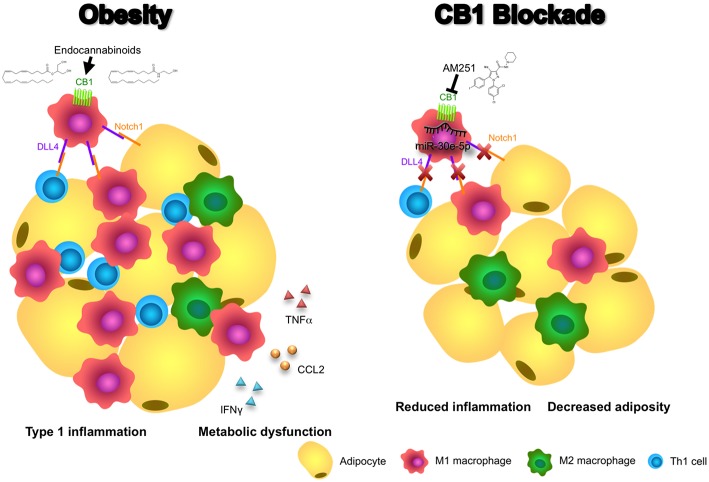
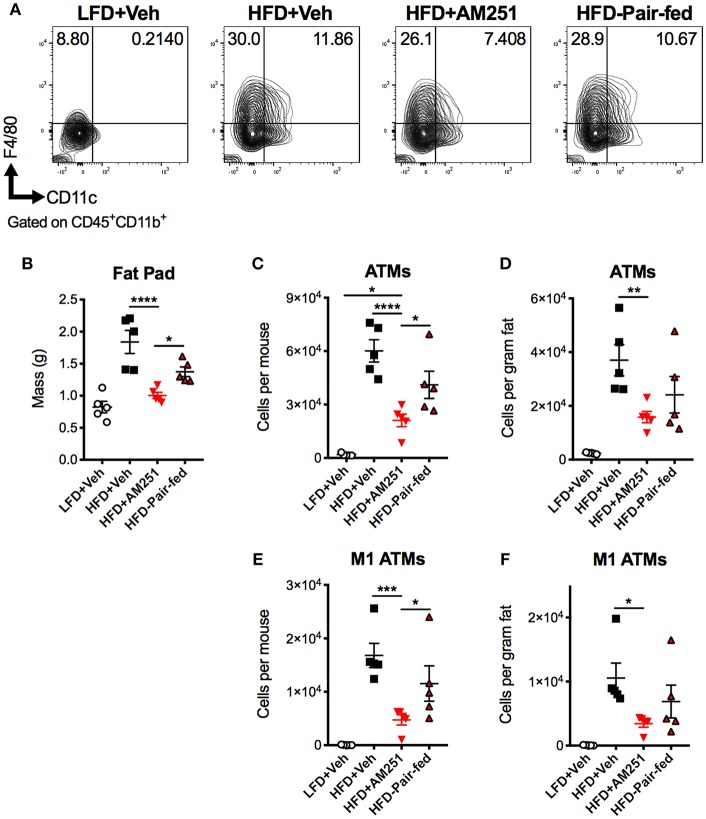
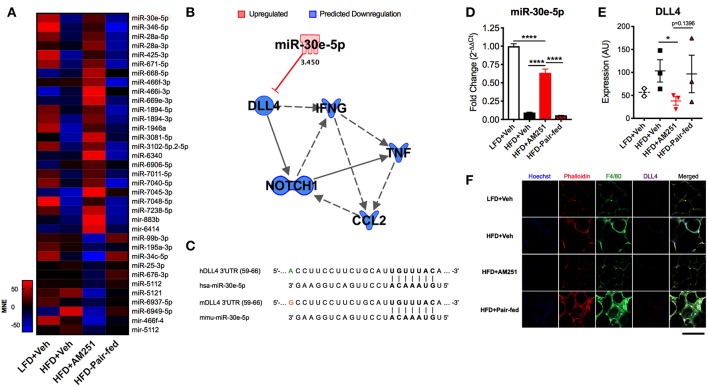
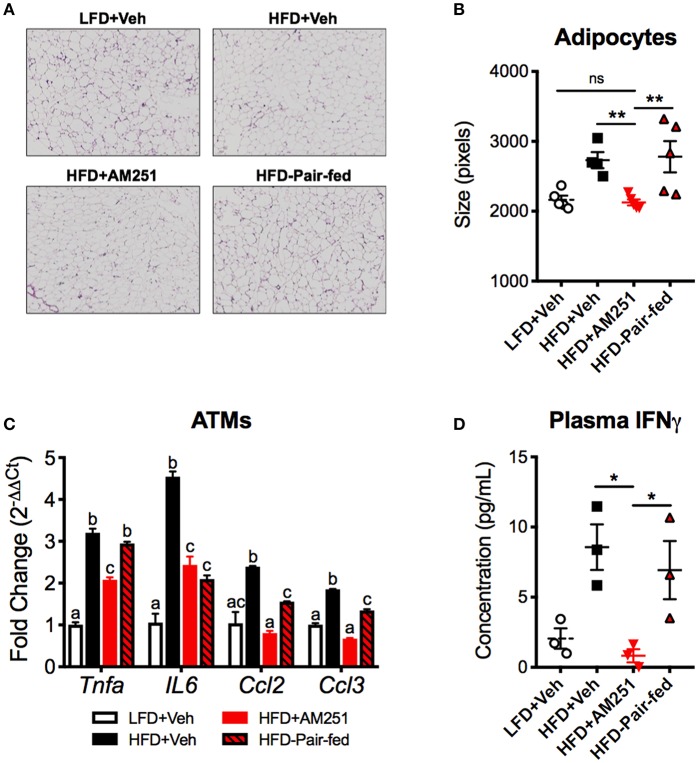
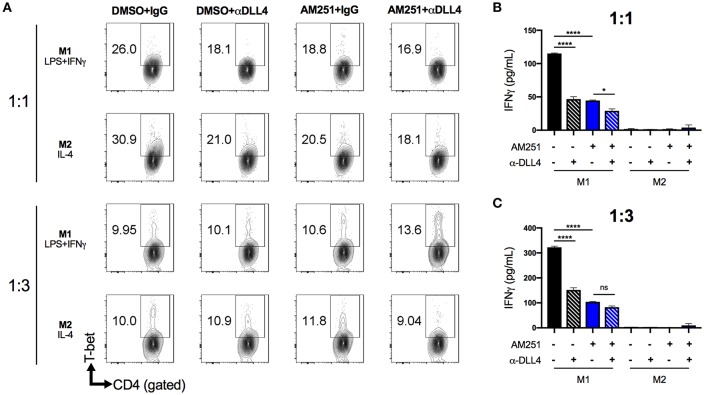
Obesity is characterized by chronic low-grade inflammation that contributes to development of cardiometabolic disorders. Cannabinoid receptor 1 (CB1) antagonists attenuate diet-induced obesity (DIO) and related inflammation, although the precise anti-inflammatory mechanisms involved have not been fully explored. In the current study we used a mouse model of DIO intervention to determine the microRNA (miRNA, miR)-mediated anti-obesity and anti-inflammatory effects of the CB1 antagonist, AM251. DIO mice that were fed high-fat diet (HFD) for 12 weeks were treated with AM251 (10 mg/kg) for an additional 4 weeks. HFD + AM251 mice experienced rapid and prolonged weight loss and reduced inflammatory M1 adipose tissue macrophage (ATM) infiltration. To investigate miRNA-mediated regulation of ATMs, F4/80+ cells from stromal vascular fractions (SVF) of epididymal fat were subjected to miR microarray analysis. Several miRs were differentially expressed in AM251-treated mice that were independent of calorie restriction. Prominently, miR-30e-5p was upregulated in ATMs from HFD + AM251 mice while the miR-30e-5p target, DLL4, was downregulated. Consistent with a decrease in DLL4-Notch signaling, fat storage and pro-inflammatory cytokine/chemokine expression was reduced following AM251 treatment. Furthermore, we found that AM251-treated macrophages can suppress DLL4-mediated Th1 polarization in CD4+ T cells. Together these data demonstrate that blocking CB1 receptors leads to upregulation of miR-30e-5p and down regulation of DLL4 in ATMs, which in turn suppress DLL4-Notch signaling-induced polarization of inflammatory Th1 cells and adipocyte energy storage. This combined effect of ATMs and T cells leads to an anti-inflammatory state and attenuation of DIO. These data support therapeutic potential of miR-30 in the treatment of cardiometabolic disorders.
肥胖的特征是慢性低度炎症,这有助于代谢紊乱的发生。大麻素受体 1 (CB1) 拮抗剂可减轻饮食诱导的肥胖 (DIO) 和相关炎症,尽管涉及的确切抗炎机制尚未完全探索。在目前的研究中,我们使用 DIO 干预的小鼠模型来确定 CB1 拮抗剂 AM251 的 miRNA (miR,miR)-介导的抗肥胖和抗炎作用。用高脂肪饮食 (HFD) 喂养 12 周的 DIO 小鼠再用 AM251 (10mg/kg) 治疗 4 周。HFD+AM251 小鼠体重迅速且持续减轻,炎症性 M1 脂肪组织巨噬细胞 (ATM) 浸润减少。为了研究 miR 介导的 ATM 调节,从附睾脂肪的基质血管部分 (SVF) 中的 F4/80+细胞进行 miR 微阵列分析。在 AM251 处理的小鼠中,几种 miR 表达不同,且与热量限制无关。特别地,miR-30e-5p 在 HFD+AM251 小鼠的 ATMs 中上调,而 miR-30e-5p 的靶标 DLL4 下调。与 DLL4-Notch 信号的减少一致,在 AM251 处理后脂肪储存和促炎细胞因子/趋化因子的表达减少。此外,我们发现 AM251 处理的巨噬细胞可以抑制 CD4+T 细胞中 DLL4 介导的 Th1 极化。总之,这些数据表明,阻断 CB1 受体导致 ATMs 中 miR-30e-5p 的上调和 DLL4 的下调,进而抑制 DLL4-Notch 信号诱导的炎症性 Th1 细胞和脂肪细胞能量储存的极化。这种 ATMs 和 T 细胞的综合作用导致抗炎状态和 DIO 的减轻。这些数据支持 miR-30 在治疗代谢紊乱中的治疗潜力。