‡University of Hohenheim, Institute of Molecular Plant Physiology, 70593 Stuttgart, Germany.
‡University of Hohenheim, Institute of Molecular Plant Physiology, 70593 Stuttgart, Germany.
Mol Cell Proteomics. 2019 Aug;18(8):1526-1542. doi: 10.1074/mcp.RA119.001367. Epub 2019 May 28.
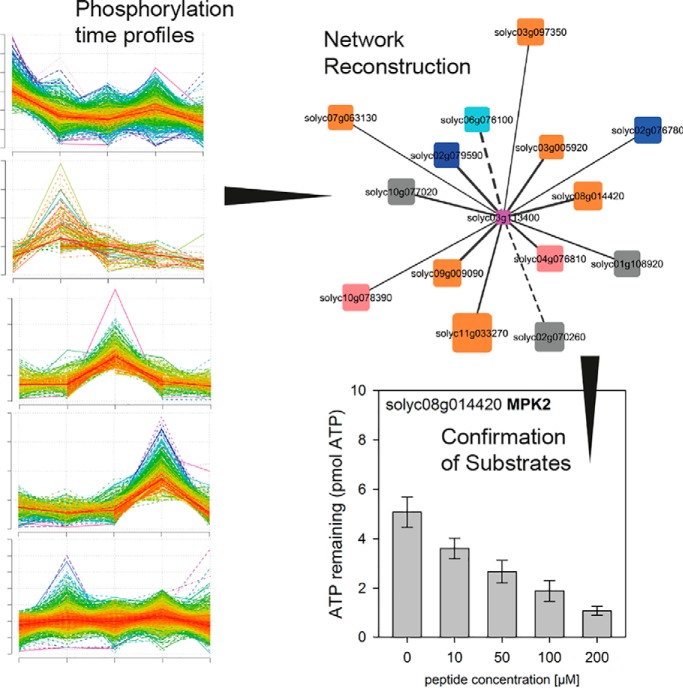
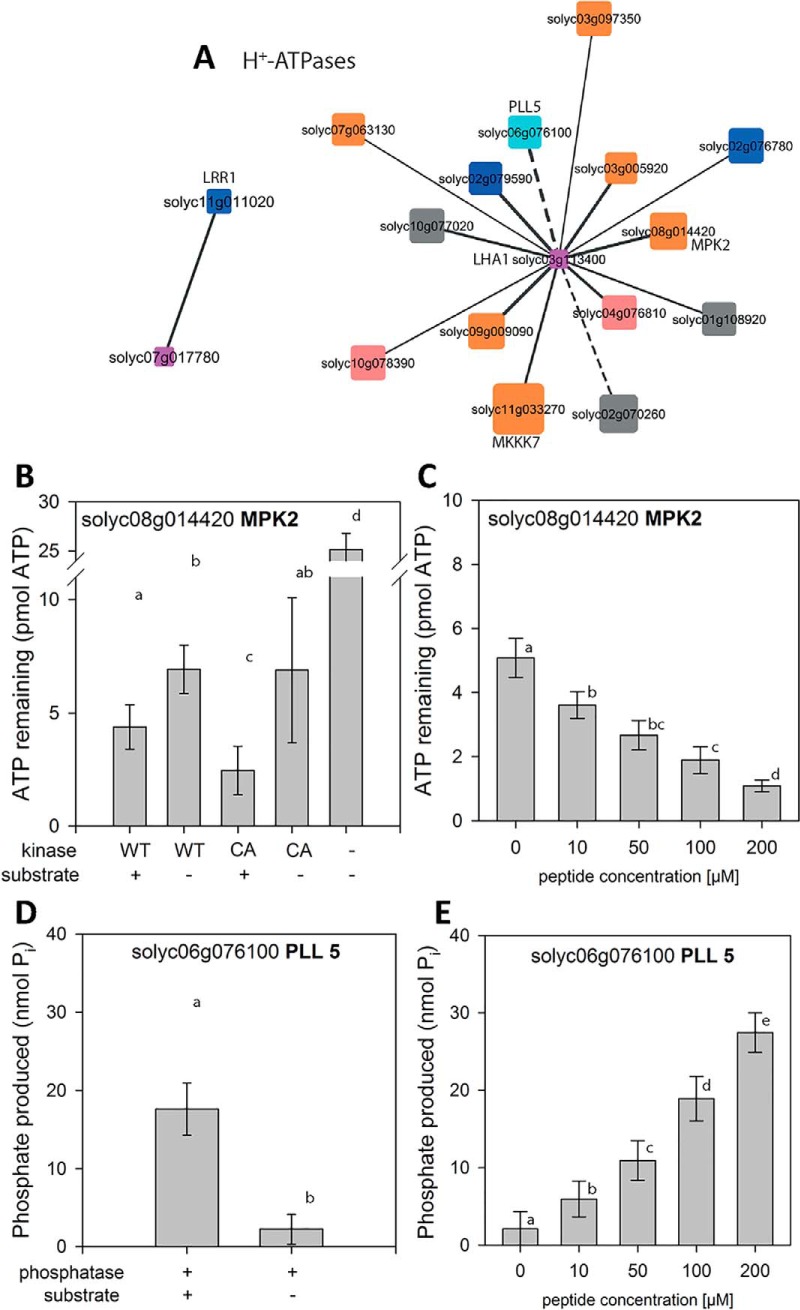
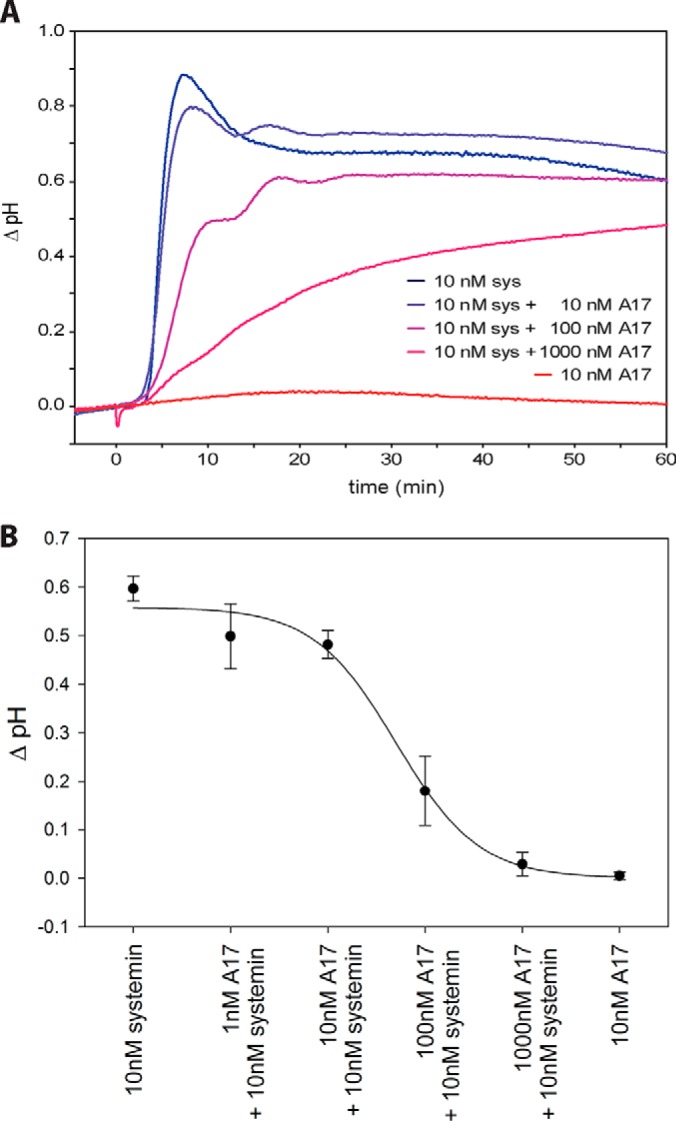
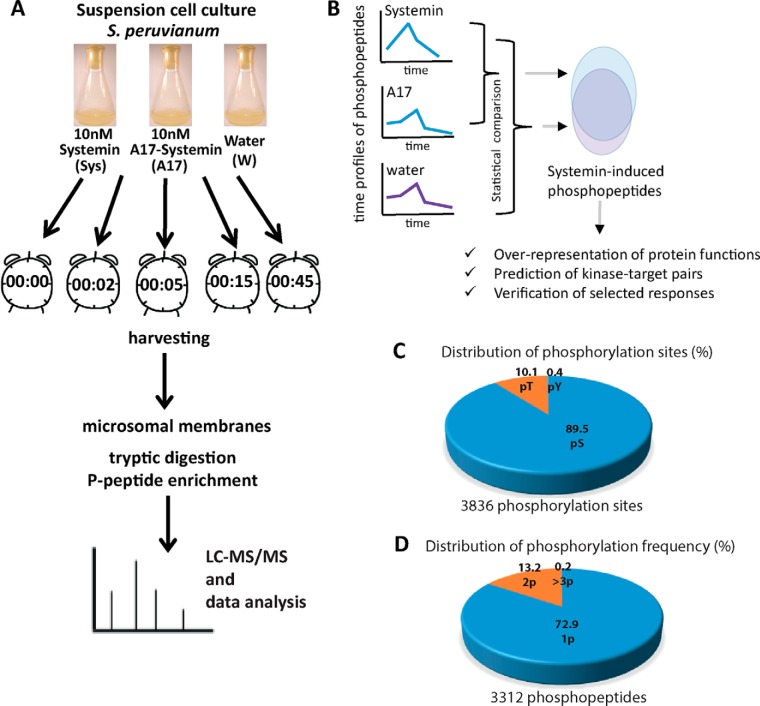
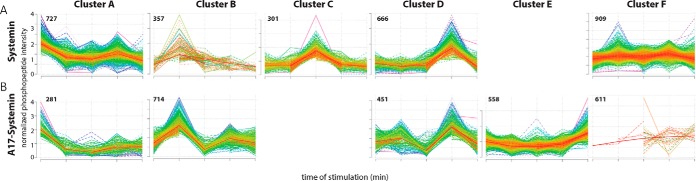
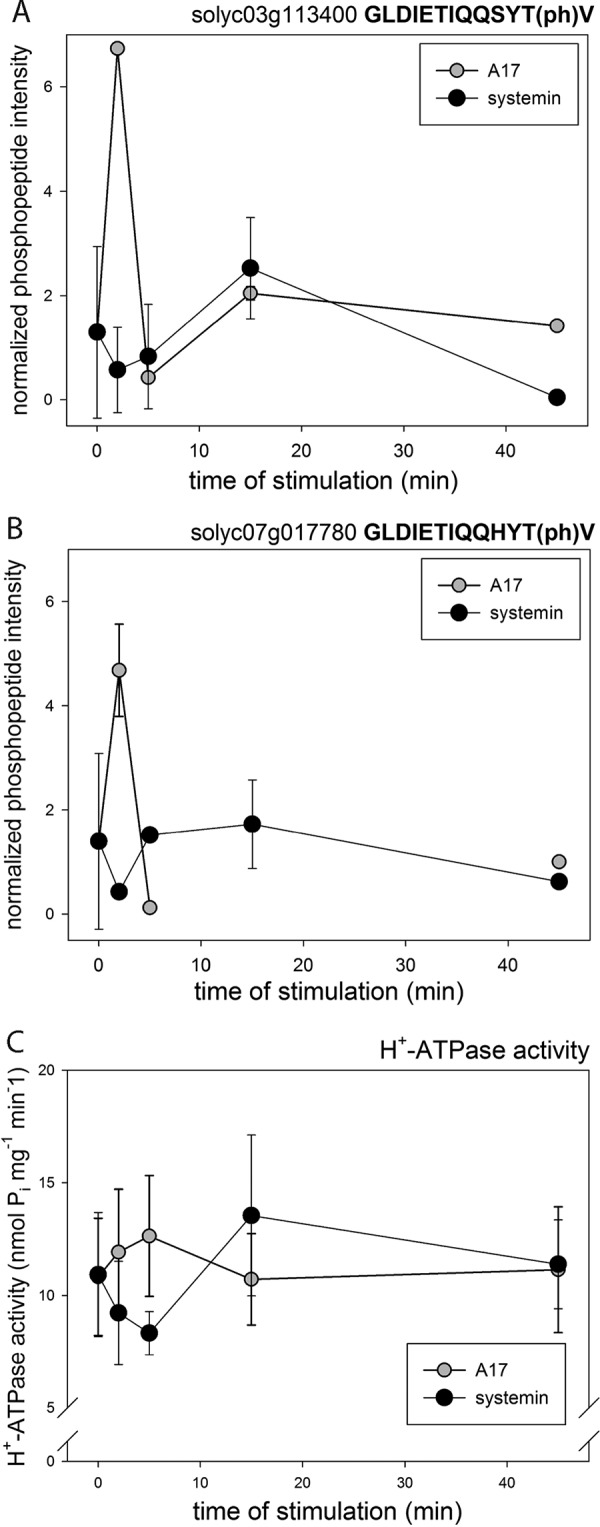
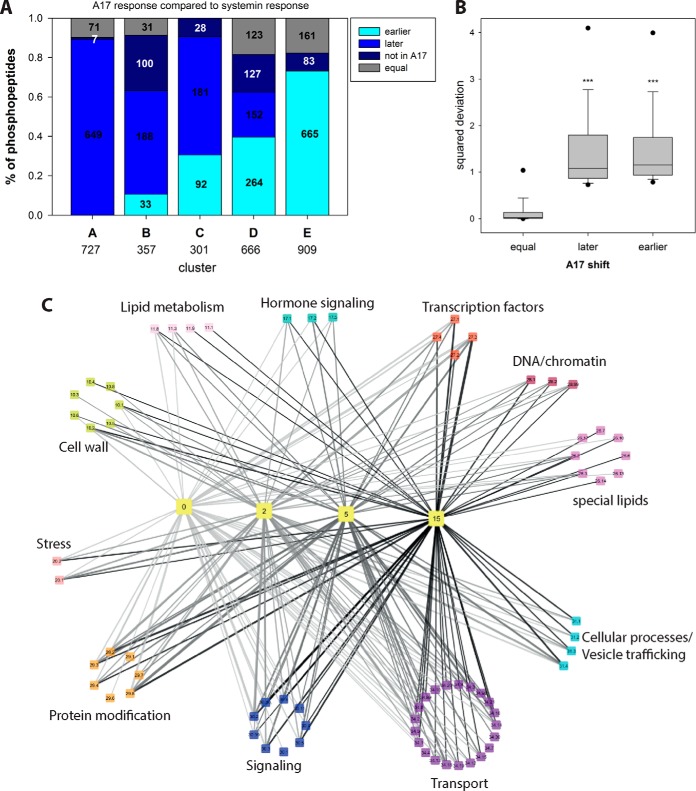
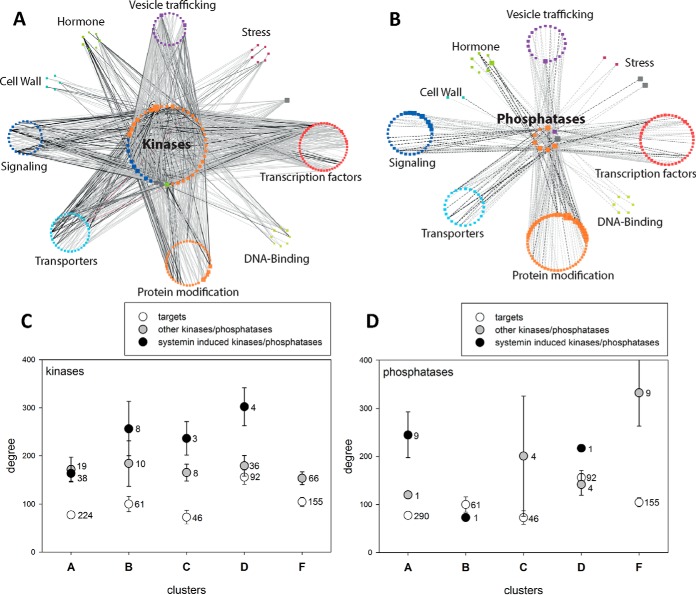
Systemin is a small peptide with important functions in plant wound response signaling. Although the transcriptional responses of systemin action are well described, the signaling cascades involved in systemin perception and signal transduction at the protein level are poorly understood. Here we used a tomato cell suspension culture system to profile phosphoproteomic responses induced by systemin and its inactive Thr17Ala analog, allowing us to reconstruct a systemin-specific kinase/phosphatase signaling network. Our time-course analysis revealed early phosphorylation events at the plasma membrane, such as dephosphorylation of H-ATPase, rapid phosphorylation of NADPH-oxidase and Ca-ATPase. Later responses involved transient phosphorylation of small GTPases, vesicle trafficking proteins and transcription factors. Based on a correlation analysis of systemin-induced phosphorylation profiles, we predicted substrate candidates for 44 early systemin-responsive kinases, which includes receptor kinases and downstream kinases such as MAP kinases, as well as nine phosphatases. We propose a regulatory module in which H-ATPase LHA1 is rapidly de-phosphorylated at its C-terminal regulatory residue T955 by phosphatase PLL5, resulting in the alkalization of the growth medium within 2 mins of systemin treatment. We found the MAP kinase MPK2 to have increased phosphorylation level at its activating TEY-motif at 15 min post-treatment. The predicted interaction of MPK2 with LHA1 was confirmed by kinase assays, suggesting that the H-ATPase LHA1 is re-activated by MPK2 later in the systemin response. Our data set provides a resource of proteomic events involved in systemin signaling that will be valuable for further in-depth functional studies in elucidation of systemin signaling cascades.
系统素是一种在植物伤口反应信号中具有重要功能的小肽。尽管系统素作用的转录反应得到了很好的描述,但在蛋白质水平上参与系统素感知和信号转导的信号级联仍知之甚少。在这里,我们使用番茄细胞悬浮培养系统来分析系统素及其无活性 Thr17Ala 类似物诱导的磷酸蛋白质组反应,使我们能够重建一个特异性的系统素激酶/磷酸酶信号网络。我们的时间进程分析揭示了质膜上的早期磷酸化事件,如 H-ATPase 的去磷酸化、NADPH-氧化酶和 Ca-ATPase 的快速磷酸化。随后的反应涉及小 GTPases、囊泡运输蛋白和转录因子的短暂磷酸化。基于系统素诱导的磷酸化图谱的相关分析,我们预测了 44 个早期系统素反应激酶的底物候选物,其中包括受体激酶和下游激酶,如 MAP 激酶,以及 9 种磷酸酶。我们提出了一个调控模块,其中 H-ATPase LHA1 在其 C 端调节残基 T955 上被磷酸酶 PLL5 迅速去磷酸化,导致在系统素处理后 2 分钟内生长介质的碱化。我们发现 MAP 激酶 MPK2 在其激活的 TEY 基序上的磷酸化水平在处理后 15 分钟增加。激酶测定证实了 MPK2 与 LHA1 的预测相互作用,表明在系统素反应后期,H-ATPase LHA1 被 MPK2 重新激活。我们的数据提供了一个与系统素信号相关的蛋白质组事件的资源,这对于进一步深入的功能研究阐明系统素信号级联将是有价值的。