Kasam Rajesh K, Reddy Geereddy B, Jegga Anil G, Madala Satish K
Department of Pediatrics, College of Medicine, University of Cincinnati, Cincinnati, OH, United States.
Division of Pulmonary Medicine, Cincinnati Children's Hospital Medical Center, Cincinnati, OH, United States.
Front Pharmacol. 2019 May 17;10:532. doi: 10.3389/fphar.2019.00532. eCollection 2019.
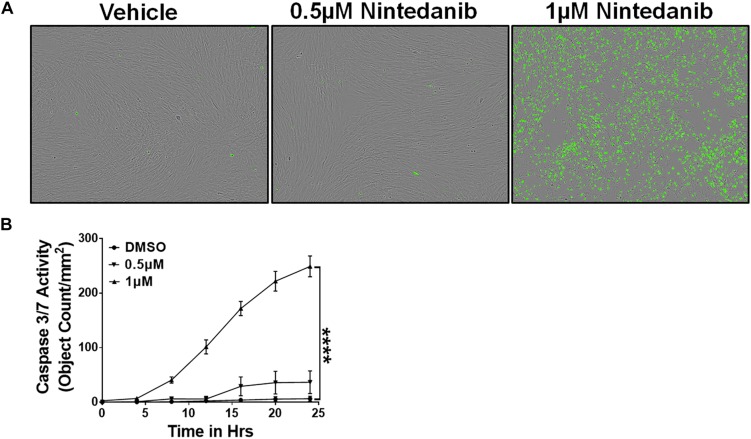
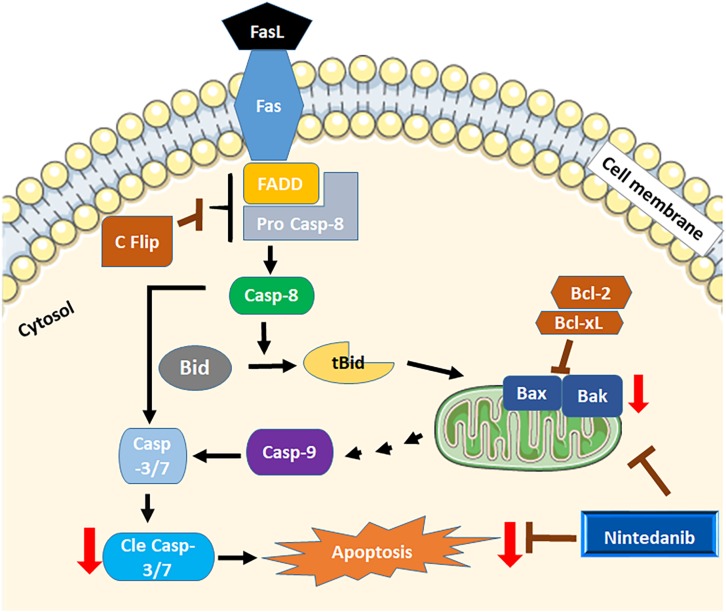
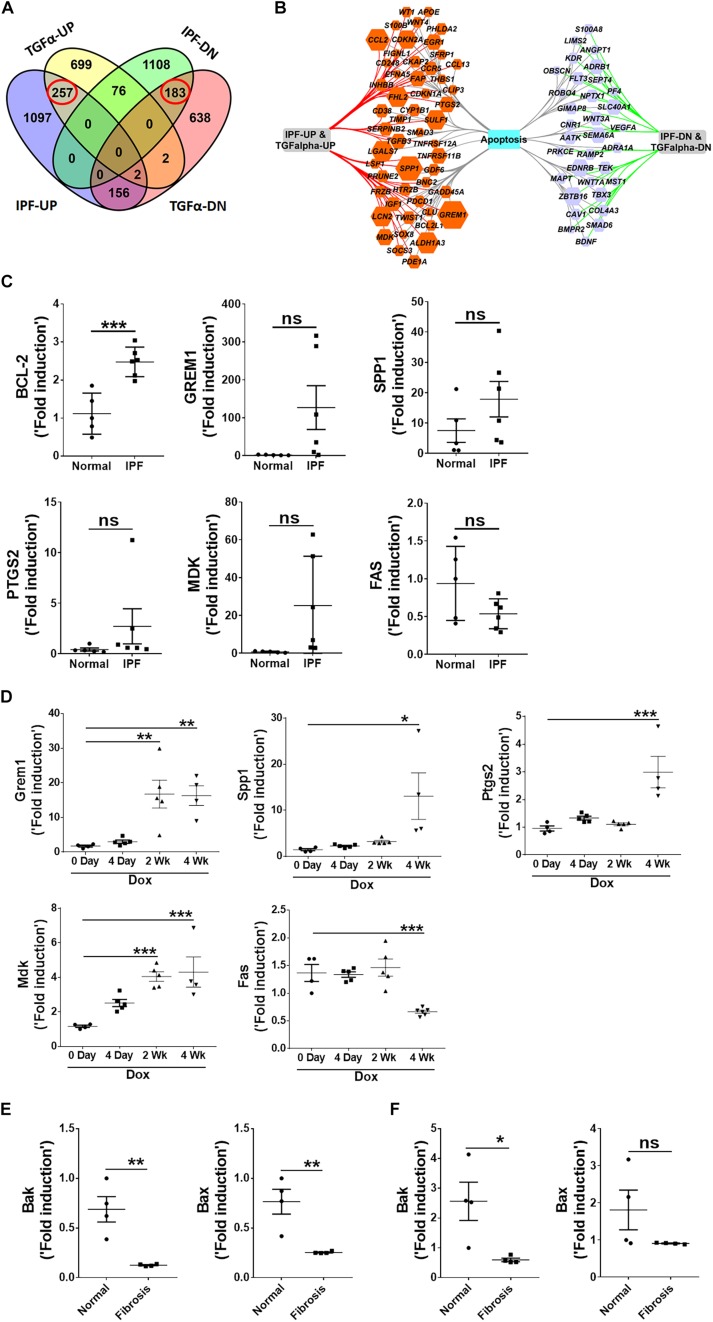
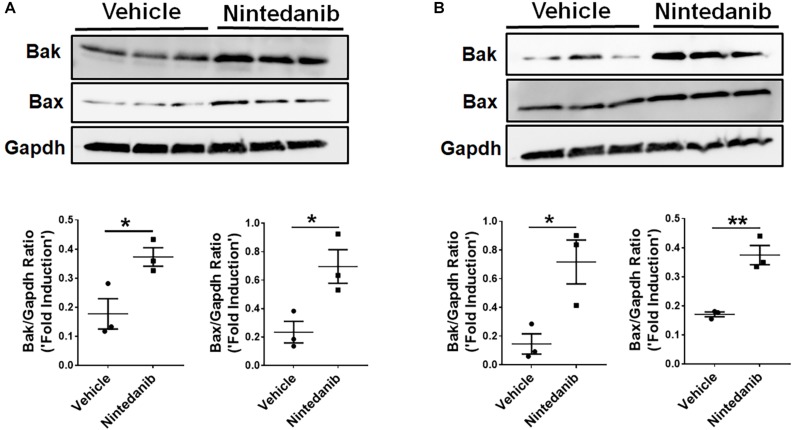
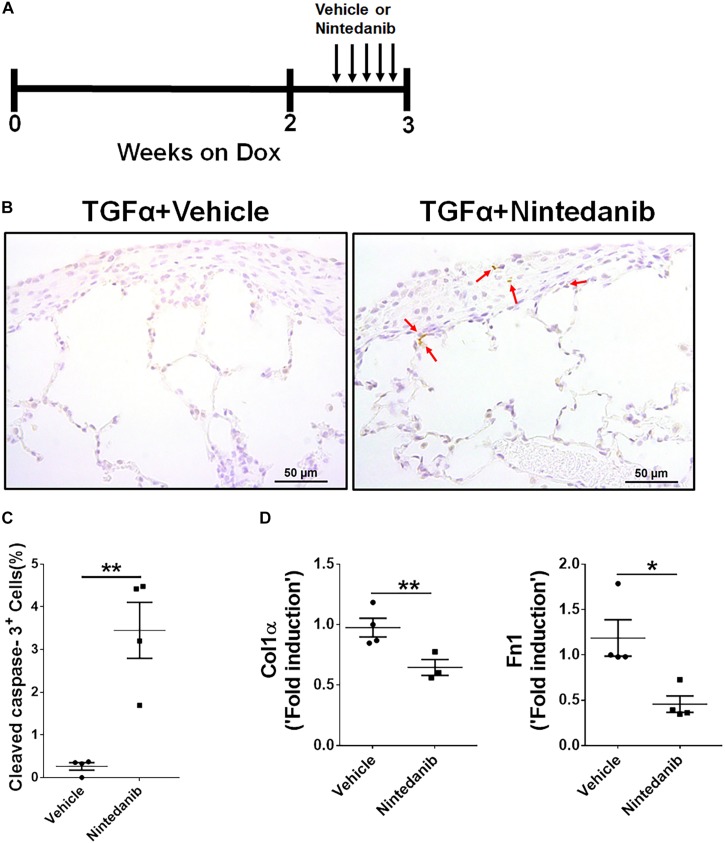
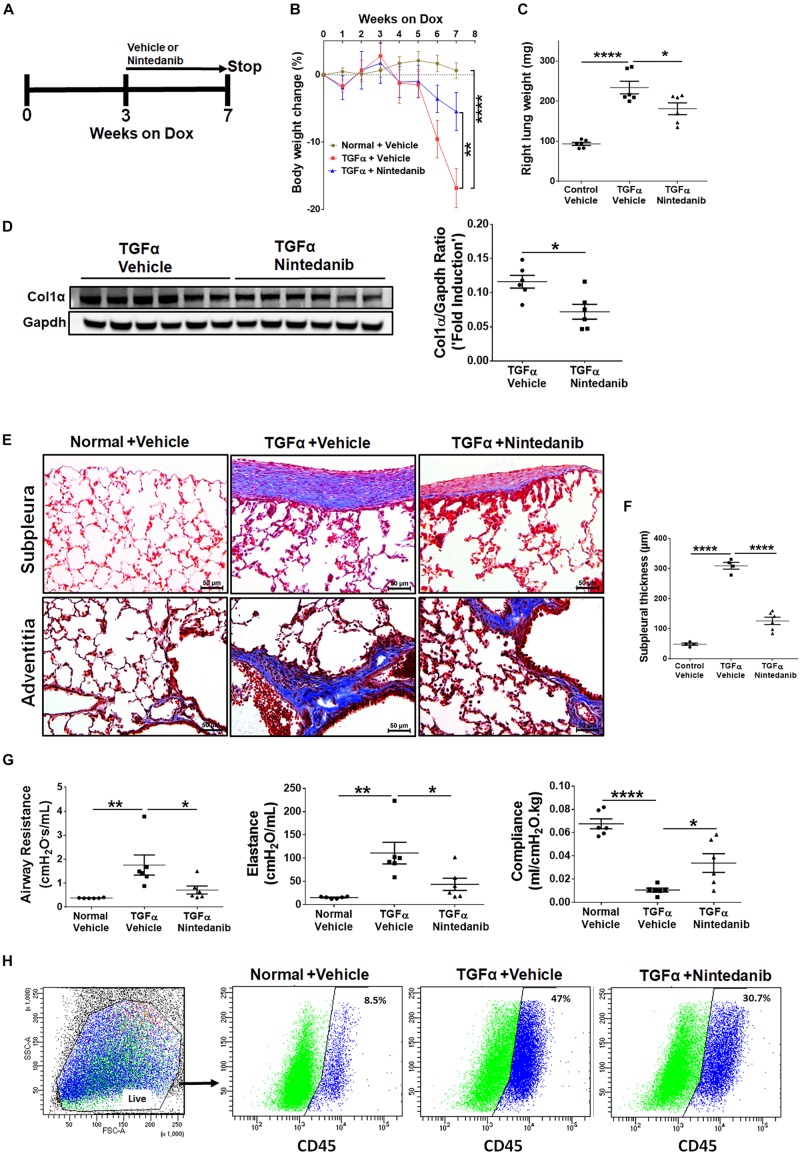
Impaired apoptotic clearance of myofibroblasts can result in the continuous expansion of scar tissue during the persistent injury in the lung. However, the molecular and cellular mechanisms underlying the apoptotic clearance of multiple mesenchymal cells including fibrocytes, fibroblasts and myofibroblasts in severe fibrotic lung diseases such as idiopathic pulmonary fibrosis (IPF) remain largely unknown. We analyzed the apoptotic pathways activated in mesenchymal cells of IPF and in a mouse model of TGFα-induced pulmonary fibrosis. We found that fibrocytes and myofibroblasts in fibrotic lung lesions have acquired resistance to Fas-induced apoptosis, and an FDA-approved anti-fibrotic agent, nintedanib, effectively induced apoptotic cell death in both. In support, comparative gene expression analyses suggest that apoptosis-linked gene networks similarly dysregulated in both IPF and a mouse model of TGFα-induced pulmonary fibrosis. TGFα mice treated with nintedanib show increased active caspase 3-positive cells in fibrotic lesions and reduced fibroproliferation and collagen production. Further, the long-term nintedanib therapy attenuated fibrocyte accumulation, collagen deposition, and lung function decline during TGFα-induced pulmonary fibrosis. These results highlight the importance of inhibiting survival pathways and other pro-fibrotic processes in the various types of mesenchymal cells and suggest that the TGFα mouse model is relevant for testing of anti-fibrotic drugs either alone or in combination with nintedanib.
在肺部持续性损伤期间,肌成纤维细胞凋亡清除受损可导致瘢痕组织持续扩张。然而,在诸如特发性肺纤维化(IPF)等严重纤维化性肺病中,包括纤维细胞、成纤维细胞和肌成纤维细胞在内的多种间充质细胞凋亡清除的分子和细胞机制仍 largely 未知。我们分析了 IPF 间充质细胞以及 TGFα 诱导的肺纤维化小鼠模型中激活的凋亡途径。我们发现,纤维化肺损伤中的纤维细胞和肌成纤维细胞已获得对 Fas 诱导凋亡的抗性,而一种 FDA 批准的抗纤维化药物尼达尼布可有效诱导两者发生凋亡性细胞死亡。作为支持,比较基因表达分析表明,在 IPF 和 TGFα 诱导的肺纤维化小鼠模型中,与凋亡相关的基因网络同样失调。用尼达尼布治疗的 TGFα 小鼠在纤维化病变中显示出活性 caspase 3 阳性细胞增加,并且纤维增生和胶原蛋白产生减少。此外,长期尼达尼布治疗可减轻 TGFα 诱导的肺纤维化过程中的纤维细胞积聚、胶原蛋白沉积和肺功能下降。这些结果突出了抑制各种类型间充质细胞中的存活途径和其他促纤维化过程的重要性,并表明 TGFα 小鼠模型适用于单独或与尼达尼布联合测试抗纤维化药物。