Dartmouth Hitchcock Medical Center, Heart and Vascular Center, Lebanon, NH (L.G.G.).
The Dartmouth Institute, Geisel Medical School at Dartmouth, Hanover, NH (L.G.G.).
Circ Heart Fail. 2019 Jun;12(6):e005407. doi: 10.1161/CIRCHEARTFAILURE.118.005407. Epub 2019 Jun 7.
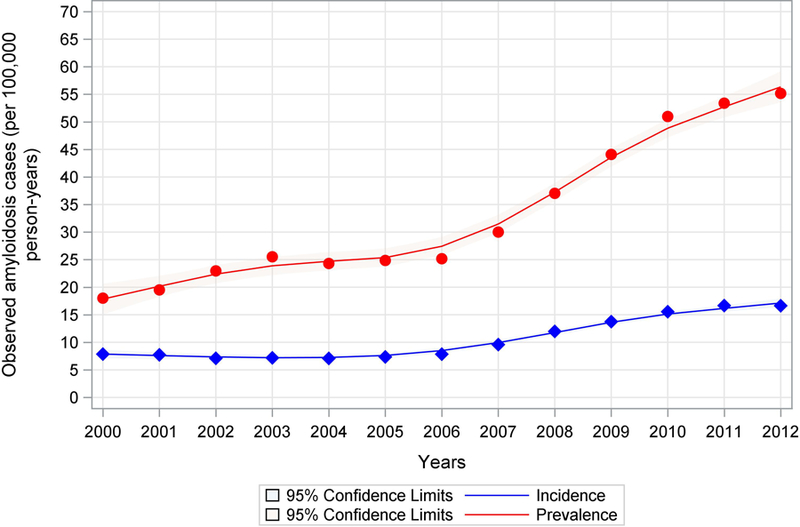
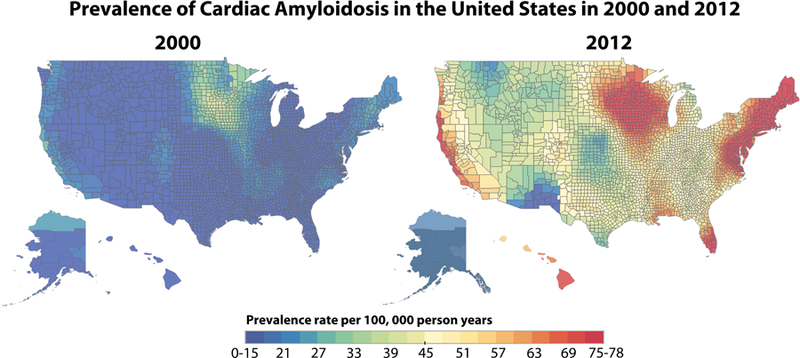
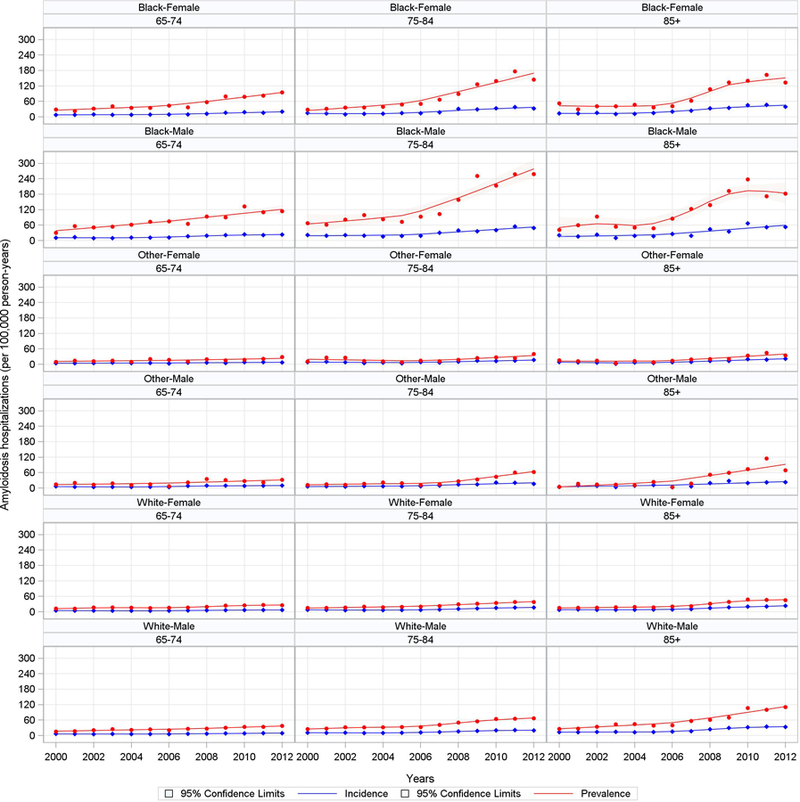
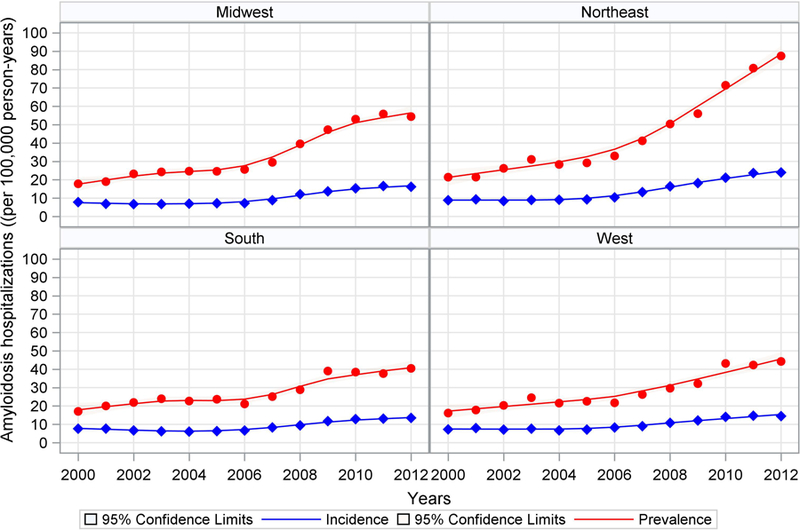
Background Cardiac amyloidosis is a substantially underdiagnosed disease, and contemporary estimates of the epidemiology of amyloidosis are lacking. This study aims to determine the incidence and prevalence of cardiac amyloidosis among Medicare beneficiaries from 2000 to 2012. Methods and Results Medicare beneficiaries were counted in the prevalence cohort in each year they had (1) ≥1 principal or secondary International Classification of Diseases, Ninth Revision code for amyloidosis and (2) ≥1 principal or secondary International Classification of Diseases, Ninth Revision code for heart failure or cardiomyopathy within 2 years after the systemic amyloidosis code. A beneficiary was counted in the incidence cohort only during the first year in which they met criteria. Primary outcomes included the prevalence and incidence of hospitalizations for cardiac amyloidosis. There were 4746 incident cases of cardiac amyloidosis in 2012 and 15 737 prevalent cases in 2012. There was also a significant increase in the prevalence rate (8 to 17 per 100 000 person-years) and incidence rate (18 to 55 per 100 000 person-years) from 2000 to 2012, most notable after 2006. Incidence and prevalence increased substantially more among men, the elderly, and in blacks. Conclusions The incidence and prevalence rates of cardiac amyloidosis are higher than previously thought. The incidence and prevalence rates of cardiac amyloidosis among hospitalized patients have increased since 2000, particularly among specific patient subgroups and after 2006, suggesting improved amyloidosis awareness and higher diagnostic rates with noninvasive imaging. In light of these trends, cardiac amyloidosis should be considered during the initial work up of patients ≥65 years old hospitalized with heart failure.
背景 心脏淀粉样变是一种严重诊断不足的疾病,目前对淀粉样变的流行病学估计还很缺乏。本研究旨在确定 2000 年至 2012 年期间,医疗保险受益人群中心脏淀粉样变的发病率和患病率。
方法和结果 在每年有(1)≥1 个主要或次要国际疾病分类,第 9 版(ICD-9)淀粉样变性编码和(2)在系统性淀粉样变性编码后 2 年内有≥1 个主要或次要 ICD-9 心力衰竭或心肌病编码的情况下,医疗保险受益人群被归入患病率队列。只有在符合条件的第一年,受益人才被归入发病率队列。主要结局包括心脏淀粉样变性住院的患病率和发病率。2012 年有 4746 例心脏淀粉样变性新发病例,2012 年有 15737 例心脏淀粉样变性现患病例。患病率(从 8/10 万增至 17/10 万)和发病率(从 18/10 万增至 55/10 万)从 2000 年至 2012 年也显著增加,尤其是在 2006 年后。男性、老年人和黑人中发病率和患病率的增加更为显著。
结论 心脏淀粉样变的发病率和患病率高于之前的估计。自 2000 年以来,住院患者中心脏淀粉样变的发病率和患病率有所增加,尤其是在特定的患者亚组和 2006 年后,这表明对淀粉样变性的认识有所提高,并且非侵入性影像学检查的诊断率有所提高。鉴于这些趋势,≥65 岁因心力衰竭住院的患者在初始检查时应考虑心脏淀粉样变。