Bravo María Carmen, López-Ortego Paloma, Sánchez Laura, Madero Rosario, Cabañas Fernando, Koch Armin, Rojas-Anaya Héctor, Rabe Heike, Pellicer Adelina
Department of Neonatology, La Paz University Hospital, Madrid, Spain.
Division of Statistics, La Paz University Hospital, Madrid, Spain.
Front Pediatr. 2019 May 29;7:212. doi: 10.3389/fped.2019.00212. eCollection 2019.
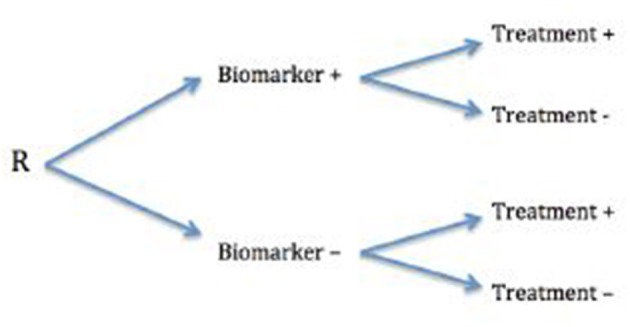
The definition of circulatory impairment in the premature infant is controversial. Current research suggests overdiagnosis and overtreatment. We aimed to analyse which biomarkers move clinicians to initiate cardiovascular treatment (CVT). The prognostic capacity for adverse outcome (death and/or moderate-severe brain damage by cranial ultrasound at term equivalent) of these biomarkers was evaluated. Retrospective data analysis from preterm infants enrolled in a placebo-controlled trial on dobutamine for low superior vena cava (SVC) flow, who showed normal SVC flow within the first 24 h (not randomized). Five positive biomarkers were considered: MABP < gestational age (GA)-1 mmHg; MABP < GA-5 mmHg; lactate > 4 mmol/L; BE < -9 mmol/L; SVC flow <51 ml/kg/min. infants formed the study cohort. Thirty six received CVT (2-95 h). Logistic regression models adjusted for gestational age showed a positive association between CVT and the risk of death or moderate-severe abnormal cranial ultrasound at term equivalent [(OR 5.2, 95%CI: 1.8-15.1) = 0.002]. MABP < GA-1 mmHg and lactate > 4 mmol/L were the most prevalent biomarkers at start of treatment. Low BE, high serum lactate and low SVC flow at first echocardiography showed a trend toward being associated with adverse outcome, although not statistically significant. Low blood pressure and high lactate are the most prevalent biomarkers used for CVT prescription. Lactic acidosis and low SVC flow early after birth showed a trend toward being associated with adverse outcome. These findings support using a combination of biomarkers for inclusion in a placebo-controlled trial on CVT during transitional circulation.
早产儿循环功能障碍的定义存在争议。目前的研究表明存在过度诊断和过度治疗的情况。我们旨在分析哪些生物标志物促使临床医生开始进行心血管治疗(CVT)。评估了这些生物标志物对不良结局(足月时死亡和/或经头颅超声检查显示的中度至重度脑损伤)的预后能力。对参加一项关于多巴酚丁胺治疗上腔静脉(SVC)血流不足的安慰剂对照试验的早产儿进行回顾性数据分析,这些早产儿在出生后24小时内SVC血流正常(未随机分组)。考虑了五个阳性生物标志物:平均动脉血压(MABP)<胎龄(GA)-1 mmHg;MABP<GA-5 mmHg;乳酸>4 mmol/L;碱剩余(BE)<-9 mmol/L;SVC血流<51 ml/kg/min。婴儿组成了研究队列。36例接受了CVT(2-95小时)。经胎龄调整的逻辑回归模型显示,CVT与足月时死亡或中度至重度头颅超声异常风险之间存在正相关[比值比(OR)5.2,95%置信区间:1.8-15.1,P=0.002]。治疗开始时,MABP<GA-1 mmHg和乳酸>4 mmol/L是最常见的生物标志物。首次超声心动图检查时低BE、高血清乳酸和低SVC血流显示出与不良结局相关的趋势,尽管无统计学意义。低血压和高乳酸是用于CVT处方的最常见生物标志物。出生后早期的乳酸酸中毒和低SVC血流显示出与不良结局相关的趋势。这些发现支持在过渡循环期间将多种生物标志物组合用于CVT的安慰剂对照试验。