Tang Kathy C, Pan Wanling, Doschak Michael R, Alexander R Todd
Faculty of Pharmacy and Pharmaceutical Sciences, University of Alberta, Edmonton, Alberta T6G 2R7, Canada.
Department of Physiology, The University of Alberta, Edmonton, Alberta T6G 2R7, Canada.
Bone Rep. 2019 Apr 26;10:100206. doi: 10.1016/j.bonr.2019.100206. eCollection 2019 Jun.
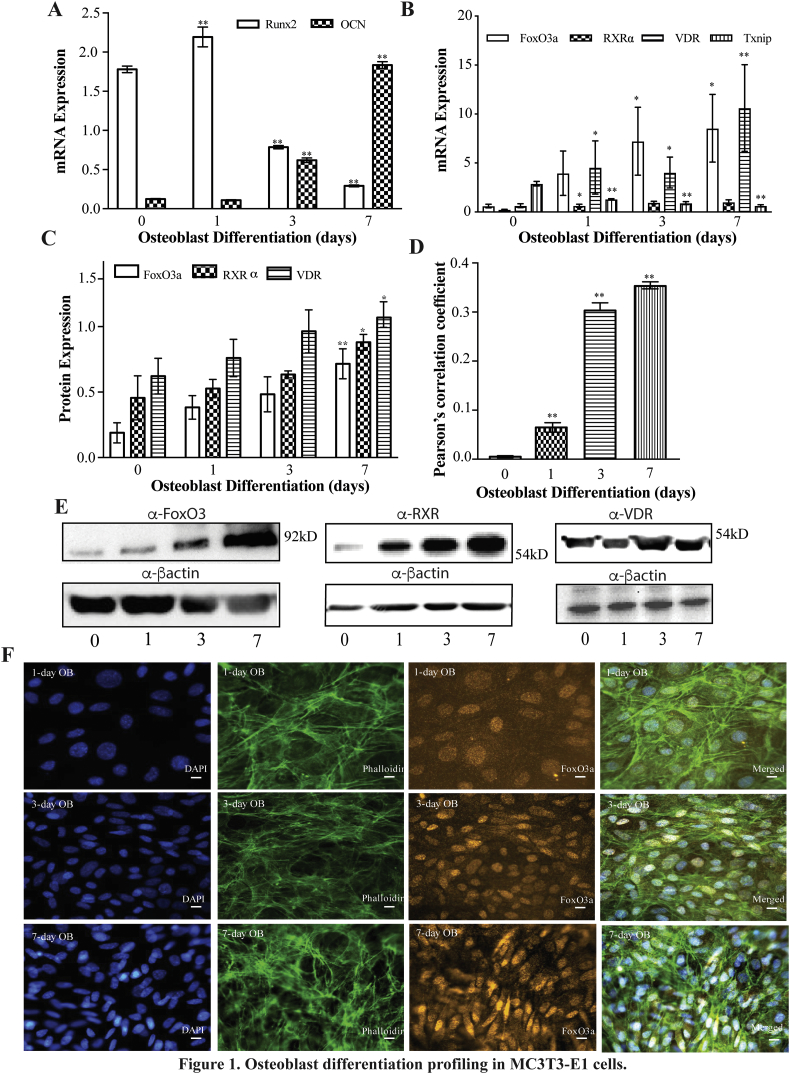
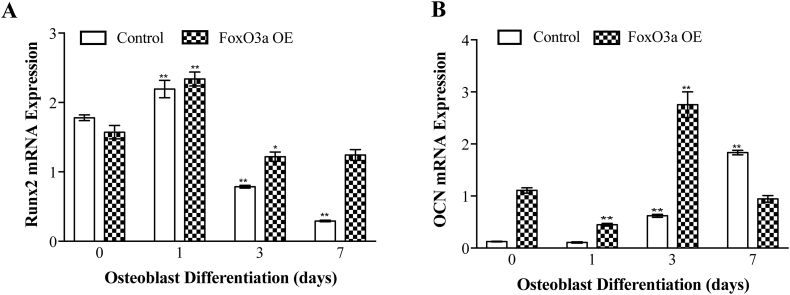
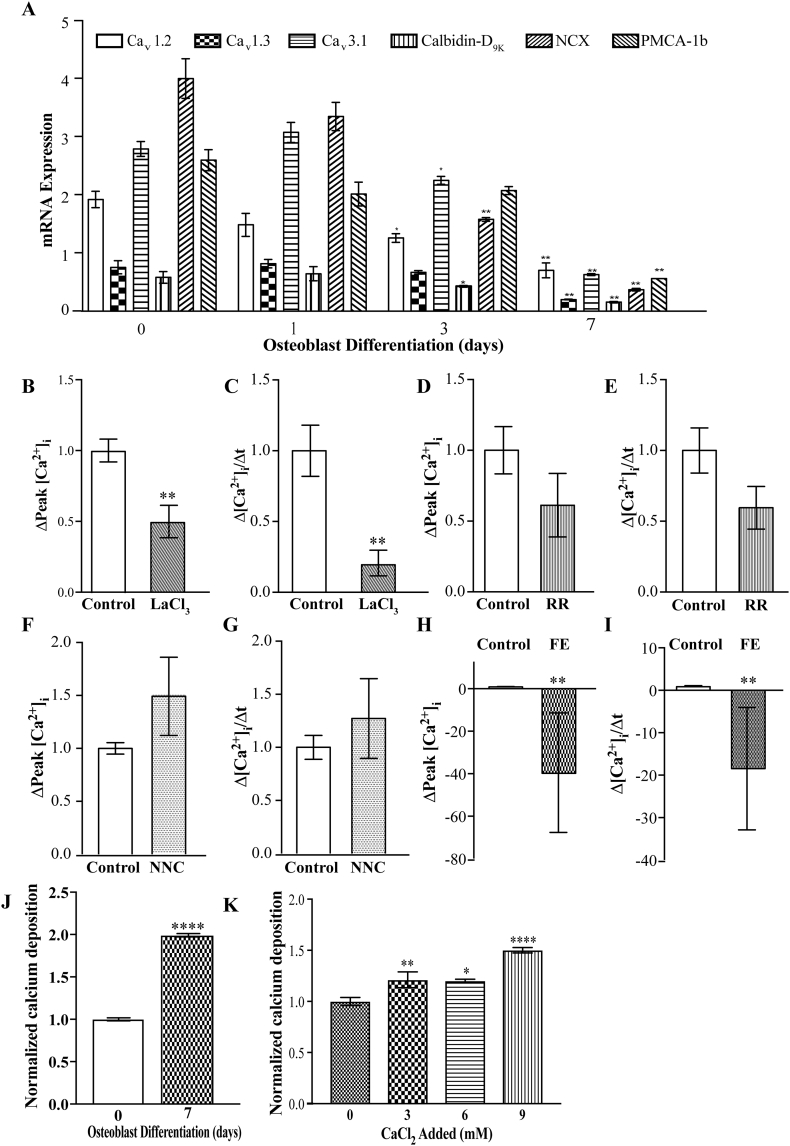
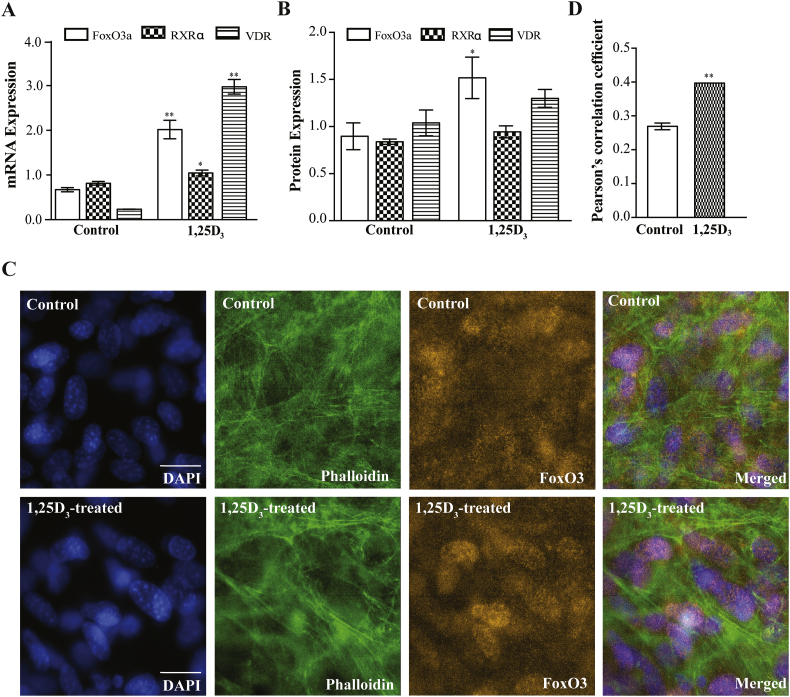
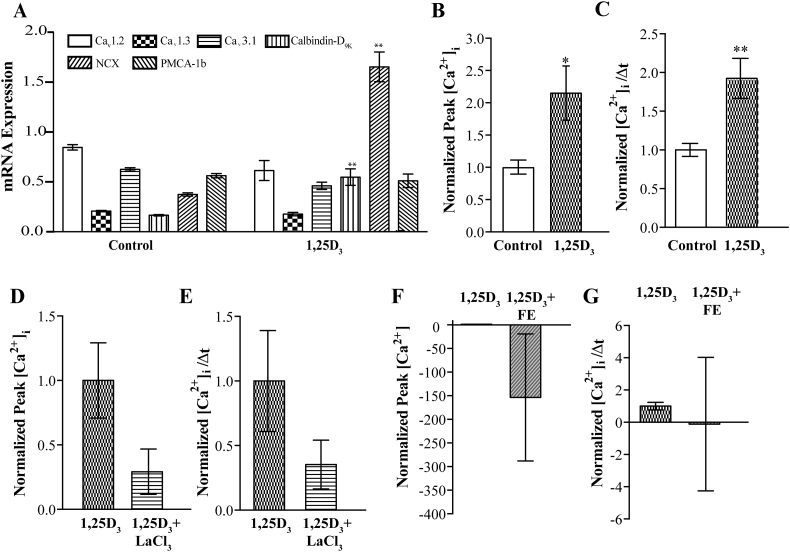
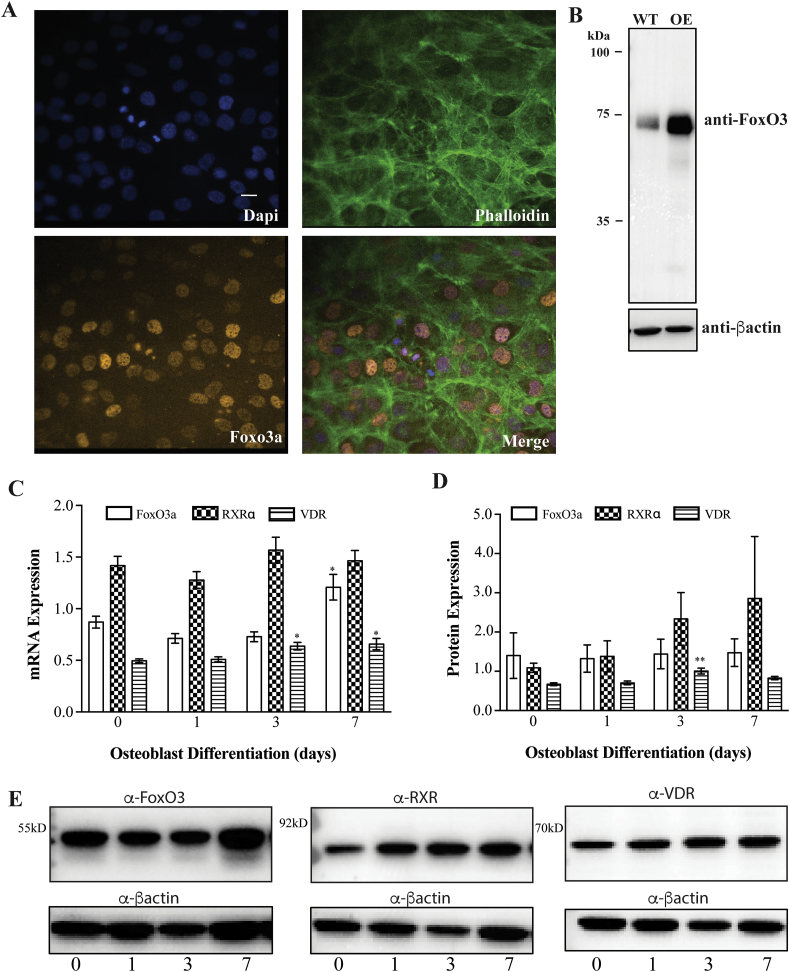
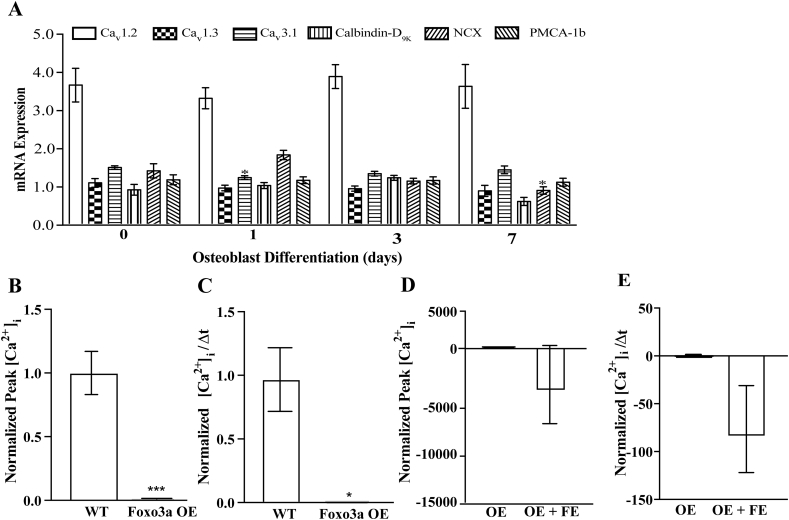
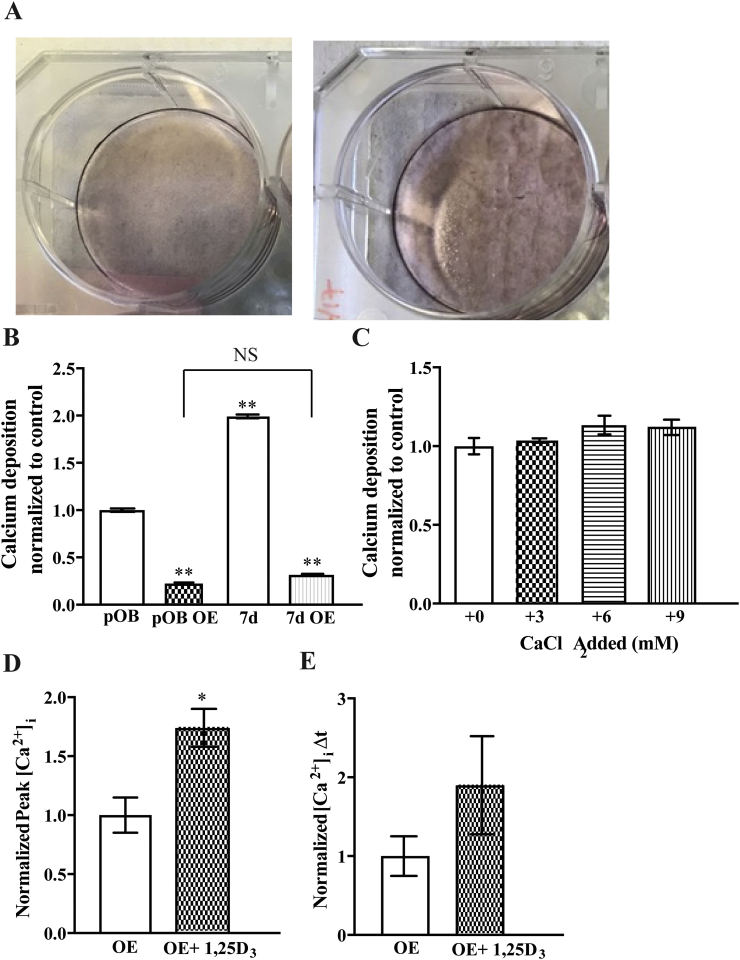
Forkhead Box O transcription factors play important roles in bone metabolism by defending against oxidative stress and apoptosis. FoxO3a is of special interest as it is the predominant isoform expressed in bone. In osteoblasts, the administration of 1,25 dihydroxyvitamin D (1,25D) increases FoxO3a expression, and alters calcium handling. We therefore queried whether FoxO3a participates in vitamin D-mediated regulation of calcium transport pathways or matrix calcification, independent of reactive oxygen species (ROS) formation. To examine this possibility, we differentiated MC3T3-E1 cells into mature osteoblast-like cells over 7 days. This coincided with an increased ability to mineralize extracellular matrix. FoxO3a expression increased throughout differentiation. 1,25D enhanced both FoxO3a mRNA and protein expression. Immunofluorescence microscopy found increased FoxO3a nuclear localization with differentiation and after treatment with 1,25D. Live cell ratiometric imaging with Fura-2AM identified significant L-type calcium channel mediated calcium uptake that was enhanced by 1,25D. We observed expression of both Ca1.2 and Ca1.3, although expression decreased throughout differentiation and was not altered by 1,25D treatment. FoxO3a overexpression reduced calcium uptake and calcium deposition. FoxO3a overexpression also prevented alterations in calcium channel expression and the cell differentiation associated decrease in expression of Runx2 and increased expression of osteocalcin, findings consistent with a failure for the cells to differentiate. Based on both our expression and functional data, we suggest that high levels of FoxO3a prevent osteoblast differentiation and matrix calcification.
叉头框O转录因子通过抵御氧化应激和细胞凋亡在骨代谢中发挥重要作用。FoxO3a特别受关注,因为它是在骨中表达的主要亚型。在成骨细胞中,给予1,25-二羟基维生素D(1,25D)可增加FoxO3a表达,并改变钙处理。因此,我们探究了FoxO3a是否参与维生素D介导的钙转运途径调节或基质钙化,而与活性氧(ROS)形成无关。为了检验这种可能性,我们将MC3T3-E1细胞在7天内分化为成熟的成骨样细胞。这与细胞外基质矿化能力的增加相吻合。在整个分化过程中,FoxO3a表达增加。1,25D增强了FoxO3a的mRNA和蛋白表达。免疫荧光显微镜检查发现,随着分化以及用1,25D处理后,FoxO3a核定位增加。用Fura-2AM进行的活细胞比率成像确定了显著的L型钙通道介导的钙摄取,其被1,25D增强。我们观察到Ca1.2和Ca1.3的表达,尽管其表达在整个分化过程中下降且未被1,25D处理改变。FoxO3a过表达减少了钙摄取和钙沉积。FoxO3a过表达还阻止了钙通道表达的改变以及与细胞分化相关的Runx2表达降低和骨钙素表达增加,这些发现与细胞未能分化一致。基于我们的表达和功能数据,我们认为高水平的FoxO3a会阻止成骨细胞分化和基质钙化。