Department of Physiotherapy, University of Granada. Faculty of Health Sciences, Granada, Spain.
Department of Physiotherapy, University of Malaga. Faculty of Health Sciences, Malaga, Spain.
BMJ Open. 2019 Jun 12;9(6):e023020. doi: 10.1136/bmjopen-2018-023020.
To determine the potential differences in both scapular positioning and scapular movement between the symptomatic and asymptomatic contralateral shoulder, in patients with unilateral subacromial pain syndrome (SAPS), and when compared with participants free of shoulder pain.
Three different primary care centres.
A sample of 73 patients with SAPS in their dominant arm was recruited, with a final sample size of 54 participants.
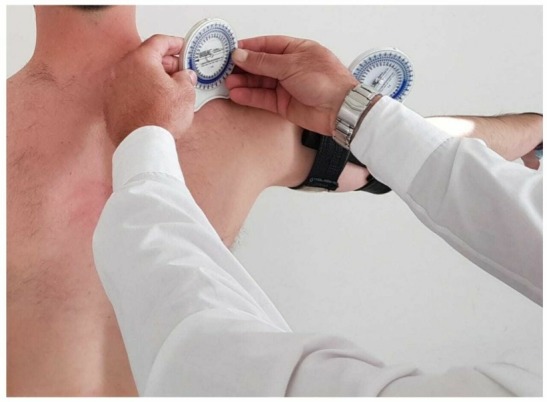
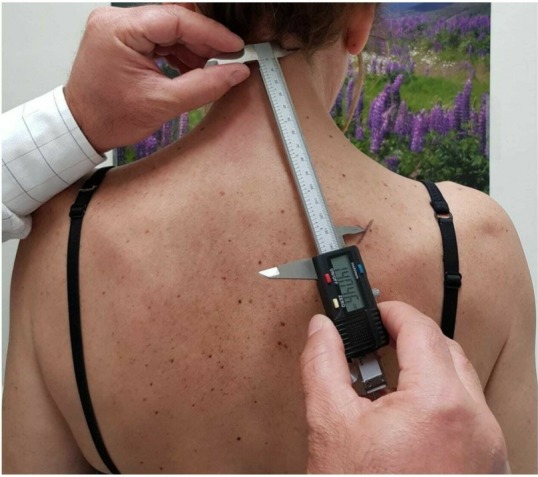
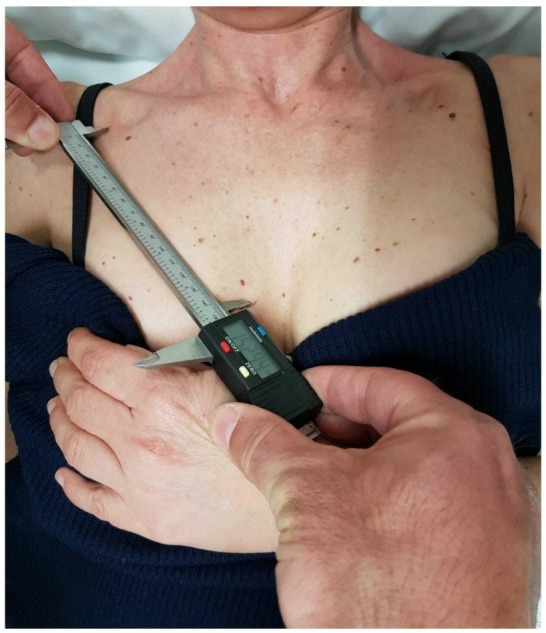
The scapular upward rotation (SUR), the pectoralis minor and the levator scapulae muscles length tests were carried out.
When symptomatic shoulders and controls were compared, an increased SUR at all positions (45°, 90° and 135°) was obtained in symptomatic shoulders (2/3,98/8,96°, respectively). These differences in SUR surpassed the minimal detectable change (MDC95) (0,91/1,55/2,83° at 45/90/135° of shoulder elevation). No differences were found in SUR between symptomatic and contralateral shoulders. No differences were found in either pectoralis minor or levator scapulae muscle length in all groups.
SUR was greater in patients with chronic SAPS compared with controls at different angles of shoulder elevation.
在患有单侧肩峰下疼痛综合征(SAPS)的患者中,比较其症状侧和无症状对侧肩部的肩胛骨位置和肩胛骨活动的潜在差异,并与无肩部疼痛的参与者进行比较。
三个不同的初级保健中心。
招募了 73 名患有 SAPS 的患者,其中有 54 名患者完成了研究。
进行肩胛骨上旋(SUR)、胸小肌和肩胛提肌长度测试。
与对照组相比,症状侧肩部在所有位置(45°、90°和 135°)的 SUR 均增加(2/3、98/8、96°)。这些 SUR 的差异超过了最小可检测变化(MDC95)(0、91/1、55/2、83°在 45/90/135°的肩部抬高角度)。在症状侧和无症状侧肩部之间未发现 SUR 的差异。在所有组中,胸小肌和肩胛提肌长度均无差异。
与对照组相比,慢性 SAPS 患者在不同的肩部抬高角度下 SUR 更大。