Division of Pediatric Neurology, Department of Pediatrics, Chung Shan Medical University Hospital, Taichung, Taiwan.
Institute of Medicine, School of Medicine, Chung Shan Medical University, Taichung, Taiwan.
Mol Genet Genomic Med. 2019 Jul;7(7):e00816. doi: 10.1002/mgg3.816. Epub 2019 Jun 14.
Epilepsy caused by a KCNQ2 gene mutation usually manifests as neonatal seizures during the first week of life. The genotypes and phenotypes of KCNQ2 mutations are noteworthy.
The KCNQ2 sequencings done were selected from 131 nonconsanguineous pediatric epileptic patients (age range: 2 days to 18 years) with nonlesional epilepsy.
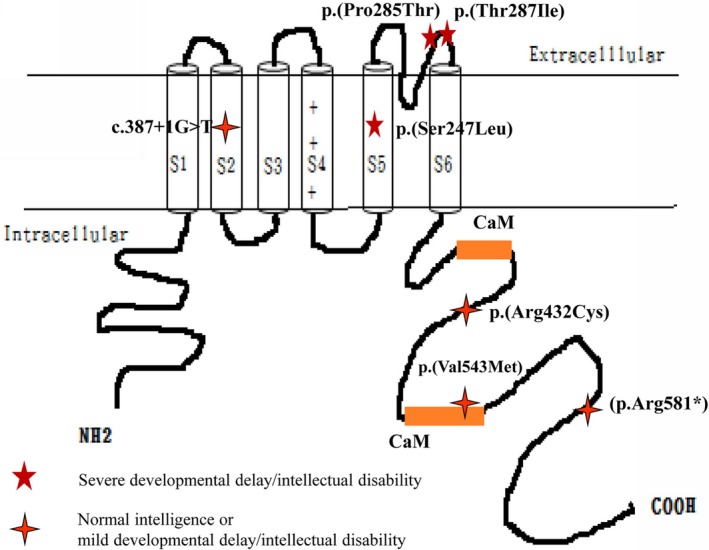
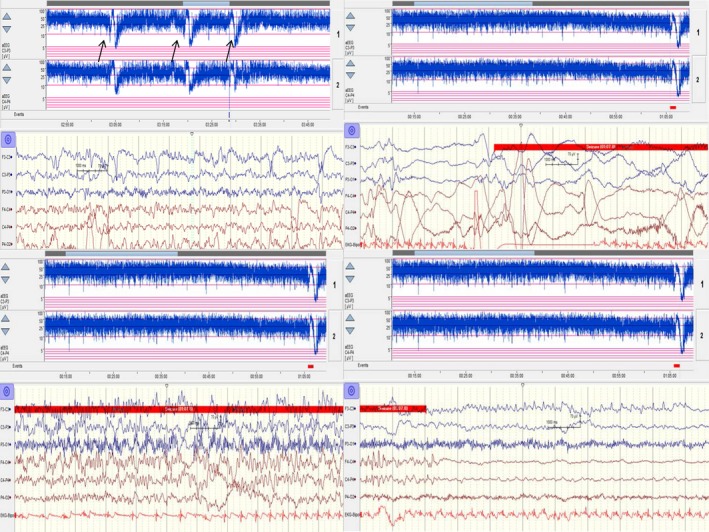
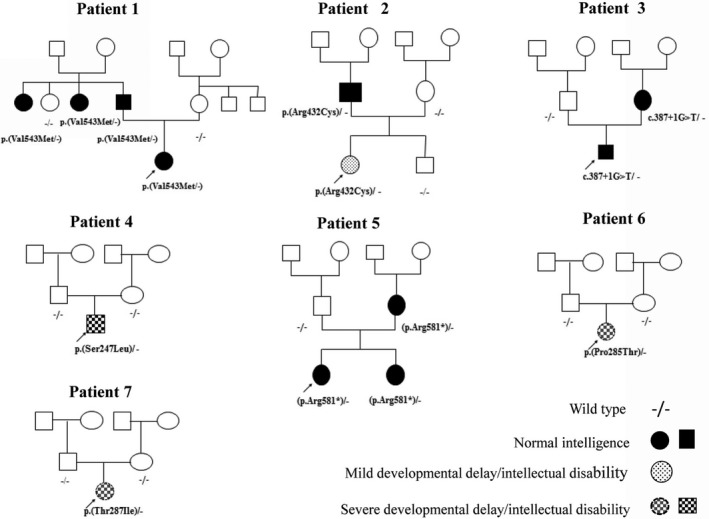
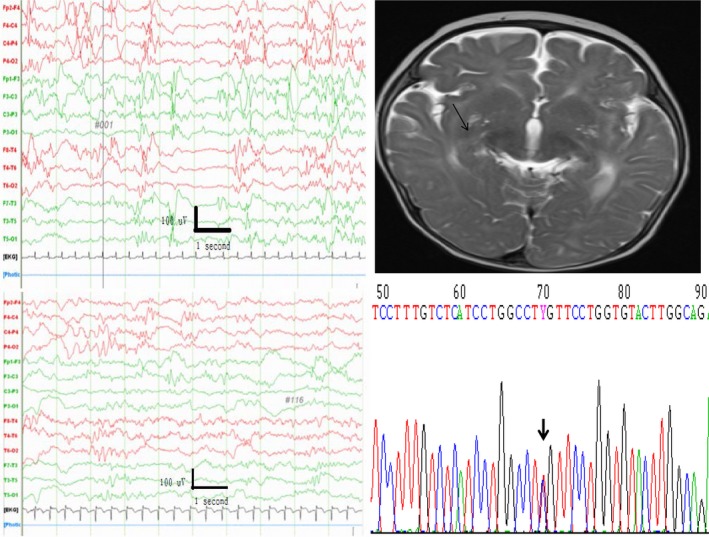
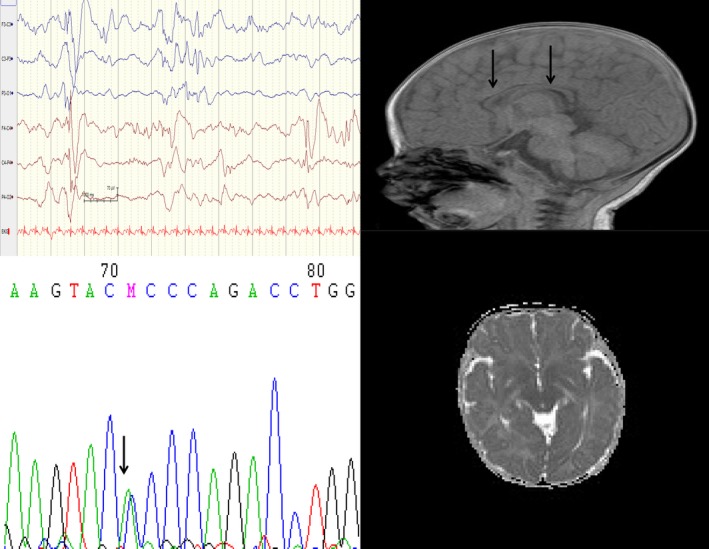
Seven (5%) index patients had verified KCNQ2 mutations: c.387+1 G>T (splicing), c.1741 C>T (p.Arg581*), c.740 C>T p.(Ser247Leu), c.853 C>A p.(Pro285Thr), c.860 C>T p.(Thr287Ile), c.1294 C>T p.(Arg432Cys), and c.1627 G>A p.(Val543Met). We found, after their paternity had been confirmed, that three patients had de novo p.(Ser247Leu), p.(Pro285Thr), and p.(Thr287Ile) mutations and neonatal-onset epileptic encephalopathy; however, their frequent seizures remitted after they turned 6 months old. Those with the c.387+1G>T (splicing), (p.Arg581*), and p.(Val543Met) mutations presented with benign familial neonatal convulsions. In addition to their relatives, 14 patients had documented KCNQ2 mutations, and 12 (86%) had neonatal seizures. The seizures of all five patients treated with oxcarbazepine remitted.
KCNQ2-related epilepsy led to varied outcomes (from benign to severe) in our patients. KCNQ2 mutations accounted for 13% of patients with seizure onset before 2 months old in our study. KCNQ2 mutations can cause different phenotypes in children. p.(Pro 285Thr) is a novel mutation, and the p.(Pro 285Thr), p.(Ser247Leu), and p.(Thr287Ile) variants can cause neonatal-onset epileptic encephalopathy.
由 KCNQ2 基因突变引起的癫痫通常在生命的第一周表现为新生儿发作。KCNQ2 突变的基因型和表型值得注意。
从 131 名非近亲性儿科癫痫患者(年龄范围:2 天至 18 岁)的非病变性癫痫中选择进行 KCNQ2 测序。
7 名(5%)索引患者有经证实的 KCNQ2 突变:c.387+1G>T(剪接),c.1741C>T(p.Arg581*),c.740C>Tp.(Ser247Leu),c.853C>A p.(Pro285Thr),c.860C>T p.(Thr287Ile),c.1294C>T p.(Arg432Cys)和 c.1627G>A p.(Val543Met)。在确认了他们的父亲身份后,我们发现 3 名患者存在新发 p.(Ser247Leu),p.(Pro285Thr)和 p.(Thr287Ile)突变和新生儿发作性癫痫性脑病;然而,他们在 6 个月大后经常发作就缓解了。c.387+1G>T(剪接),(p.Arg581*)和 p.(Val543Met)突变的患者表现为良性家族性新生儿惊厥。除了他们的亲属外,还有 14 名患者有 KCNQ2 突变记录,其中 12 名(86%)有新生儿发作。用奥卡西平治疗的 5 名患者的发作均得到缓解。
KCNQ2 相关癫痫导致我们患者的结果(从良性到严重)各不相同。在我们的研究中,KCNQ2 突变占发病前 2 个月的患者的 13%。KCNQ2 突变可导致儿童出现不同的表型。p.(Pro285Thr)是一种新突变,p.(Pro285Thr),p.(Ser247Leu)和 p.(Thr287Ile)变异可引起新生儿发作性癫痫性脑病。