Starks Tyrel J, Feldstein Ewing Sarah W, Lovejoy Travis, Gurung Sitaji, Cain Demetria, Fan Carolyn A, Naar Sylvie, Parsons Jeffrey T
Center for HIV Educational Studies and Training, Hunter College, City University of New York, New York, NY, United States.
Hunter College Department of Psychology, Hunter College, City University of New York, New York, NY, United States.
JMIR Res Protoc. 2019 Jun 7;8(6):e11186. doi: 10.2196/11186.
Young men who have sex with men (YMSM), particularly those who are partnered, are at unique risk for HIV. YMSM are among those at highest risk for HIV. Meanwhile, despite the fact that primary partners account for many-possibly most-new HIV infections, partnered men who have sex with men perceive themselves to be at much lower risk for HIV infection and therefore test less often than single men. In response to the risk of primary partner HIV transmission, couples HIV testing and counseling (CHTC) procedures have been developed for use in adult populations. Although promising, YMSM couples may require additional support to complete CHTC given their developmental context in which sexual and romantic relationships are relatively new, and communication skills are emergent.
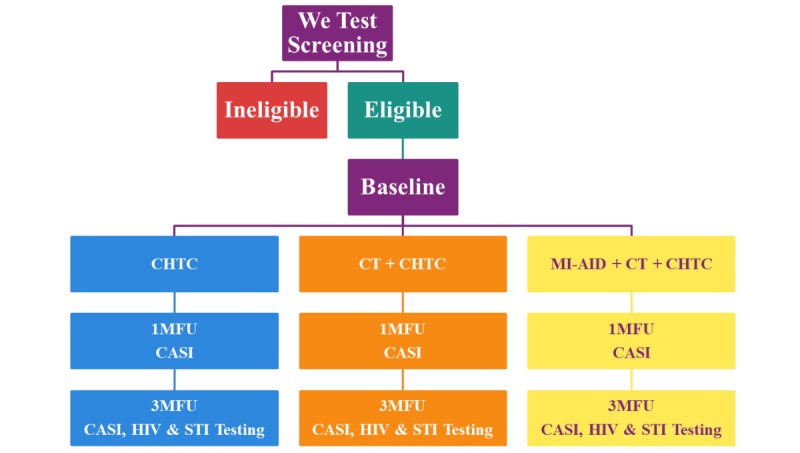
The aim of this study was to test the additive benefit of adjunct treatment components tailored for YMSM, which enhance communication skills before the completion of CHTC. The intervention tests a continuum of prevention packages including assertive communication training videos and motivational interviewing focused on assisting with identification and development (MI-AID) before entering into the dyadic intervention components. This protocol is part of the Adolescent Medicine Trials Network (ATN) Scale It Up program described in this issue.
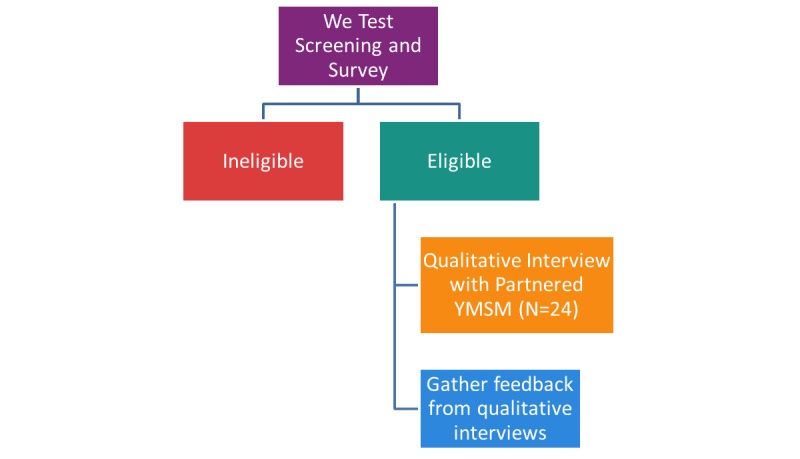
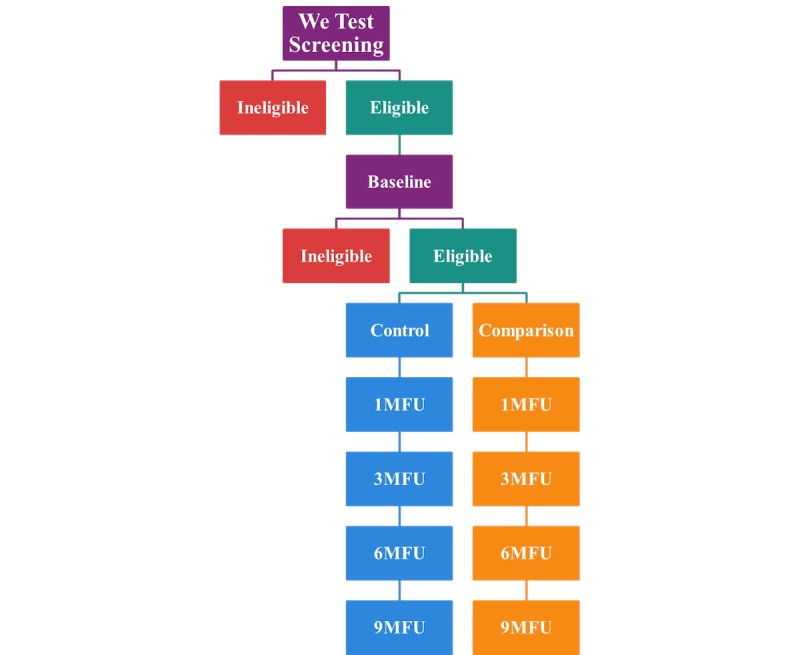
This is a comparative effectiveness trial that will be executed in 3 phases. Phase 1 will gather qualitative data related to intervention development and implementation from partnered YMSM at 4 subject recruitment venues (SRVs). Phase 2 will compare a continuum of these interventions in a pilot randomized controlled trial (RCT) at 2 SRVs. Phase 3 will compare the most successful adapted intervention package from phase 2 to CHTC as usual in a larger RCT at 4 SRVs. This phase is focused on implementation and sustainment phases of the Exploration, Preparation, Implementation, and Sustainment framework.
Phase 1 data will be drawn from qualitative interviews with partnered YMSM (n=24) and staff from ATN sites (n=20). Baseline enrollment for phase 2 is expected to begin across 2 SRVs in June 2018 (n=36). In phase 2, survey data collection along with HIV and sexually transmitted infection (STI) testing will occur at baseline, and 1- and 3-month (postintervention) follow-ups. Phase 3 will begin enrollment across 4 SRVs in September 2019 (n=144) and follow-ups will occur at 1, 3, 6, and 9 months postintervention.
Although MI-AID, video-based assertive communication training, and CHTC have established efficacy when administered on their own, this study will be the first to evaluate the strongest adjunctive version of these interventions to address the specific developmental needs of partnered YMSM.
ClinicalTrials.gov NCT03386110; http://clinicaltrials.gov/ct2/show/NCT03386110 (Archived by WebCite at http://www.webcitation.org/75mlO7GCx).
INTERNATIONAL REGISTERED REPORT IDENTIFIER (IRRID): DERR1-10.2196/11186.
与男性发生性关系的年轻男性(YMSM),尤其是那些有伴侣的人,面临着独特的艾滋病毒感染风险。YMSM属于艾滋病毒感染风险最高的人群。与此同时,尽管主要伴侣导致了许多(可能是大多数)新的艾滋病毒感染,但有伴侣的与男性发生性关系的男性认为自己感染艾滋病毒的风险要低得多,因此检测频率低于单身男性。为应对主要伴侣传播艾滋病毒的风险,已开发出夫妻艾滋病毒检测与咨询(CHTC)程序供成年人群使用。尽管前景乐观,但鉴于YMSM的性和浪漫关系相对较新且沟通技巧尚在发展的成长背景,YMSM伴侣可能需要额外支持来完成CHTC。
本研究的目的是测试为YMSM量身定制的辅助治疗组件的附加益处,这些组件可在完成CHTC之前增强沟通技巧。该干预措施测试了一系列预防方案,包括自信沟通培训视频和在进入二元干预组件之前专注于协助识别和发展的动机性访谈(MI-AID)。本方案是本期所述青少年医学试验网络(ATN)扩大规模计划的一部分。
这是一项将分三个阶段执行的比较效果试验。第一阶段将从4个受试者招募地点(SRV)的有伴侣的YMSM中收集与干预措施开发和实施相关的定性数据。第二阶段将在2个SRV进行的试点随机对照试验(RCT)中比较这些干预措施的一系列方案。第三阶段将在4个SRV进行的更大规模的RCT中,将第二阶段最成功的适应性干预方案与常规CHTC进行比较。此阶段侧重于探索、准备、实施和维持框架的实施和维持阶段。
第一阶段的数据将来自对有伴侣YMSM(n = 24)和ATN站点工作人员(n = 20)的定性访谈。预计2018年6月在2个SRV开始第二阶段的基线入组(n = 36)。在第二阶段,将在基线以及干预后1个月和3个月的随访时进行调查数据收集以及艾滋病毒和性传播感染(STI)检测。第三阶段将于2019年9月在4个SRV开始入组(n = 144),并在干预后1、3、6和9个月进行随访。
尽管MI-AID、基于视频的自信沟通培训和CHTC单独实施时已证实有效,但本研究将首次评估这些干预措施的最强辅助版本,以满足有伴侣YMSM的特定发展需求。
ClinicalTrials.gov NCT03386110;http://clinicaltrials.gov/ct2/show/NCT03386110(由WebCite存档于http://www.webcitation.org/75mlO7GCx)。
国际注册报告识别码(IRRID):DERR1-10.2196/11186。