Idalski Carcone April, Coyle Karin, Gurung Sitaji, Cain Demetria, Dilones Rafael E, Jadwin-Cakmak Laura, Parsons Jeffrey T, Naar Sylvie
Department of Family Medicine and Public Health Sciences, Wayne State University, Detroit, MI, United States.
Education, Training, and Research, Scotts Valley, CA, United States.
JMIR Res Protoc. 2019 May 23;8(5):e11202. doi: 10.2196/11202.
The Exploration, Preparation, Implementation, and Sustainment (EPIS) model is an implementation framework for studying the integration of evidence-based practices (EBPs) into real-world settings. The EPIS model conceptualizes implementation as a process starting with the earliest stages of problem recognition (Exploration) through the continued use of an EBP in a given clinical context (Sustainment). This is the first implementation science (IS) study of the integration of EBPs into adolescent HIV prevention and care settings.
This protocol (ATN 153 EPIS) is part of the Scale It Up program, a research program administered by the Adolescent Medicine Trials Network for HIV/AIDS Interventions (ATN), described in this issue by Naar et al. The EPIS study is a descriptive study of the uptake of 4 EBPs within the Scale It Up program. The goal of EPIS is to understand the barriers and facilitators associated with the Preparation, Implementation, and Sustainment of EBPs into HIV prevention and clinical care settings.
The EPIS study is a convergent parallel mixed-methods IS study. Key implementation stakeholders, that is, clinical care providers and leaders, located within 13 ATN sites across the United States will complete a qualitative interview conducted by telephone and Web-based surveys at 3 key implementation stages. The Preparation assessment occurs before EBP implementation, Implementation occurs immediately after sites finish implementation activities and prepare for sustainment, and Sustainment occurs 1 year postimplementation. Assessments will examine stakeholders' perceptions of the barriers and facilitators to EBP implementation within their clinical site as outlined by the EPIS framework.
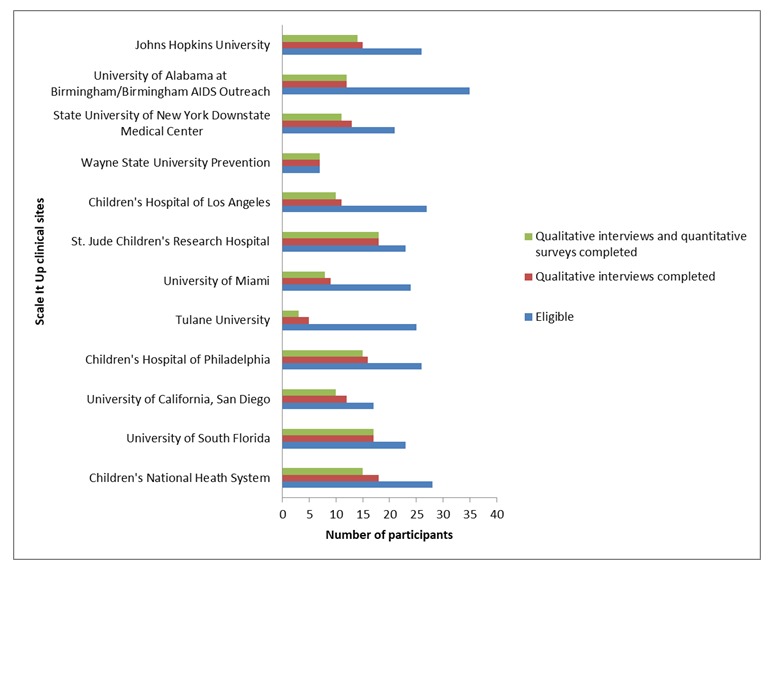
The EPIS baseline period began in June 2017 and concluded in May 2018; analysis of the baseline data is underway. To date, 153 stakeholders have completed qualitative interviews, and 91.5% (140/153) completed the quantitative survey.
The knowledge gained from the EPIS study will strengthen the implementation and sustainment of EBPs in adolescent prevention and clinical care contexts by offering insights into the barriers and facilitators of successful EBP implementation and sustainment in real-world clinical contexts.
INTERNATIONAL REGISTERED REPORT IDENTIFIER (IRRID): DERR1-10.2196/11202.
探索、准备、实施与维持(EPIS)模型是一个用于研究将循证实践(EBPs)整合到现实环境中的实施框架。EPIS模型将实施概念化为一个过程,始于问题识别的最早阶段(探索),贯穿于在特定临床环境中持续使用循证实践(维持)。这是将循证实践整合到青少年艾滋病毒预防和护理环境中的第一项实施科学(IS)研究。
本方案(ATN 153 EPIS)是扩大规模计划的一部分,该计划是由青少年艾滋病毒/艾滋病干预医学试验网络(ATN)管理的一项研究计划,本期由纳尔等人进行了描述。EPIS研究是对扩大规模计划中4种循证实践的采用情况进行的描述性研究。EPIS的目标是了解在将循证实践准备、实施和维持到艾滋病毒预防和临床护理环境中时所涉及的障碍和促进因素。
EPIS研究是一项收敛平行混合方法的实施科学研究。位于美国13个ATN站点的关键实施利益相关者,即临床护理提供者和领导者,将在3个关键实施阶段通过电话访谈和基于网络的调查完成定性访谈。准备评估在循证实践实施之前进行,实施在各站点完成实施活动并为维持做准备之后立即进行,维持在实施后1年进行。评估将检查利益相关者对EPIS框架所概述的其临床站点内循证实践实施的障碍和促进因素的看法。
EPIS基线期于2017年6月开始,2018年5月结束;基线数据分析正在进行中。迄今为止,153名利益相关者完成了定性访谈,91.5%(140/153)完成了定量调查。
从EPIS研究中获得的知识将通过深入了解在现实临床环境中成功实施和维持循证实践的障碍和促进因素,加强循证实践在青少年预防和临床护理环境中的实施和维持。
国际注册报告识别号(IRRID):DERR1-10.2196/11202。