Columbia Center for Translational Immunology, Columbia University Medical Center, New York, New York, United States of America.
Division of Rheumatology, Columbia University Medical Center, New York, New York, United States of America.
PLoS One. 2019 Jun 14;14(6):e0218109. doi: 10.1371/journal.pone.0218109. eCollection 2019.
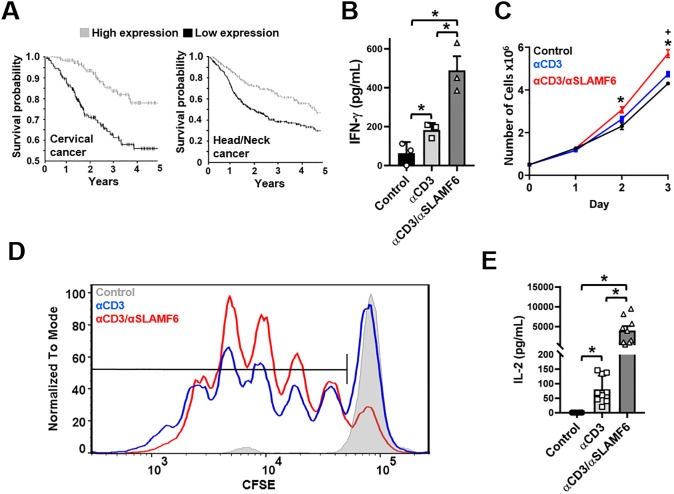
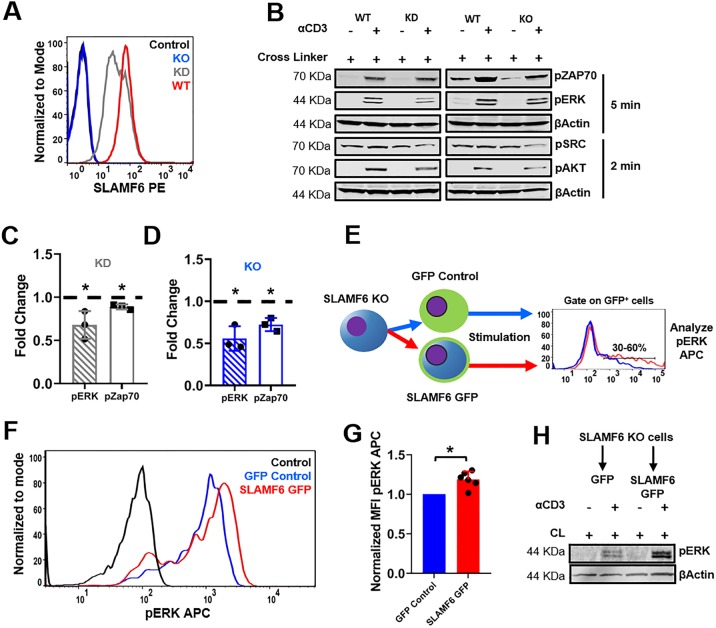
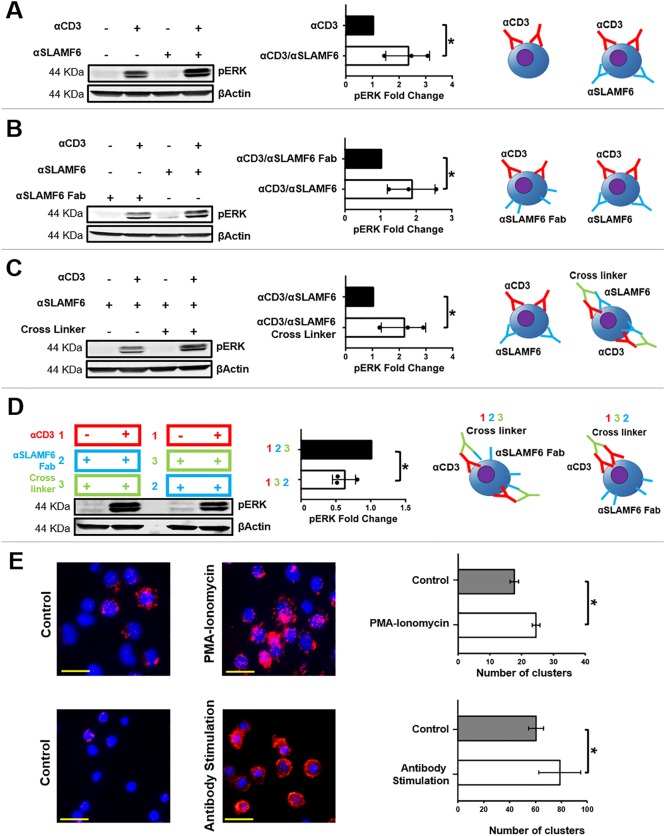
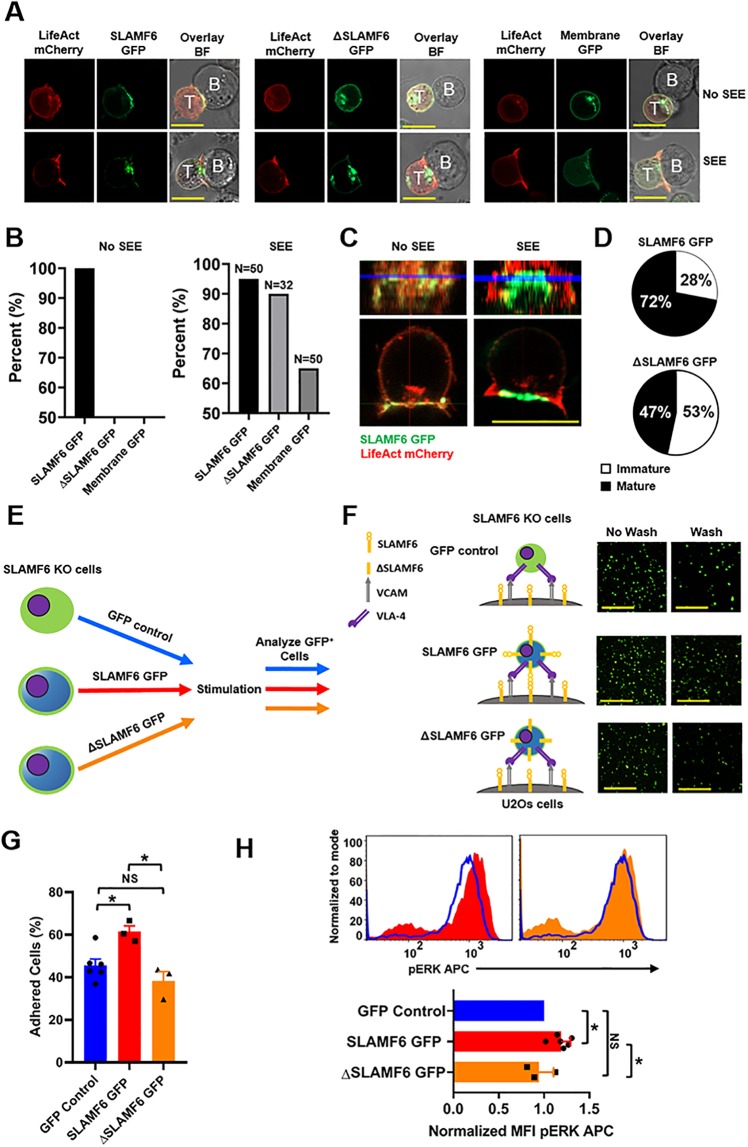
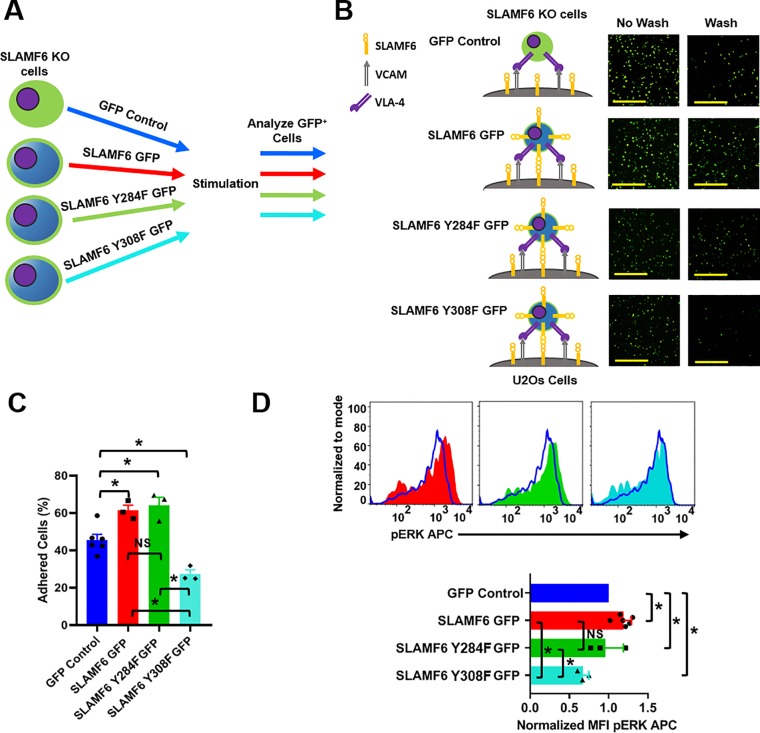
The signaling lymphocytic activation molecule (SLAM) family is comprised of nine distinct receptors that are expressed exclusively on hematopoietic cells. Most of these transmembrane receptors are homotypic by nature and downstream signaling occurs when cells that express the same SLAM receptor interact. Previous studies have determined that anti-SLAMF6 antibodies can have a therapeutic effect in autoimmunity and cancer. However, little is known about the role of SLAMF6 in the adaptive immune responses and in order to utilize SLAMF6 interventional approaches, a better understanding of the biology of this receptor in T cell is warranted. Accordingly, the objective of our study was to investigate both functionally and structurally the role of SLAMF6 in T cell receptor (TCR) mediated responses. Biochemical and genetic experiments revealed that SLAMF6 was required for productive TCR downstream signaling. Interestingly, SLAMF6 ectodomain was required for its function, but not for its recruitment to the immunological synapse. Flow-cytometry analysis demonstrated that tyrosine 308 of the tail of SLAMF6 was crucial for its ability to enhance T cell function. Imaging studies revealed that SLAMF6 clustering, specifically with the TCR, resulted in dramatic increase in downstream signaling. Mechanistically, we showed that SLAMF6 enhanced T cell function by increasing T cell adhesiveness through activation of the small GTPase Rap1. Taken together SLAMF6 is an important regulator of T cell activation where both its ectodomain and its endodomain contribute differentially to T cell functions. Additional studies are underway to better evaluate the role of anti-SLAMF6 approaches in specific human diseases.
信号淋巴细胞激活分子 (SLAM) 家族由九个独特的受体组成,这些受体仅在造血细胞上表达。这些跨膜受体中的大多数在本质上是同型的,当表达相同 SLAM 受体的细胞相互作用时,就会发生下游信号转导。先前的研究已经确定,抗 SLAMF6 抗体在自身免疫和癌症中具有治疗作用。然而,人们对 SLAMF6 在适应性免疫反应中的作用知之甚少,为了利用 SLAMF6 干预方法,有必要更好地了解该受体在 T 细胞中的生物学特性。因此,我们研究的目的是从功能和结构上研究 SLAMF6 在 T 细胞受体 (TCR) 介导的反应中的作用。生化和遗传实验表明,SLAMF6 是 TCR 下游信号转导所必需的。有趣的是,SLAMF6 的胞外结构域是其功能所必需的,但不是其募集到免疫突触所必需的。流式细胞术分析表明,SLAMF6 尾部的酪氨酸 308 对于其增强 T 细胞功能的能力至关重要。成像研究表明,SLAMF6 的聚类,特别是与 TCR 的聚类,导致下游信号的急剧增加。在机制上,我们表明 SLAMF6 通过激活小 GTPase Rap1 增加 T 细胞的黏附性来增强 T 细胞功能。总之,SLAMF6 是 T 细胞激活的重要调节剂,其胞外结构域和胞内结构域对 T 细胞功能的贡献不同。正在进行更多的研究以更好地评估抗 SLAMF6 方法在特定人类疾病中的作用。