College of Mechanical and Electronic Engineering, Northwest A&F University, Yangling, Shaanxi, 712100, China.
Key Laboratory of Agricultural Internet of Things, Ministry of Agriculture and Rural Affairs, Yangling, Shaanxi, 712100, China.
Sci Rep. 2019 Jun 17;9(1):8650. doi: 10.1038/s41598-019-44980-z.
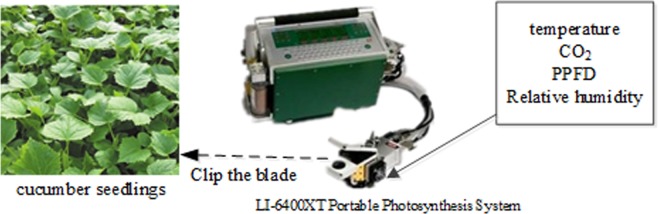
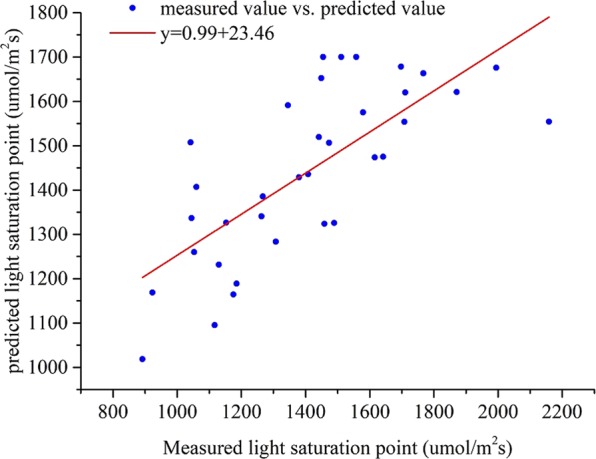
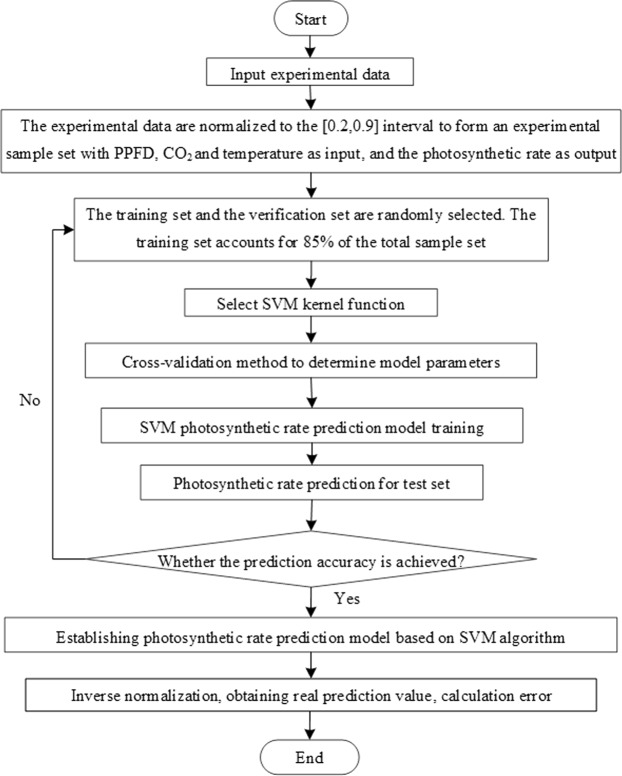
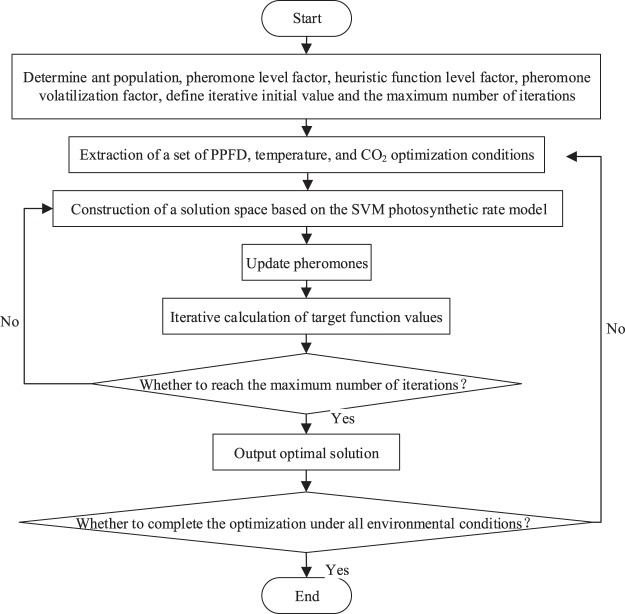
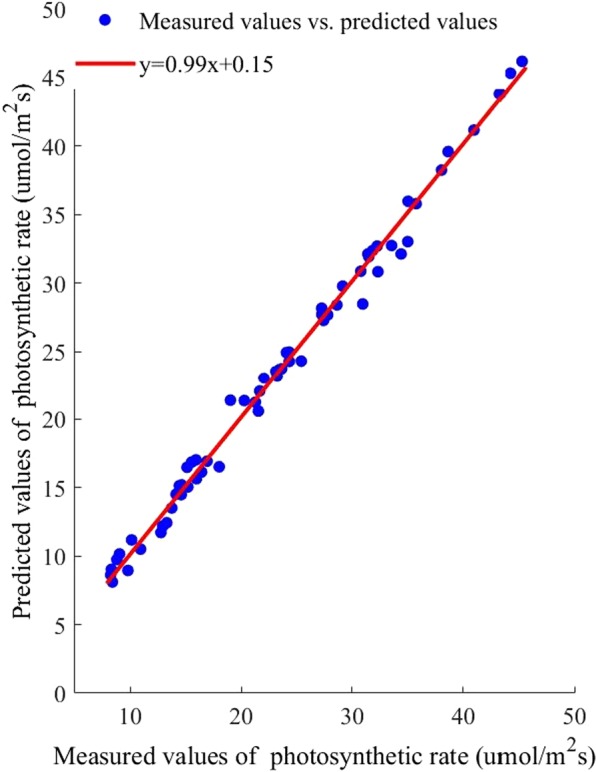
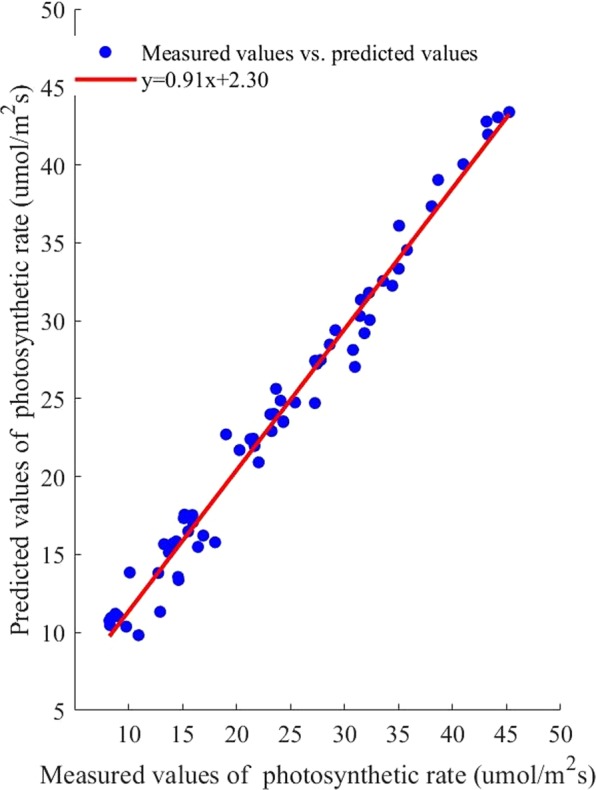
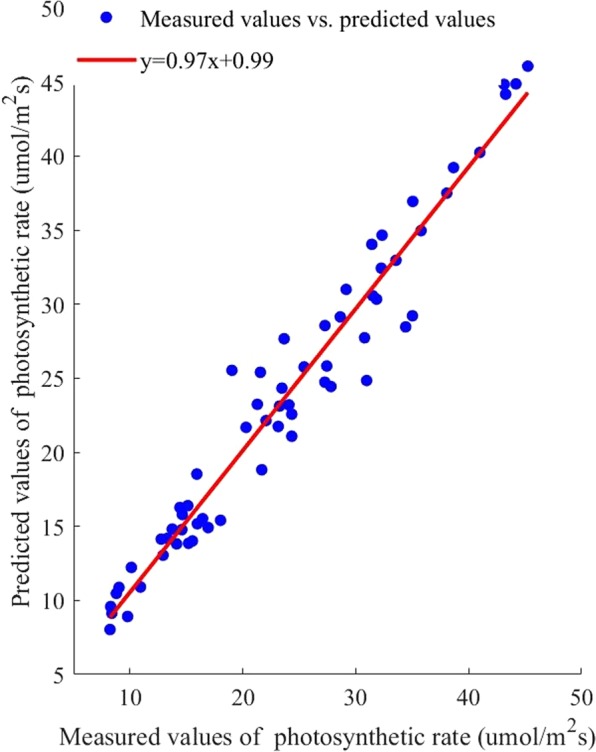
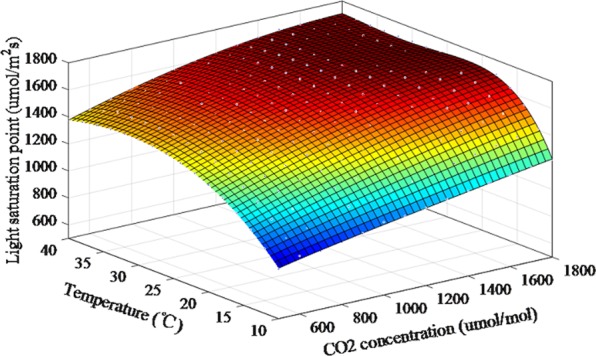
Optimization and control of the greenhouse light environment is key to increasing crop yield and quality. However, the light saturation point impacts the efficient use of light. Therefore, the dynamic acquisition of the light saturation point that is influenced by changes in temperature and CO concentration is an important challenge for the development of greenhouse light environment control system. In view of this challenge, this paper describes a light environment optimization and control model based on a crop growth model for predicting cucumber photosynthesis. The photosynthetic rate values for different photosynthetic photon flux densities (PPFD), CO concentration, and temperature conditions provided to cucumber seedlings were obtained by using an LI-6400XT portable photosynthesis system during multi-factorial experiments. Based on the measured data, photosynthetic rate predictions were determined. Next, a support vector machine(SVM) photosynthetic rate prediction model was used to obtain the light response curve under other temperatures and CO conditions. The light saturation point was used to establish the light environment optimization and control model and to perform model validation. The slope of the fitting straight line comparing the measured and predicted light saturation point was 0.99, the intercept was 23.46 and the coefficient of determination was 0.98. The light control model was able to perform dynamic acquisition of the light saturation point and provide a theoretical basis for the efficient and accurate control of the greenhouse light environment.
优化和控制温室光环境是提高作物产量和质量的关键。然而,光饱和点会影响光的有效利用。因此,动态获取受温度和 CO2 浓度变化影响的光饱和点,是开发温室光环境控制系统的一个重要挑战。针对这一挑战,本文描述了一种基于作物生长模型的光环境优化和控制模型,用于预测黄瓜光合作用。在多因素实验中,使用 LI-6400XT 便携式光合作用系统为黄瓜幼苗提供不同光合光子通量密度(PPFD)、CO2 浓度和温度条件下的光合速率值。基于测量数据,确定了光合速率预测值。然后,使用支持向量机(SVM)光合速率预测模型获得其他温度和 CO2 条件下的光响应曲线。用光饱和点建立光环境优化和控制模型,并进行模型验证。比较实测和预测光饱和点的拟合直线的斜率为 0.99,截距为 23.46,决定系数为 0.98。光照控制模型能够动态获取光饱和点,为温室光照环境的高效准确控制提供了理论依据。