Abraham Madelyn J, Fleming Kayla L, Raymond Sophie, Wong Adrian Y C, Bergeron Richard
Department of Cellular and Molecular Medicine, University of Ottawa, Ottawa, Ontario, Canada.
Neuroscience, Ottawa Hospital Research Institute, Ottawa, Ontario, Canada.
Physiol Rep. 2019 Jul;7(12):e14147. doi: 10.14814/phy2.14147.
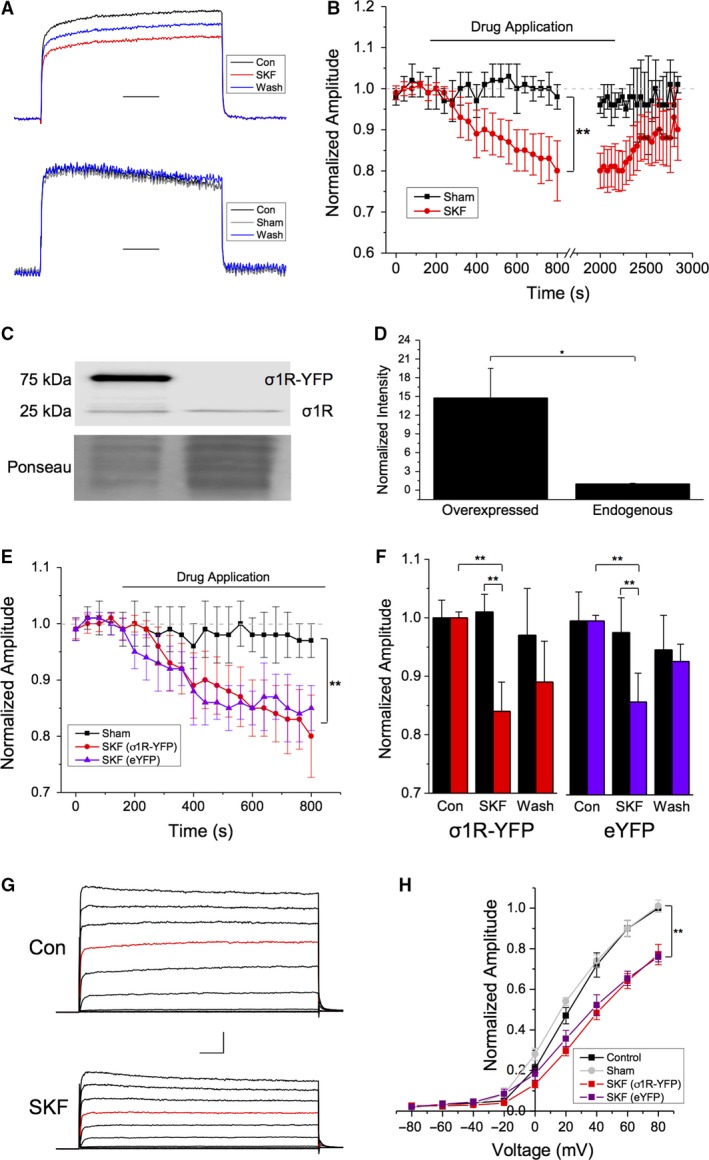
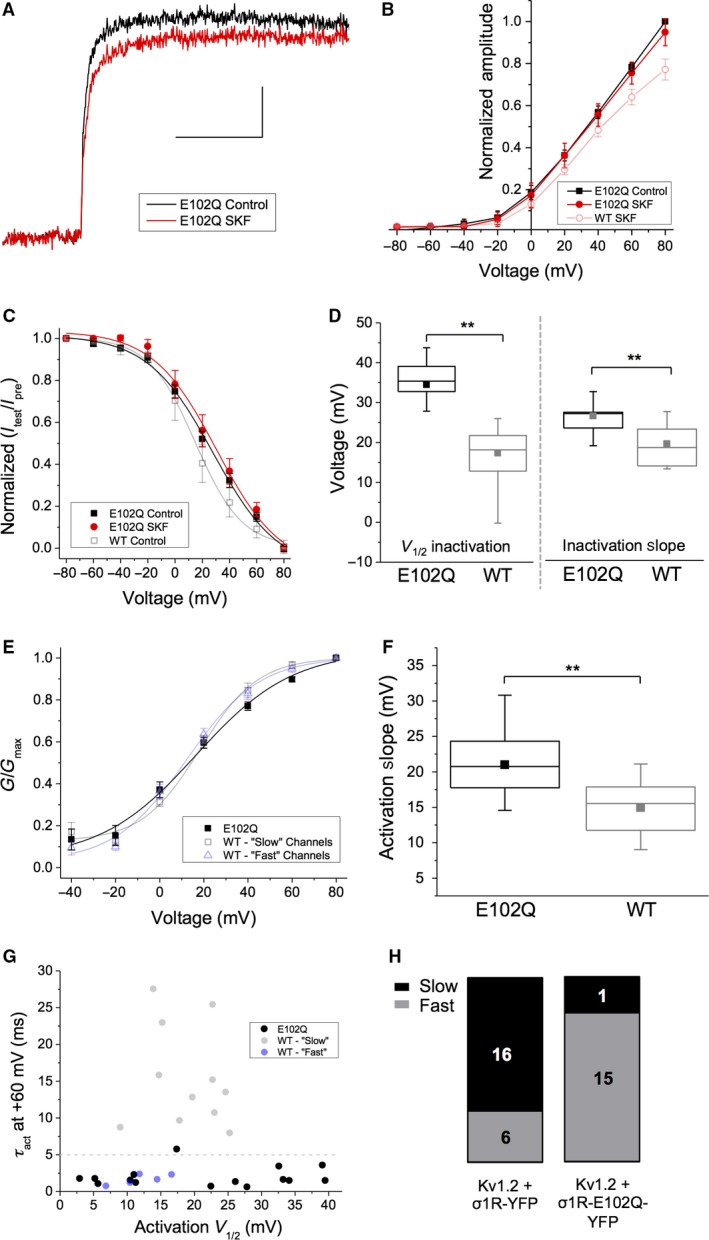
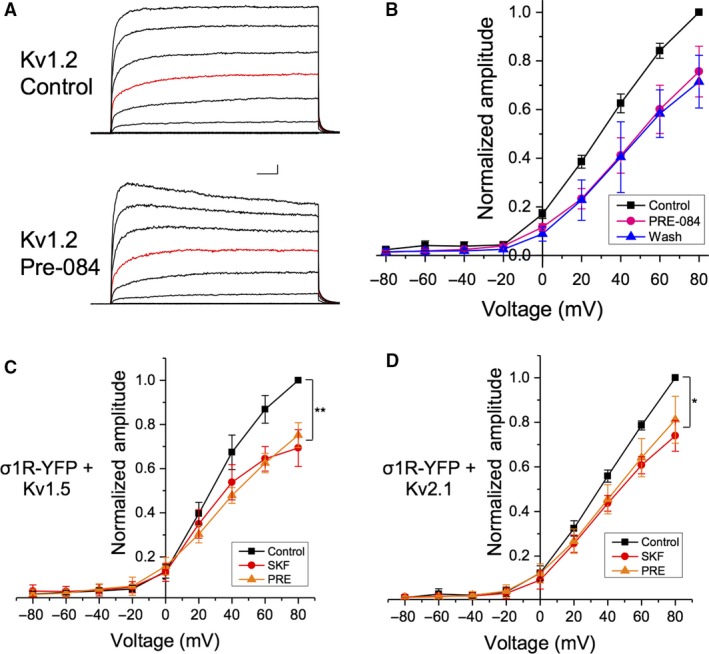
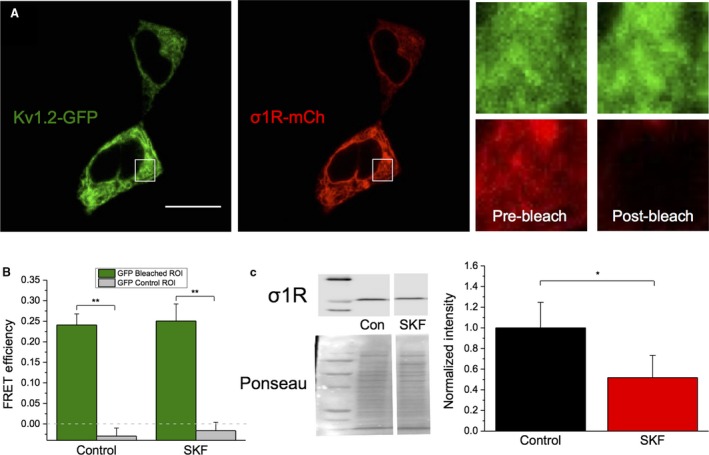
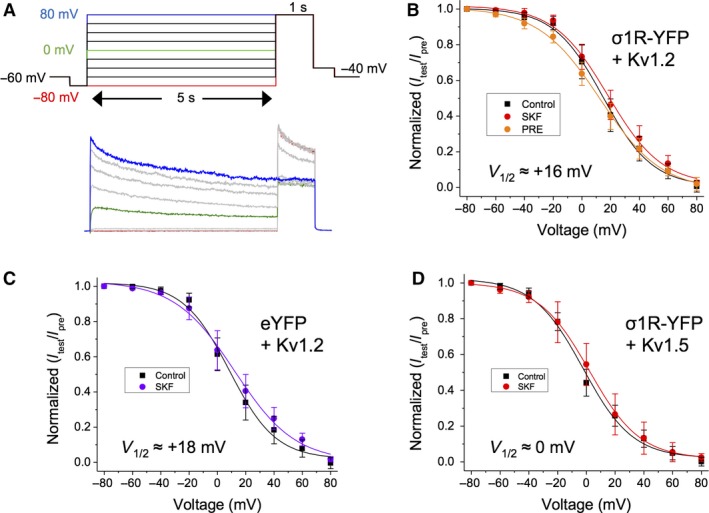
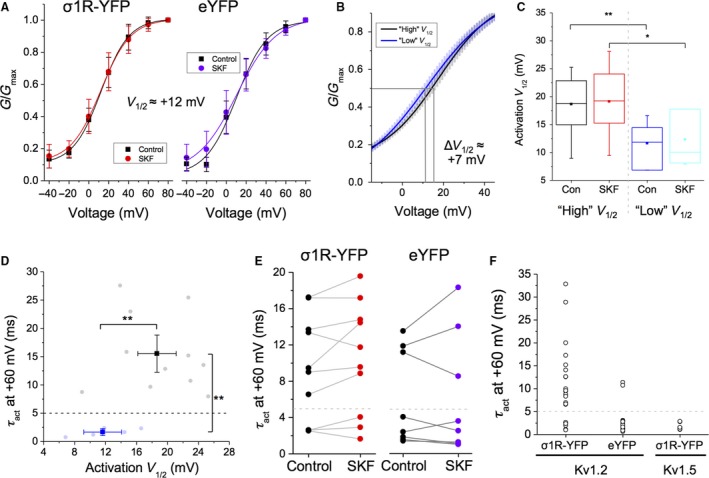
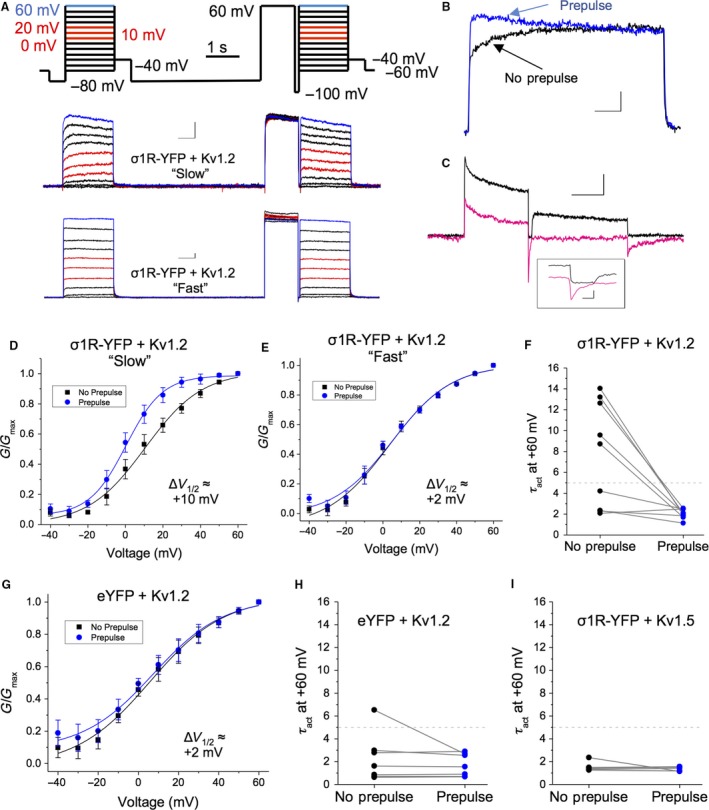
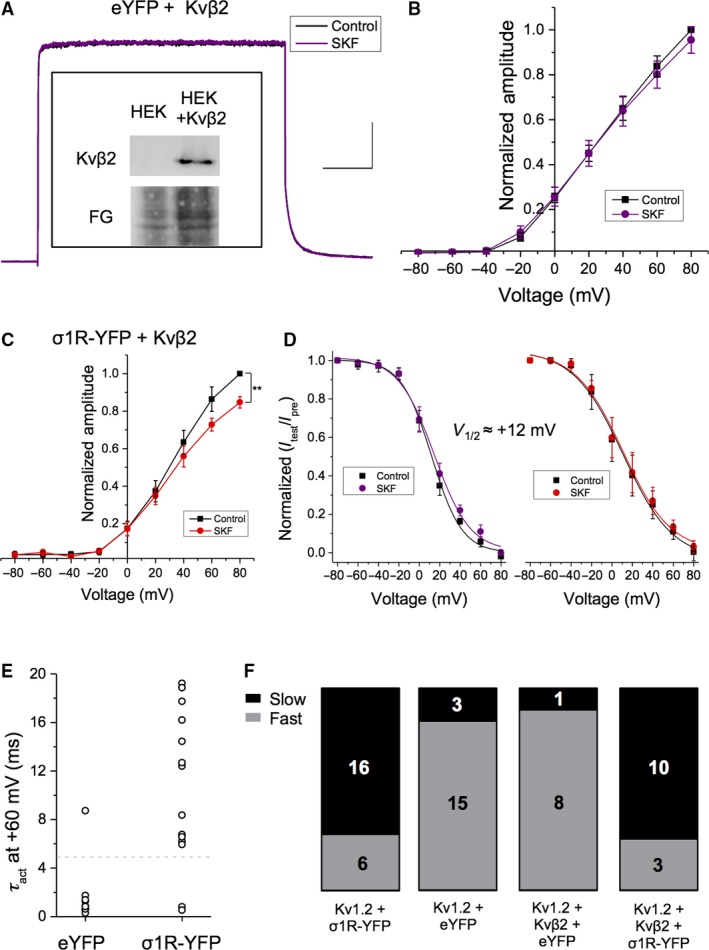
Expression of Kv1.2 within Kv1.x potassium channel complexes is critical in maintaining appropriate neuronal excitability and determining the threshold for action potential firing. This is attributed to the interaction of Kv1.2 with a hitherto unidentified protein that confers bimodal channel activation gating, allowing neurons to adapt to repetitive trains of stimulation and protecting against hyperexcitability. One potential protein candidate is the sigma-1 receptor (Sig-1R), which regulates other members of the Kv1.x channel family; however, the biophysical nature of the interaction between Sig-1R and Kv1.2 has not been elucidated. We hypothesized that Sig-1R may regulate Kv1.2 and may further act as the unidentified modulator of Kv1.2 activation. In transiently transfected HEK293 cells, we found that ligand activation of the Sig-1R modulates Kv1.2 current amplitude. More importantly, Sig-1R interacts with Kv1.2 in baseline conditions to influence bimodal activation gating. These effects are abolished in the presence of the auxiliary subunit Kvβ2 and when the Sig-1R mutation underlying ALS16 (Sig-1R-E102Q), is expressed. These data suggest that Kvβ2 occludes the interaction of Sig-1R with Kv1.2, and that E102 may be a residue critical for Sig-1R modulation of Kv1.2. The results of this investigation describe an important new role for Sig-1R in the regulation of neuronal excitability and introduce a novel mechanism of pathophysiology in Sig-1R dysfunction.
Kv1.2在Kv1.x钾通道复合物中的表达对于维持适当的神经元兴奋性以及确定动作电位发放阈值至关重要。这归因于Kv1.2与一种迄今尚未鉴定的蛋白质的相互作用,该蛋白质赋予通道双峰激活门控,使神经元能够适应重复的刺激序列并防止过度兴奋。一种潜在的蛋白质候选物是σ-1受体(Sig-1R),它调节Kv1.x通道家族的其他成员;然而,Sig-1R与Kv1.2之间相互作用的生物物理性质尚未阐明。我们假设Sig-1R可能调节Kv1.2,并可能进一步作为Kv1.2激活的未鉴定调节剂。在瞬时转染的HEK293细胞中,我们发现Sig-1R的配体激活调节Kv1.2电流幅度。更重要的是,Sig-1R在基线条件下与Kv1.2相互作用以影响双峰激活门控。在存在辅助亚基Kvβ2以及表达ALS16(Sig-1R-E102Q)潜在的Sig-1R突变时,这些作用被消除。这些数据表明Kvβ2阻断了Sig-1R与Kv1.2的相互作用,并且E102可能是Sig-1R调节Kv1.2的关键残基。本研究结果描述了Sig-1R在调节神经元兴奋性方面的重要新作用,并介绍了Sig-1R功能障碍的一种新的病理生理机制。