Miyamoto Takumi, Uemura Takuya, Nemoto Keiichirou, Daito Maho, Nozawa Akira, Sawasaki Tatsuya, Arimura Gen-Ichiro
Department of Biological Science and Technology, Faculty of Industrial Science and Technology, Tokyo University of Science, Tokyo, Japan.
Iwate Biotechnology Research Center, Iwate, Japan.
Front Plant Sci. 2019 Jun 12;10:776. doi: 10.3389/fpls.2019.00776. eCollection 2019.
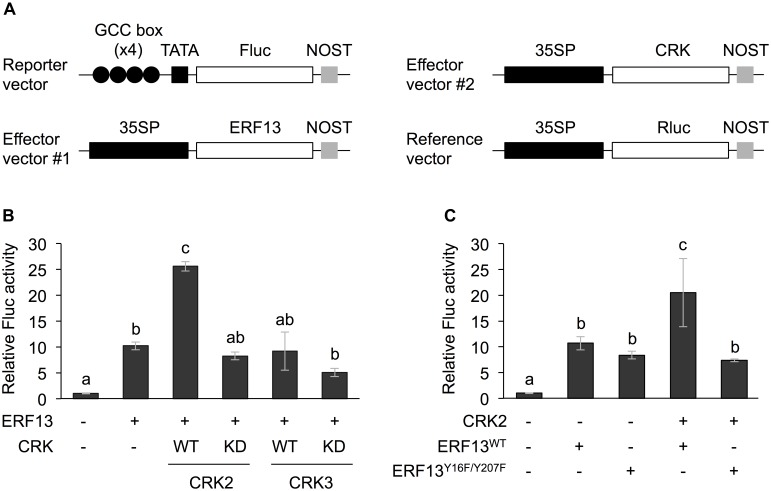
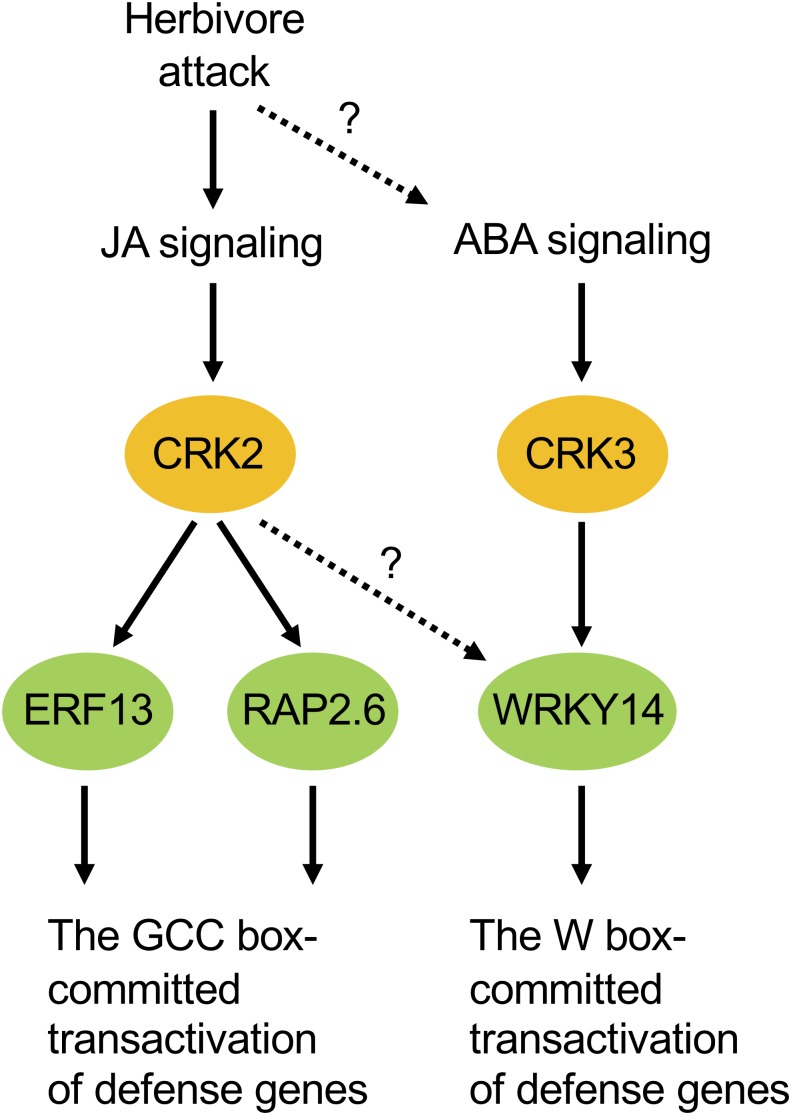
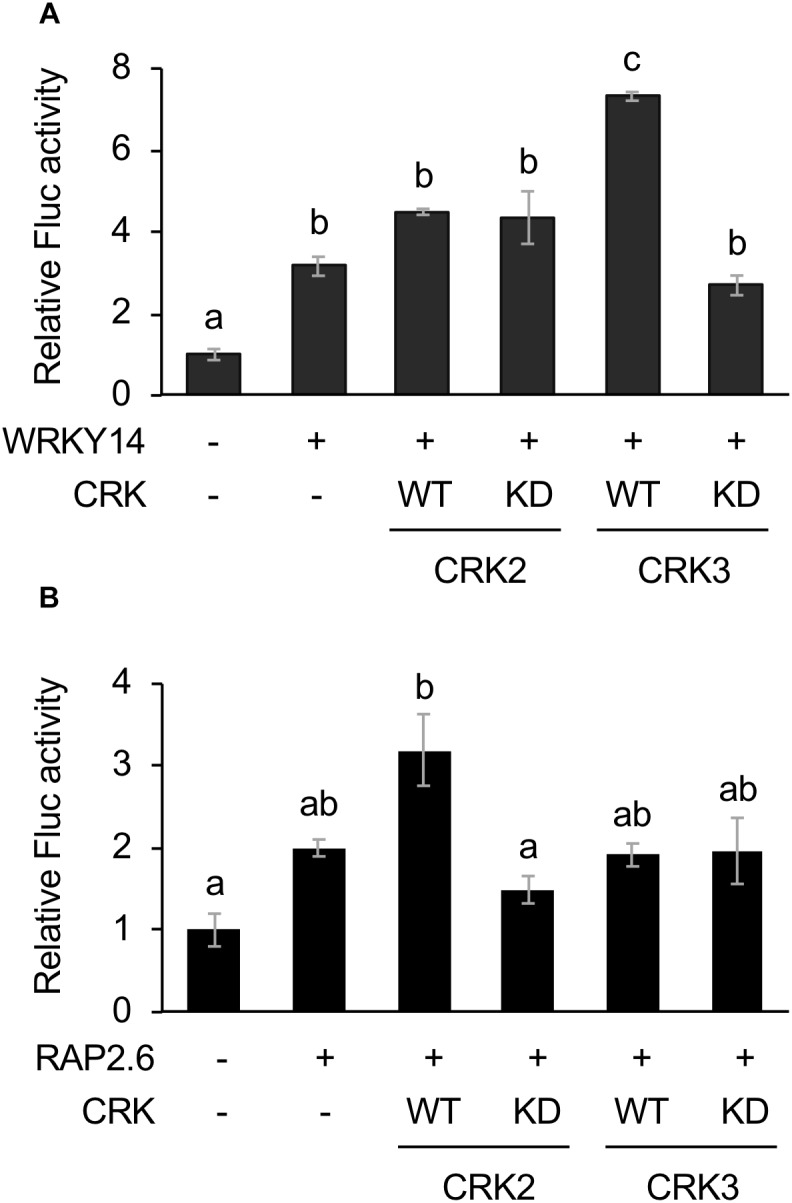
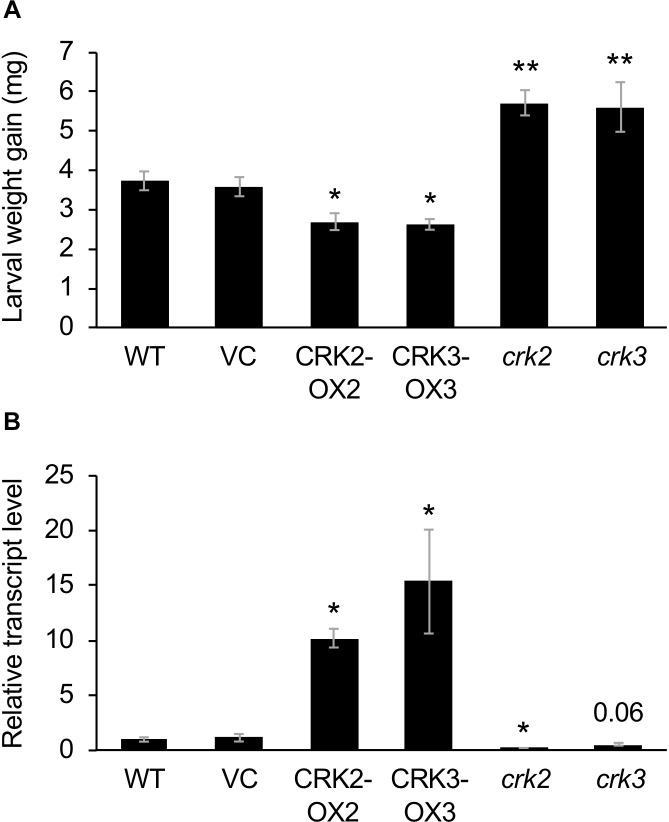
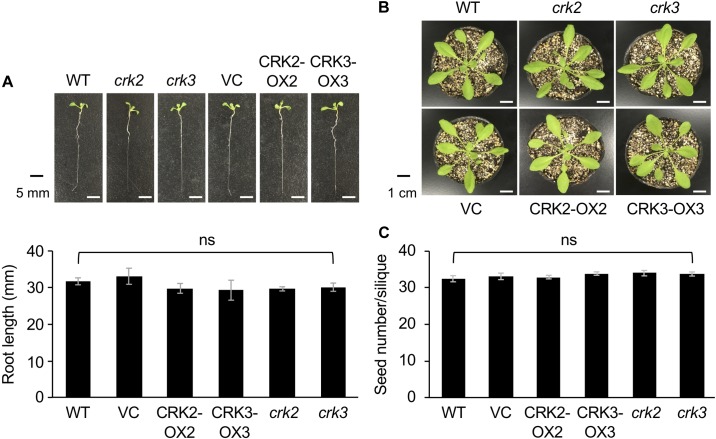
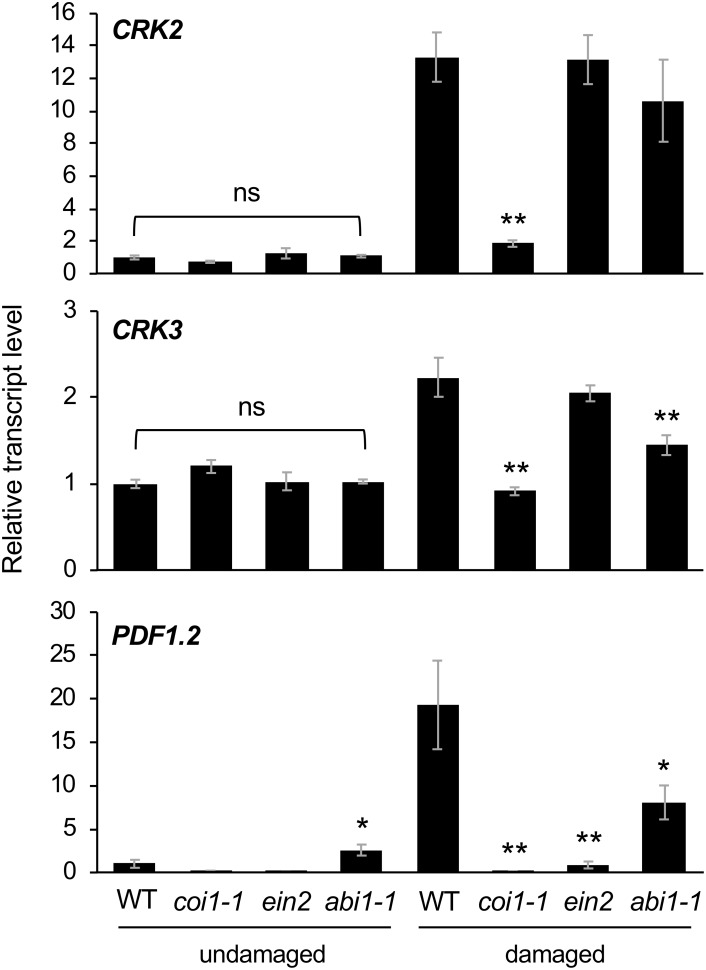
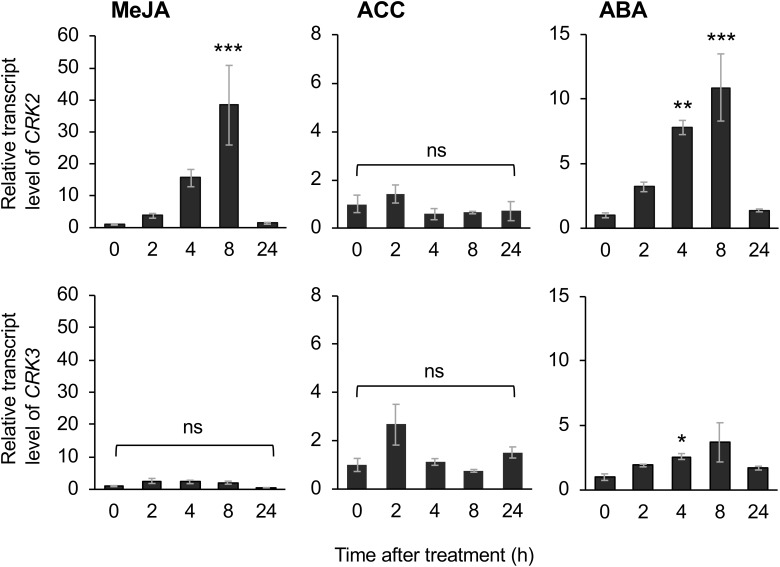
Tyrosine (Tyr) phosphorylation (TP) is important for promotion of plants' signaling. Arabidopsis calcium-dependent protein kinase related protein kinases (CRK2 and CRK3) phosphorylate Tyr residues of a subset of transcription factors (TFs), including herbivory-responsive ethylene response factor 13 (ERF13), but the functions of these kinases in plant defense responses and development remain to be clarified. We show that when CRKs were coexpressed with ERF13 in Arabidopsis leaf protoplasts, the transcription activity regulated via ERF13 was elevated by CRK2 but not CRK3 or their kinase-dead form mutants. Moreover, this elevation was abolished when a Tyr-phosphorylation mutant of ERF was coexpressed with CRK2, indicating that CRK2 serves as an effector of ERF13 mediated by Tyr-phosphorylation. Moreover, CRK2 and CRK3 acted as effectors of RAP2.6 and WRKY14, respectively. CRK-overexpressing lines and knockout mutants of Arabidopsis plants showed increased and decreased expression levels of the defensin gene in leaves, respectively, conferring on the plants modulated defense properties against the generalist herbivore . However, these lines did not show any obvious developmental defects, indicating that CRKs play a role in defense responses but not in the ordinary growth or development of plants. Transcription of both and was positively regulated by jasmonate signaling and abscisic acid (ABA) signaling upon herbivory. Our findings suggest that these phytohormone-responsive CRKs work coordinately for plant defense responses via Tyr phosphorylation of herbivory-responsive regulators.
酪氨酸(Tyr)磷酸化(TP)对促进植物信号传导很重要。拟南芥钙依赖性蛋白激酶相关蛋白激酶(CRK2和CRK3)使包括草食性响应乙烯响应因子13(ERF13)在内的一部分转录因子(TFs)的Tyr残基磷酸化,但这些激酶在植物防御反应和发育中的功能仍有待阐明。我们发现,当CRKs与ERF13在拟南芥叶原生质体中共表达时,通过ERF13调节的转录活性被CRK2提高,而不是CRK3或其激酶失活形式的突变体。此外,当ERF的酪氨酸磷酸化突变体与CRK2共表达时,这种提高被消除,表明CRK2作为由酪氨酸磷酸化介导的ERF13的效应器。此外,CRK2和CRK3分别作为RAP2.6和WRKY14的效应器。拟南芥植物的CRK过表达系和敲除突变体分别显示叶片中防御素基因的表达水平增加和降低,赋予植物对多食性食草动物的调节防御特性。然而,这些品系没有表现出任何明显的发育缺陷,表明CRKs在防御反应中起作用,但在植物的正常生长或发育中不起作用。在草食性胁迫下, 和 的转录均受到茉莉酸信号和脱落酸(ABA)信号的正调控。我们的研究结果表明,这些植物激素响应性CRKs通过对草食性响应调节因子的酪氨酸磷酸化协同作用于植物防御反应。