Wei Haiyan, Li Weihua, Jiang Zhen, Xi Xiaoying, Qi Gongjian
Department of Intensive Care Unit, Xuzhou Children's Hospital, Xuzhou Medical University, Xuzhou, Jiangsu 221006, P.R. China.
Exp Ther Med. 2019 Jul;18(1):411-417. doi: 10.3892/etm.2019.7574. Epub 2019 May 10.
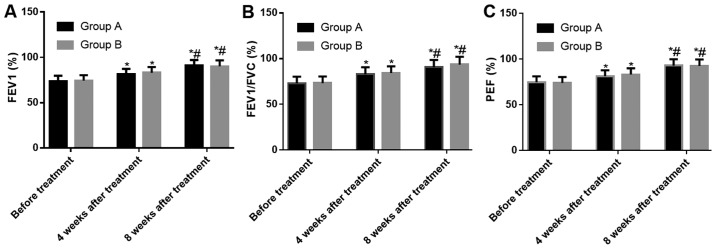
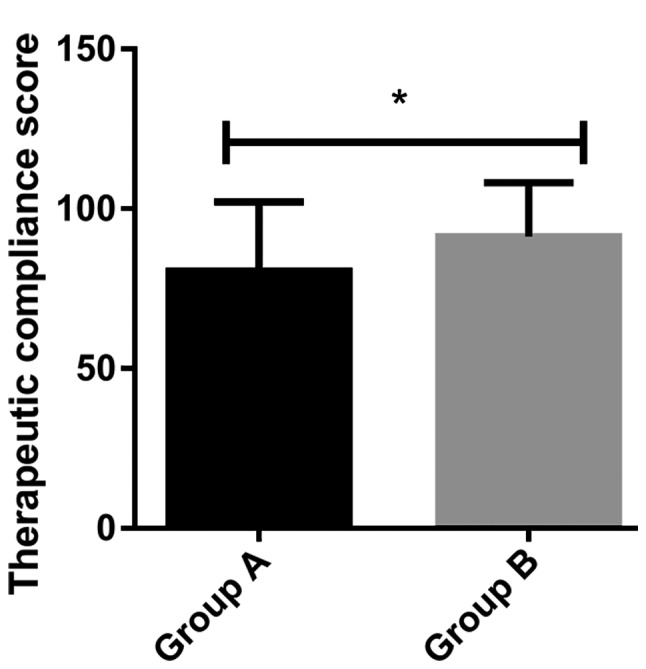
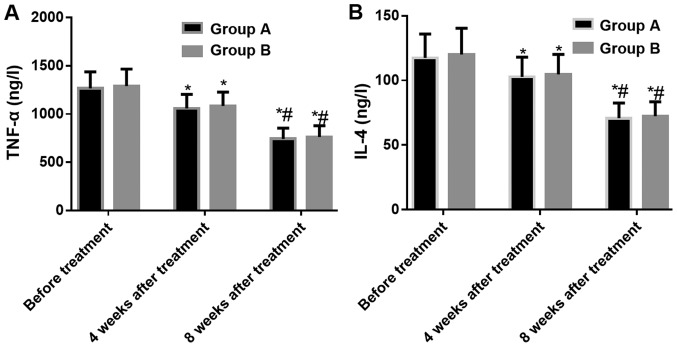
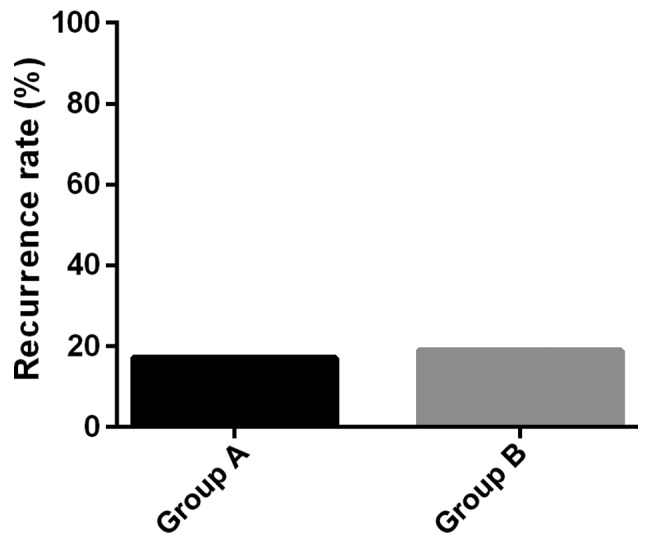
Clinical efficacy of montelukast sodium combined with budesonide or combined with loratadine in children with cough variant asthma was investigated. A retrospective analysis of the medical records of 72 children with cough variant asthma who were treated in Xuzhou Children's Hospital, Xuzhou Medical University from April 2015 to August 2017 was performed and the 72 child patients were divided into two groups: 35 children were treated with montelukast sodium combined with budesonide in Group A, and 37 children were treated with montelukast sodium combined with loratadine in Group B. The clinical efficacy of the two groups was evaluated according to the lung function indexes [forced expiratory volume in the first second (FEV1), ratio of the forced expiratory volume in the first second to the forced vital capacity (FEV1/FVC), the peak expiratory flow (PEF)], the inflammation biomarkers [tumor necrosis factor-α (TNF-α) and interleukin-4 (IL-4)], the level of eosinophil granulocyte, and the level of IgE at three time-points: before treatment, the 4th week after treatment, and the 12th week after treatment as well as adverse reactions, recurrence of symptoms, and treatment compliance were recorded. After treatment, the levels of FEV1, FEV1/FVC, PEF, TNF-α and IL-4, eosinophil granulocyte and IgE in the two groups were significantly improved (P<0.05). The treatment compliance of Group A was significantly lower than that of Group B (P<0.05). In conclusion, the method of montelukast sodium combined with budesonide or loratadine are both worthy of clinical promotion because they have equivalent efficacy in the treatment of cough variant asthma to effectively improve the lung function and inflammatory response in patients and both bring less adverse reactions and lower recurrence rate.
研究了孟鲁司特钠联合布地奈德或联合氯雷他定治疗咳嗽变异性哮喘患儿的临床疗效。对2015年4月至2017年8月在徐州医科大学附属徐州儿童医院接受治疗的72例咳嗽变异性哮喘患儿的病历进行回顾性分析,并将这72例患儿分为两组:A组35例患儿接受孟鲁司特钠联合布地奈德治疗,B组37例患儿接受孟鲁司特钠联合氯雷他定治疗。根据肺功能指标[第1秒用力呼气量(FEV1)、第1秒用力呼气量与用力肺活量之比(FEV1/FVC)、呼气峰值流速(PEF)]、炎症生物标志物[肿瘤坏死因子-α(TNF-α)和白细胞介素-4(IL-4)]、嗜酸性粒细胞水平以及治疗前、治疗后第4周和治疗后第12周三个时间点的IgE水平评估两组的临床疗效,并记录不良反应、症状复发情况和治疗依从性。治疗后,两组的FEV1、FEV1/FVC、PEF、TNF-α和IL-4、嗜酸性粒细胞和IgE水平均显著改善(P<0.05)。A组的治疗依从性显著低于B组(P<0.05)。综上所述,孟鲁司特钠联合布地奈德或氯雷他定的方法在治疗咳嗽变异性哮喘方面疗效相当,均能有效改善患者的肺功能和炎症反应,且不良反应较少,复发率较低,均值得临床推广。