
红麻/竹纤维增强环氧混杂复合材料的空隙含量、拉伸、振动及声学性能
Void Content, Tensile, Vibration and Acoustic Properties of Kenaf/Bamboo Fiber Reinforced Epoxy Hybrid Composites.
作者信息
Ismail Ahmad Safwan, Jawaid Mohammad, Naveen Jesuarockiam
机构信息
Laboratory of Bio composite Technology, Institute of Tropical Forestry and Forest Products (INTROP), Universiti Putra Malaysia, UPM Serdang, Selangor 43400, Malaysia.
Department of Mechanical and Manufacturing Engineering, Faculty of Engineering, Universiti Putra Malaysia, UPM Serdang, Selangor 43400, Malaysia.
出版信息
Materials (Basel). 2019 Jun 28;12(13):2094. doi: 10.3390/ma12132094.
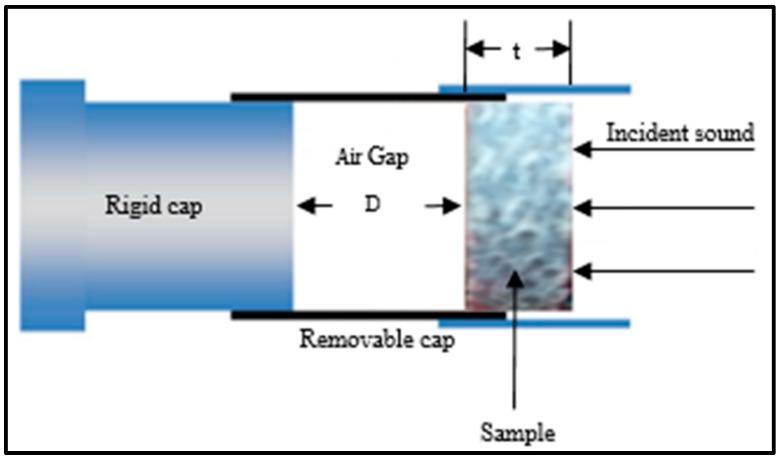
This study aims to investigate the void content, tensile, vibration and acoustic properties of kenaf/bamboo fiber reinforced epoxy hybrid composites. The composites were made using the hand lay-up method. The weight ratios of kenaf/bamboo were 30:70, 50:50 and 70:30. Further, kenaf and bamboo composites were fabricated for the purpose of comparison. The hybridization of woven kenaf/bamboo reduced the void content. The void contents of hybrid composites were almost similar. An enhancement in elongation at break, tensile strength and modulus of hybrid composites was observed until a kenaf/bamboo ratio of 50:50. Kenaf/bamboo (50:50) hybrid composite displays the highest elongation at break, tensile strength and modulus compared to the other hybrid composites which are 2.42 mm, 55.18 MPa and 5.15 GPa, respectively. On the other hand, the highest natural frequency and damping factors were observed for Bamboo/Kenaf (30:70) hybrid composites. The sound absorption coefficient of composites were measured in two conditions: without air gap and with air gap (10, 20, 30 mm). The sound absorption coefficient for testing without air gap was less than 0.5. Introducing an air gap improved the sound absorption coefficient of all composites. Hence, hybrid kenaf/bamboo composites exhibited less void content, as well as improved tensile, vibration and acoustic properties.
本研究旨在探究红麻/竹纤维增强环氧混杂复合材料的孔隙率、拉伸性能、振动性能及声学性能。复合材料采用手糊成型法制备。红麻/竹的重量比为30:70、50:50和70:30。此外,为作比较还制备了红麻复合材料和竹复合材料。机织红麻/竹的混杂降低了孔隙率。混杂复合材料的孔隙率几乎相近。观察到,在红麻/竹比例达到50:50之前,混杂复合材料的断裂伸长率、拉伸强度和模量均有所提高。与其他混杂复合材料相比,红麻/竹(50:50)混杂复合材料的断裂伸长率、拉伸强度和模量最高,分别为2.42毫米、55.18兆帕和5.15吉帕。另一方面,竹/红麻(30:70)混杂复合材料的固有频率和阻尼因子最高。在两种条件下测量了复合材料的吸声系数:无气隙和有气隙(10、20、30毫米)。无气隙测试的吸声系数小于0.5。引入气隙提高了所有复合材料的吸声系数。因此,红麻/竹混杂复合材料孔隙率较低,同时拉伸性能、振动性能及声学性能均得到改善。





 Zotero 插件