
一种利用序列测量组合改进同震电离层扰动探测的新方法。
A New Method to Improve the Detection of Co-Seismic Ionospheric Disturbances using Sequential Measurement Combination.
作者信息
Kang Seonho, Song Junesol, Han Deokhwa, Kim Bugyeom, So Hyoungmin, Kim Kap-Jin, Kee Changdon
机构信息
Mechanical and Aerospace Engineering, and the SNU-IAMD, Seoul National University, Seoul 08826, Korea.
Ecole Nationale de l'Aviation Civile (ENAC), Toulouse 31400, France.
出版信息
Sensors (Basel). 2019 Jul 4;19(13):2948. doi: 10.3390/s19132948.
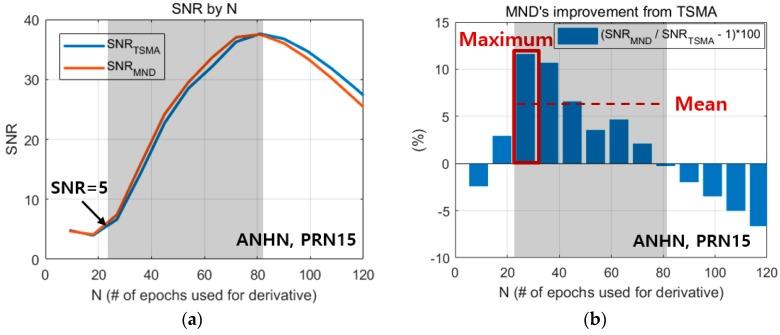
Earthquakes generate energy that propagates into the ionosphere and incurs co-seismic ionospheric disturbances (CIDs), which can be observed in ionospheric delay measurements. In most cases, the CID has a weak signal strength, because the energy in the atmosphere transferred from the earthquake dissipates as it travels toward the ionosphere. It is particularly hard to observe at reference stations that are located far from the epicenter. As the number of Global Navigation Satellite System stations and their positions are restricted, it is important to employ weak CID data in the analysis by improving the detection performance of CIDs. In this study, we suggest a new method of detecting CIDs, which mainly uses a sequential measurement combination of the carrier phase-based ionospheric delay data, with a 1-second interval. The proposed method's performance was compared with conventional methods, including band-pass filters and a representative time-derivative method, using data from the 2011 Tohoku earthquake. As a result, the maximum CID-to-noise ratio can be increased by a maximum of 13% when the proposed method is used, and consequently, the detection performance of the CID can be improved.
地震产生的能量会传播到电离层,并引发同震电离层扰动(CIDs),这种扰动可在电离层延迟测量中观测到。在大多数情况下,CIDs的信号强度较弱,因为从地震传递到大气中的能量在向电离层传播的过程中会消散。在远离震中的参考站尤其难以观测到。由于全球导航卫星系统站点的数量及其位置受到限制,通过提高CIDs的检测性能来在分析中使用微弱的CIDs数据非常重要。在本研究中,我们提出了一种检测CIDs的新方法,该方法主要使用基于载波相位的电离层延迟数据以1秒的间隔进行顺序测量组合。使用2011年东北地震的数据,将所提方法的性能与包括带通滤波器和一种代表性的时间导数方法在内的传统方法进行了比较。结果表明,使用所提方法时,最大CIDs与噪声比最多可提高13%,因此可以提高CIDs的检测性能。



 Zotero 插件