The Rowett Institute, University of Aberdeen, Ashgrove Road West, Aberdeen AB25 2ZD, UK.
Department of Life Sciences and the National Institute for Biotechnology in the Negev, Ben-Gurion University of the Negev, Be'er Sheva, Israel.
Sci Adv. 2019 Jul 3;5(7):eaav8391. doi: 10.1126/sciadv.aav8391. eCollection 2019 Jul.
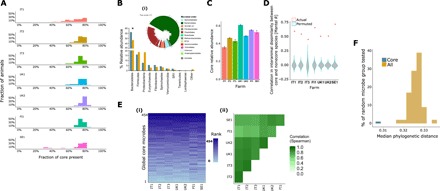
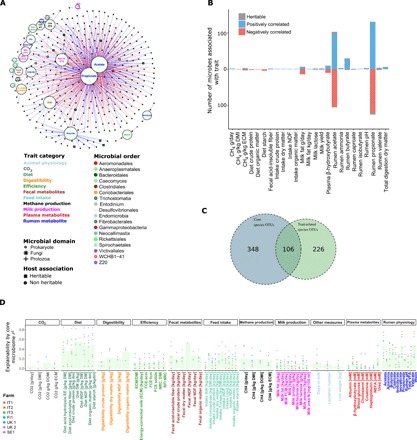
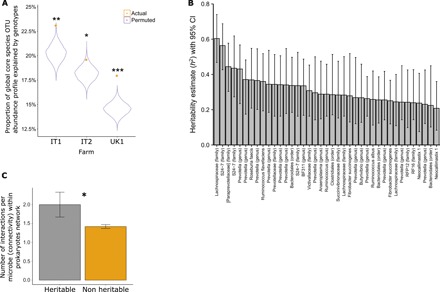
A 1000-cow study across four European countries was undertaken to understand to what extent ruminant microbiomes can be controlled by the host animal and to identify characteristics of the host rumen microbiome axis that determine productivity and methane emissions. A core rumen microbiome, phylogenetically linked and with a preserved hierarchical structure, was identified. A 39-member subset of the core formed hubs in co-occurrence networks linking microbiome structure to host genetics and phenotype (methane emissions, rumen and blood metabolites, and milk production efficiency). These phenotypes can be predicted from the core microbiome using machine learning algorithms. The heritable core microbes, therefore, present primary targets for rumen manipulation toward sustainable and environmentally friendly agriculture.
开展了一项涉及四个欧洲国家的 1000 头牛的研究,旨在了解反刍动物微生物组在多大程度上可以受到宿主动物的控制,并确定决定生产力和甲烷排放的宿主瘤胃微生物组轴的特征。确定了一个与系统发育相关且具有保留的层次结构的核心瘤胃微生物组。核心的 39 个成员子集形成了共生网络的枢纽,将微生物组结构与宿主遗传学和表型(甲烷排放、瘤胃和血液代谢物以及牛奶生产效率)联系起来。可以使用机器学习算法从核心微生物组中预测这些表型。因此,可遗传的核心微生物是实现瘤胃可持续和环保管理的主要目标。