Michałek Jarosław
Faculty of Civil Engineering, Wrocław University of Science and Technology, 50-370 Wrocław, Poland.
Materials (Basel). 2019 Jul 5;12(13):2162. doi: 10.3390/ma12132162.
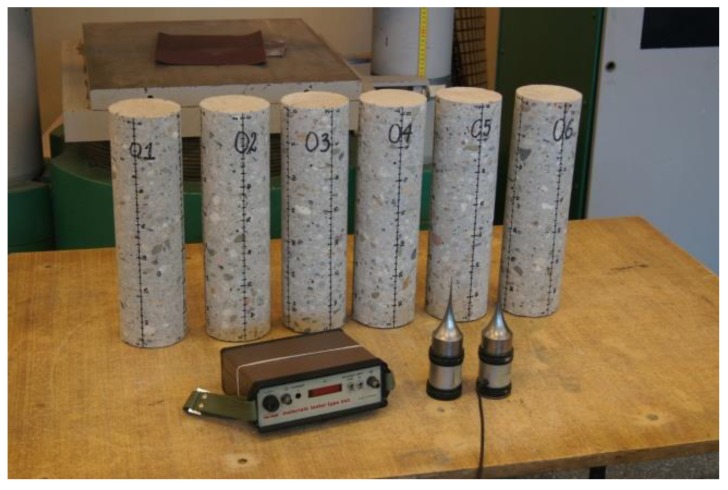
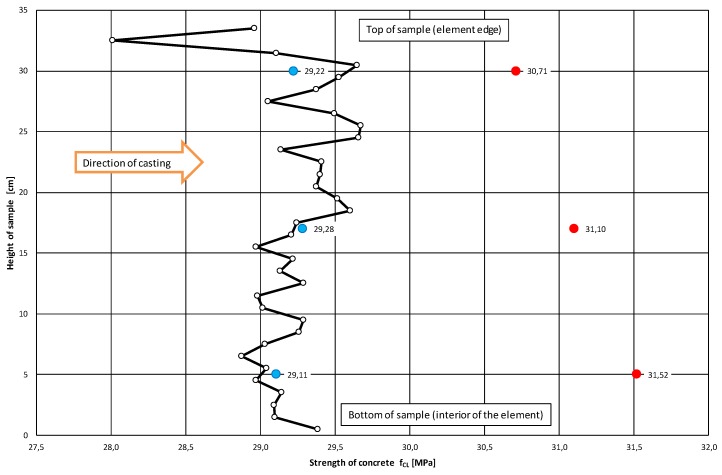
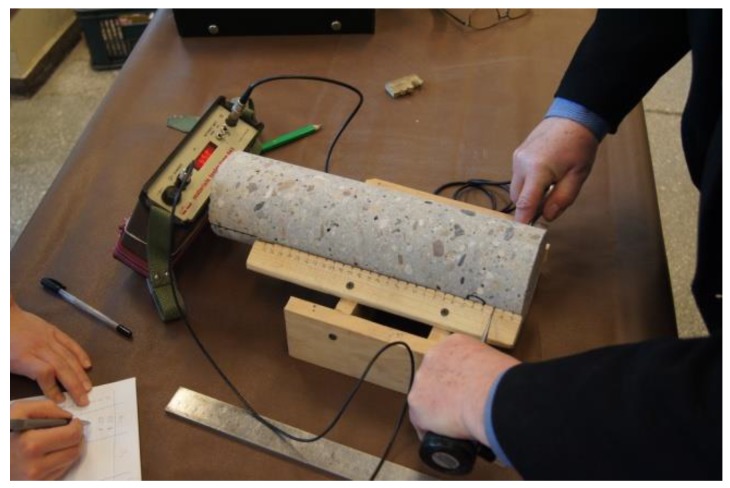
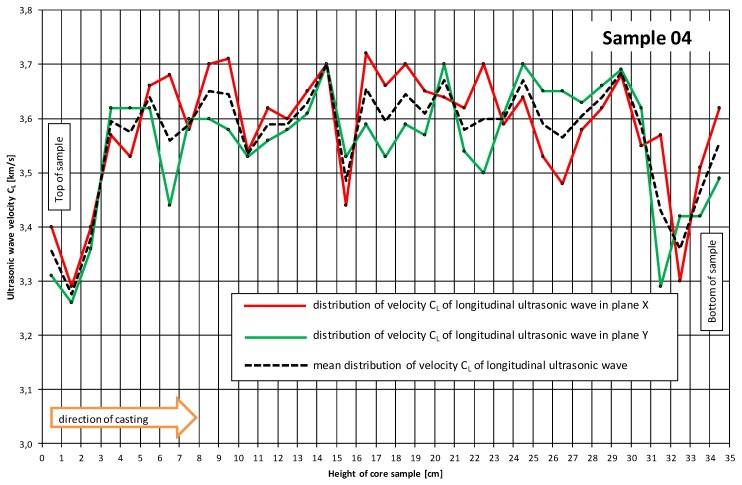
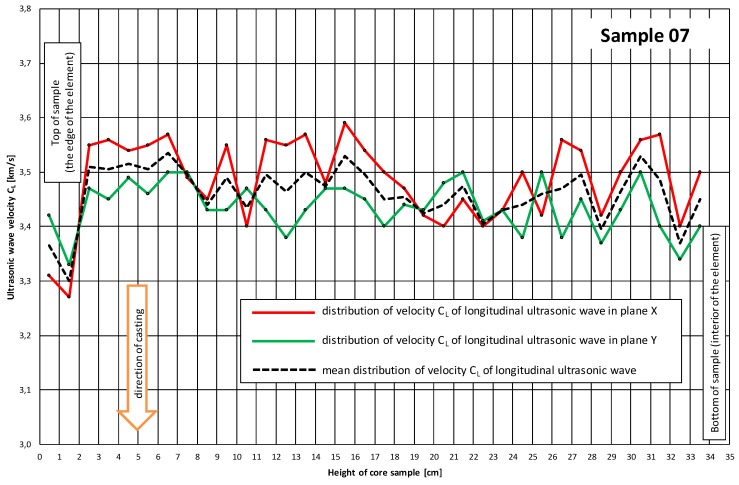
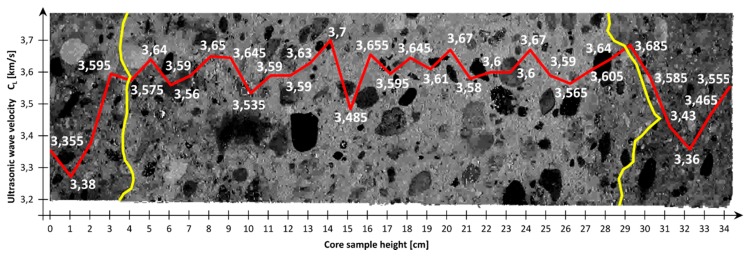
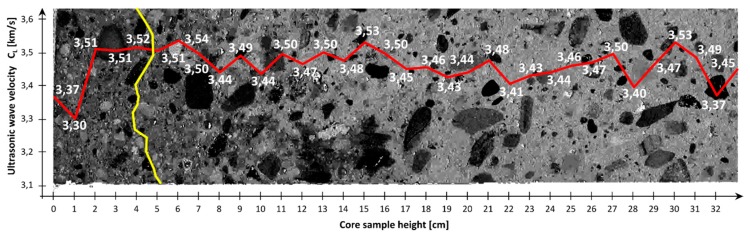
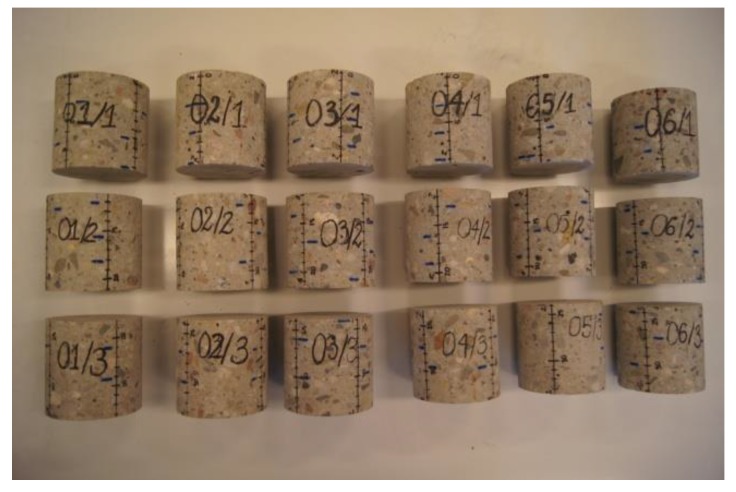
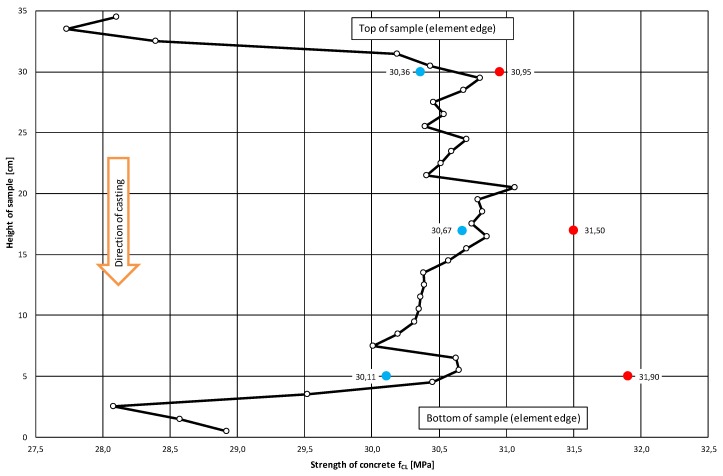
Is the variation in the compressive strength of concrete across the thickness of horizontally cast elements negligibly small or rather needs to be taken into account at the design stage? There are conflicting answers to this question. In order to determine if the compressive strength of concrete varies across the thickness of horizontally cast elements, ultrasonic tests and destructive tests were carried out on core samples taken from a 350 mm thick slab made of class C25/30 concrete. Special point-contact probes were used to measure the time taken for the longitudinal ultrasonic wave to pass through the tested sample. The correlation between the velocity of the longitudinal ultrasonic wave and the compressive strength of the concrete in the slab was determined. The structure of the concrete across the thickness of the slab was evaluated using GIMP 2.10.4. It was found that the destructively determined compressive strength varied only slightly (by 3%) across the thickness of the placed layer of concrete. Whereas the averaged ultrasonically determined strength of the concrete in the same samples does not vary across the thickness of the analyzed slab. Therefore, it was concluded that the slight increase in concrete compressive strength with depth below the top surface is a natural thing and need not be taken into account in the assessment of the strength of concrete in the structure.
对于水平浇筑构件,其混凝土抗压强度在构件厚度方向上的变化是小到可以忽略不计,还是在设计阶段就需要考虑呢?对于这个问题,答案相互矛盾。为了确定混凝土抗压强度在水平浇筑构件厚度方向上是否变化,对取自一块350毫米厚的C25/30级混凝土板的芯样进行了超声测试和破坏性试验。使用特殊的点接触探头测量纵向超声波穿过测试样品所需的时间。确定了纵向超声波速度与板中混凝土抗压强度之间的相关性。使用GIMP 2.10.4评估了板厚方向上混凝土的结构。结果发现,通过破坏性试验确定的抗压强度在浇筑混凝土层的厚度方向上仅略有变化(3%)。而在相同样品中,通过超声平均确定的混凝土强度在分析板的厚度方向上没有变化。因此,得出的结论是,混凝土抗压强度在顶面以下随深度略有增加是正常现象,在评估结构中混凝土强度时无需考虑。