Di Cristo Luisana, Bianchi Massimiliano G, Chiu Martina, Taurino Giuseppe, Donato Francesca, Garzaro Giacomo, Bussolati Ovidio, Bergamaschi Enrico
Laboratory of General Pathology, Department of Medicine and Surgery, University of Parma, 43125 Parma, Italy.
Department of Public Health Sciences and Pediatrics, University of Turin, 10126 Turin, Italy.
Nanomaterials (Basel). 2019 Jul 6;9(7):982. doi: 10.3390/nano9070982.
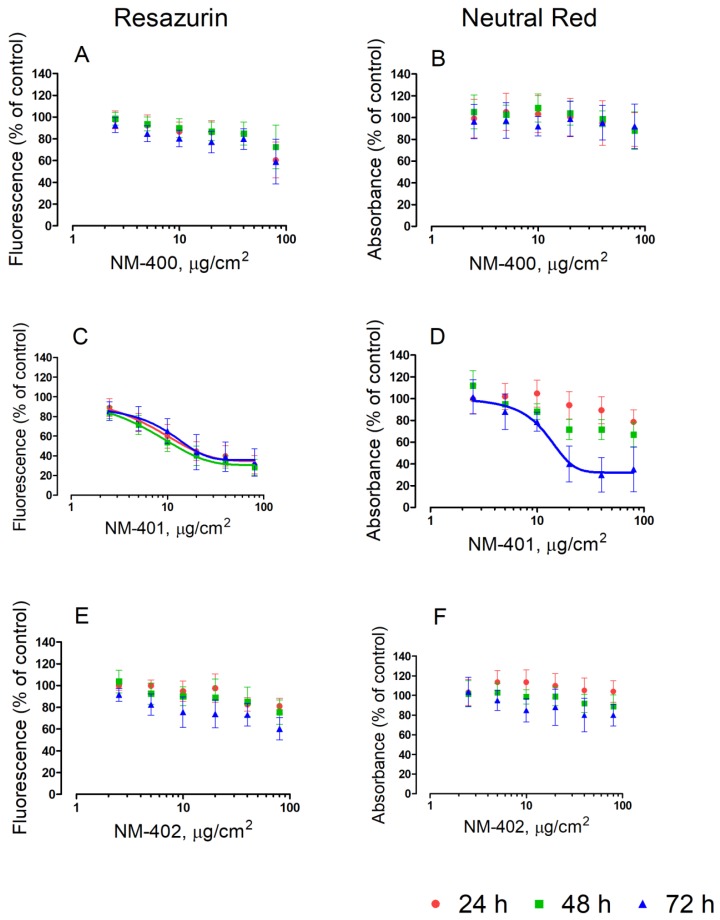
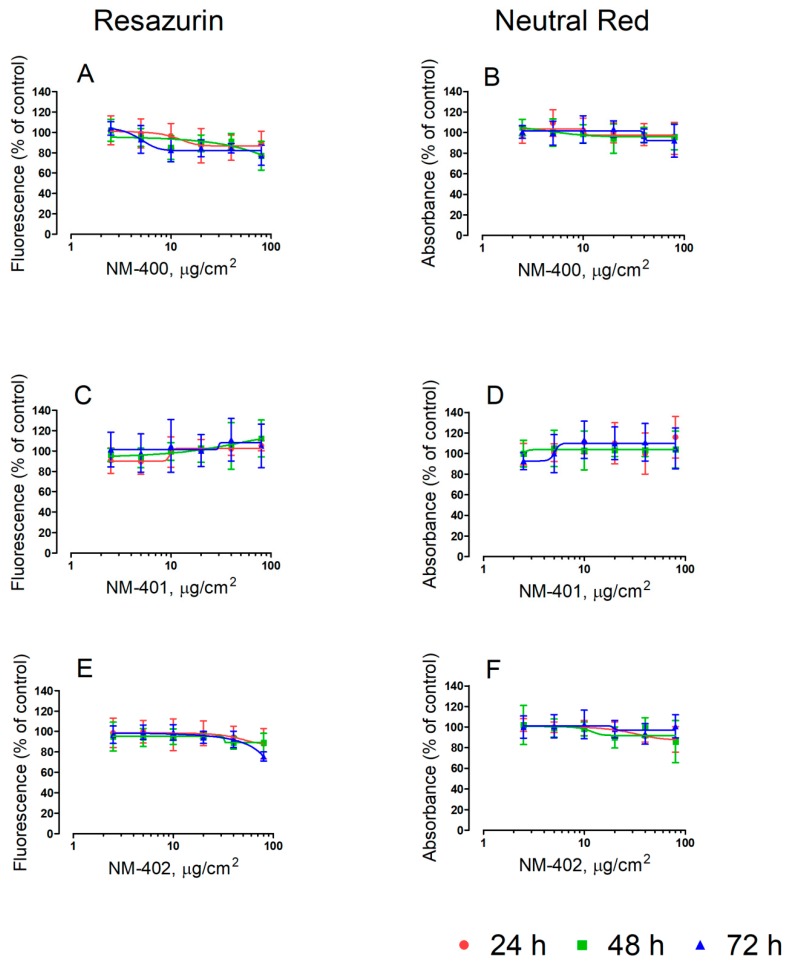
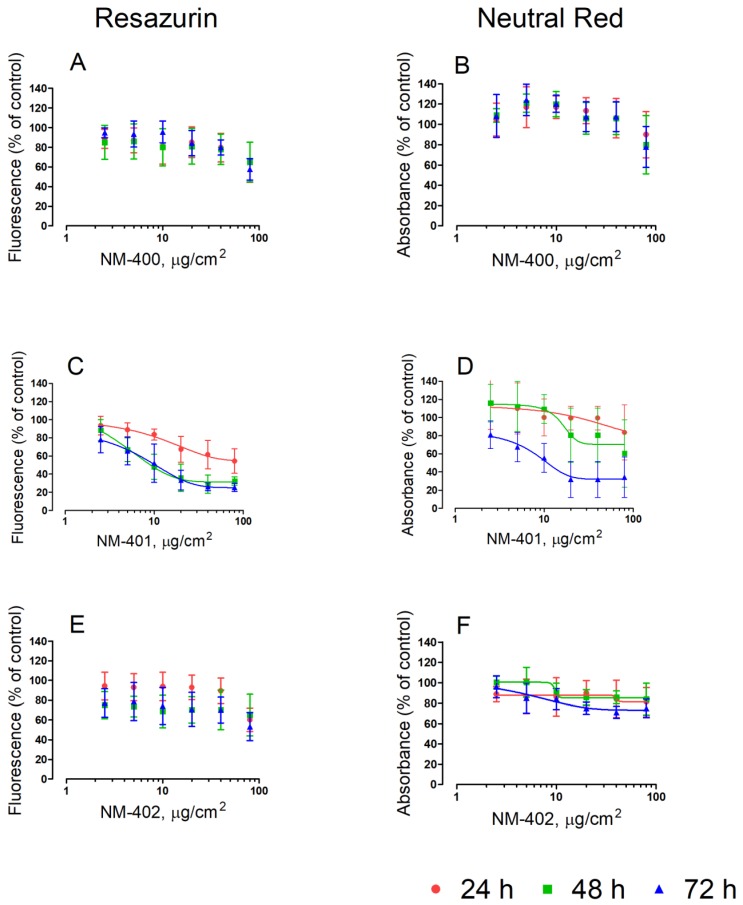
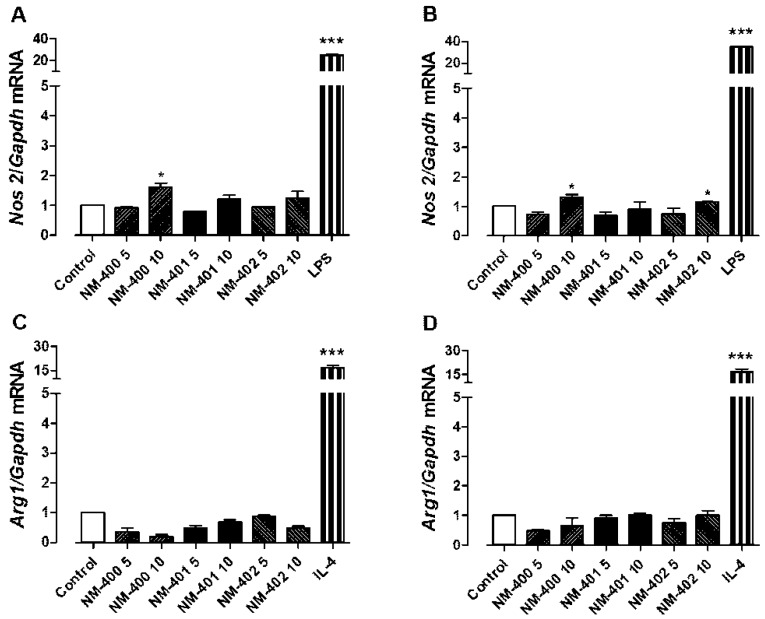
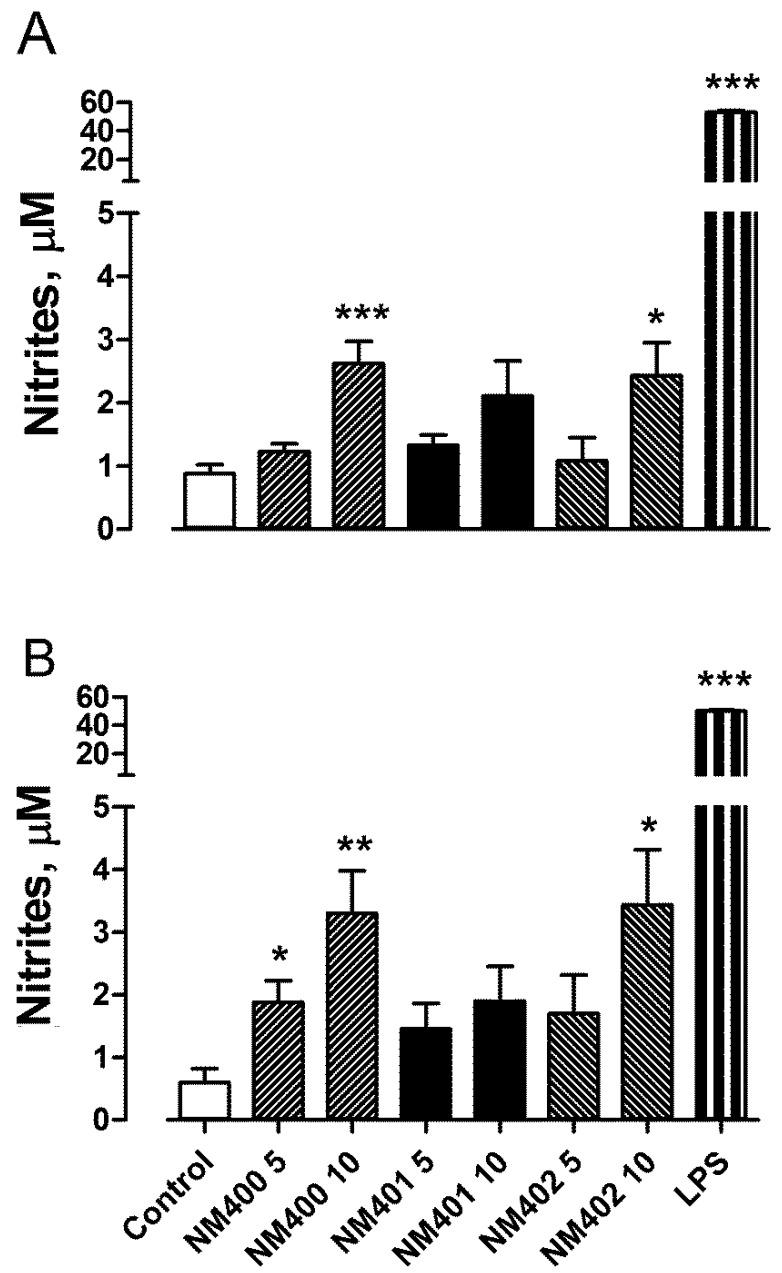
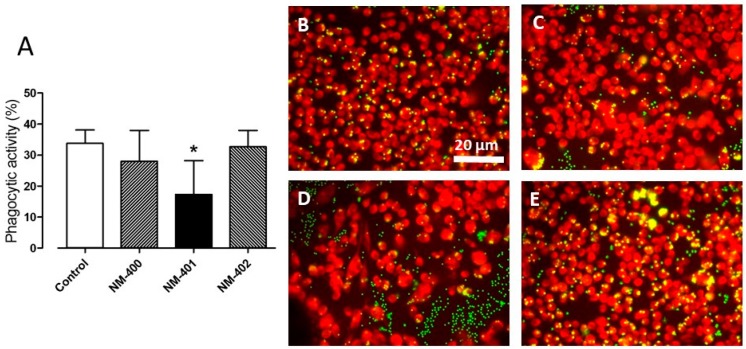
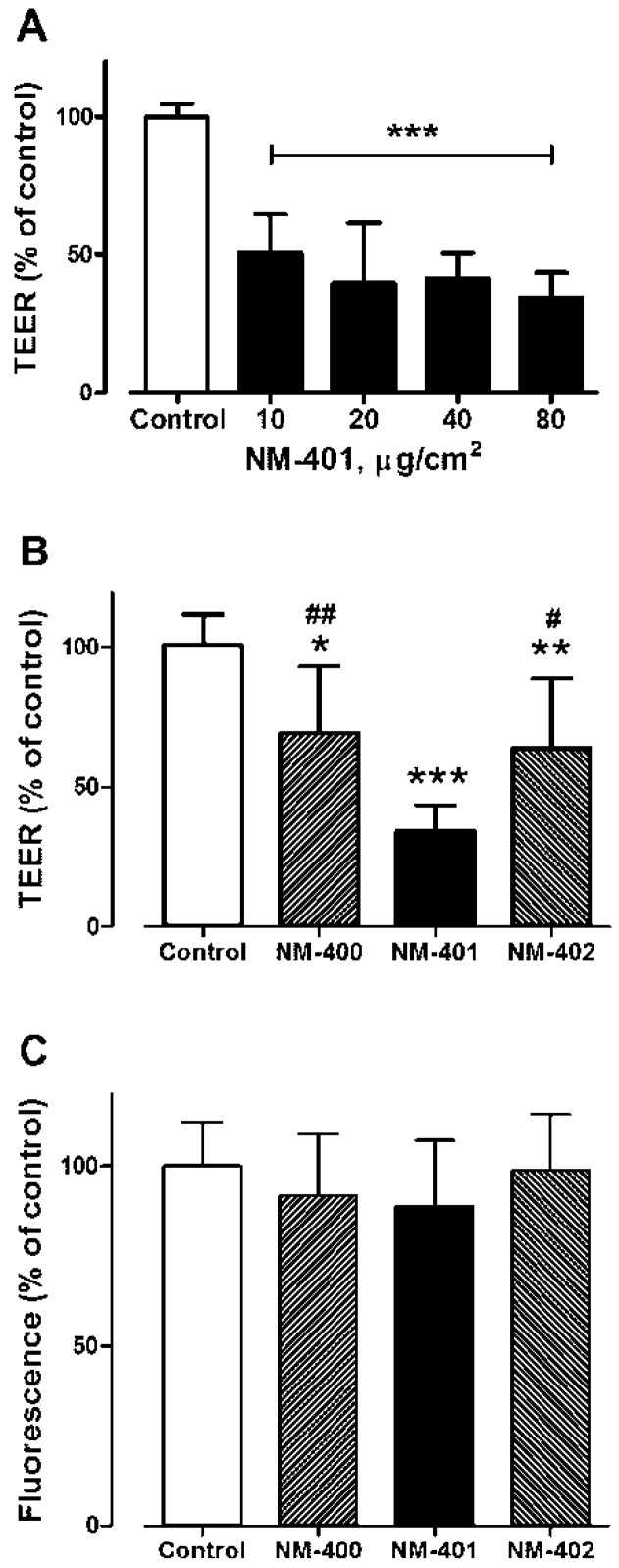
Multi-walled carbon nanotubes (MWCNT) have many outstanding physical and chemical properties that make them useful in many applications in nanotechnology. However, these properties are reported to be potentially harmful for the human body. The effects of low and realistic doses of three well-characterized preparations of MWCNT, obtained from the Joint Research Centre (JRC) (NM-400, NM-401, and NM-402), were assessed in two murine macrophage lines, Raw264.7, of peritoneal origin, and MH-S, derived from alveolar macrophages. Macrophage viability, evaluated with two distinct methods, was significantly lowered by NM-401 (needle-like, average length 4 μm, diameter 67 nm) with IC values of 10 μg/cm, whereas NM-400 and NM-402 (tangled, average lengths 846-1372 nm, diameter 11 nm) had much smaller effects. In contrast, at 10 μg/cm, NM-400 and NM-402 induced the M1 marker and, consistently, a sizable accumulation of nitrites in the medium, whereas NM-401 had no significant effect. None of the MWCNT preparations induced the M2 marker . Phagocytic activity, assessed in Raw264.7 macrophages, was significantly reduced in cells exposed to NM-401, but not to NM-400 or NM-402. When tested on Calu-3 bronchial epithelial cell monolayers, the three MWCNT preparations did not affect cell viability, but decreased the trans-epithelial electrical resistance at the maximal dose tested (80 μg/cm), with the most evident effect detected for NM-401, even at 10 μg/cm. In conclusion, among the possible structural determinants of the toxic effects exerted by MWCNT towards macrophages and airway epithelial cells, shape and length appear the most relevant at low, realistic doses.
多壁碳纳米管(MWCNT)具有许多出色的物理和化学性质,这使其在纳米技术的许多应用中都很有用。然而,据报道这些性质可能对人体有害。我们评估了从联合研究中心(JRC)获得的三种特性明确的MWCNT制剂(NM - 400、NM - 401和NM - 402)在两种小鼠巨噬细胞系中的低剂量和实际剂量效应,这两种细胞系分别是源自腹膜的Raw264.7细胞系和源自肺泡巨噬细胞的MH - S细胞系。用两种不同方法评估巨噬细胞活力,结果显示NM - 401(针状,平均长度4μm,直径67nm)能显著降低细胞活力,其半数抑制浓度(IC)值为10μg/cm,而NM - 400和NM - 402(缠结状,平均长度846 - 1372nm,直径11nm)的影响要小得多。相比之下,在10μg/cm时,NM - 400和NM - 402能诱导M1标志物表达,并且培养基中一致出现大量亚硝酸盐积累,而NM - 401没有显著影响。没有一种MWCNT制剂能诱导M2标志物表达。在Raw264.7巨噬细胞中评估吞噬活性,结果显示暴露于NM - 401的细胞吞噬活性显著降低,但暴露于NM - 400或NM - 402的细胞则没有。在Calu - 3支气管上皮细胞单层上进行测试时,三种MWCNT制剂均不影响细胞活力,但在测试的最大剂量(80μg/cm)下会降低跨上皮电阻,其中NM - 401的影响最为明显,即使在10μg/cm时也是如此。总之,在MWCNT对巨噬细胞和气道上皮细胞产生毒性作用的可能结构决定因素中,在低剂量和实际剂量下,形状和长度似乎最为关键。