Austin Daniel C, Dempsey Brendan E, Kunkel Samuel T, Torchia Michael T, Jevsevar David S
Department of Orthopaedics, Dartmouth-Hitchcock Medical Center, Lebanon, NH, USA.
Department of Orthopaedics, Geisel School of Medicine, Dartmouth College, Lebanon, NH, USA.
Arthroplast Today. 2018 Oct 22;5(2):181-186. doi: 10.1016/j.artd.2018.09.005. eCollection 2019 Jun.
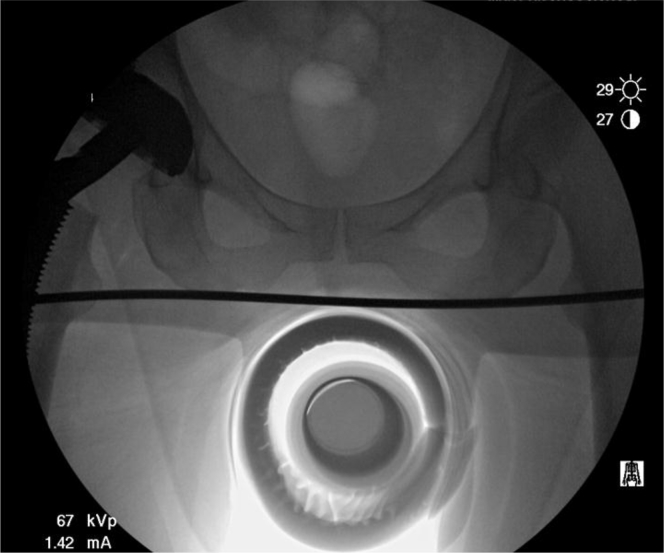
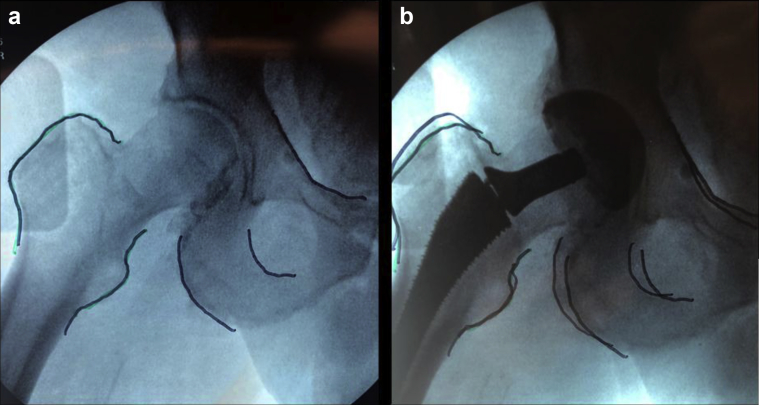
Anterior total hip arthroplasty (THA) allows the use of intraoperative fluoroscopy to assess leg-length and offset discrepancies. Two techniques to accomplish this are the transverse rod method and the radiographic overlay method. The aim of this study was to determine if they are equally effective options for minimizing postoperative radiologic discrepancies.
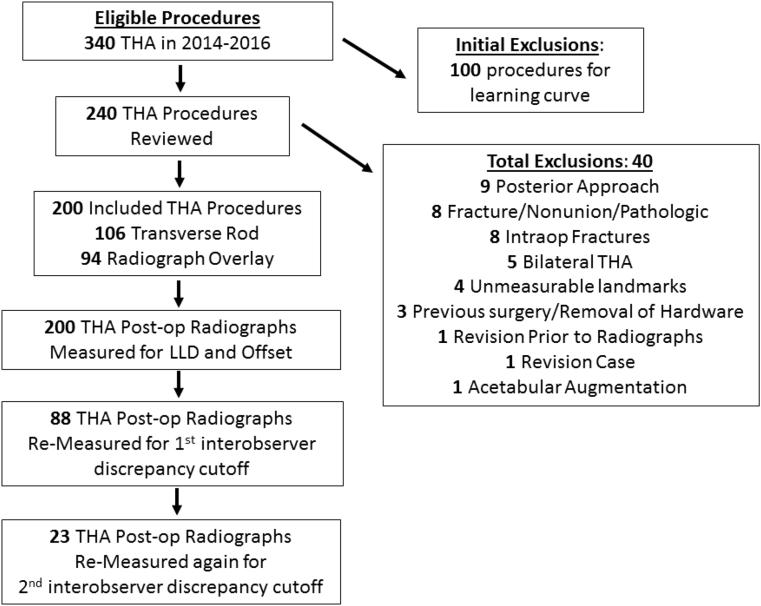
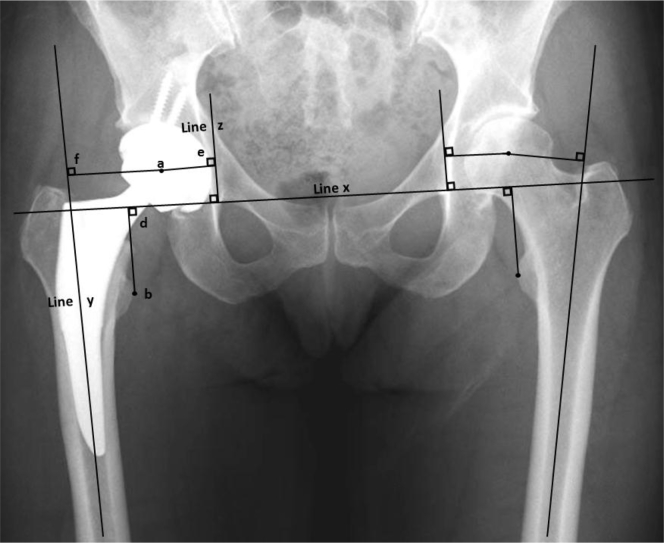
We completed a retrospective cohort study comparing 106 anterior THAs from 1 surgeon using the transverse rod technique to 94 anterior THAs from another surgeon using the radiograph overlay technique. Radiographic leg-length discrepancy (LLD) and offset discrepancy (OD) were measured independently on postoperative radiographs. Parametric, nonparametric, and categorical statistical tests were used to compare LLD and OD between groups.
Baseline characteristics were similar between groups. The mean LLD of 4.8 mm in the radiograph overlay group was not significantly different from the 4.4 mm mean discrepancy in the transverse rod group ( = .424), and the rates of LLD < 5 mm and LLD < 10 mm were not significantly different ( = .772, = .179). The mean OD of 5.1 mm in the radiograph overlay group was not significantly different from the 4.8 mm mean discrepancy in the transverse rod group ( = .668), and there was no significant difference in the rates of OD < 5 mm and OD < 10 mm ( = .488, = .878).
There was no difference between the measured LLD and OD by the 2 surgeons, suggesting that the techniques are equally effective options.
全髋关节置换术(THA)前路手术可在术中使用荧光透视来评估肢体长度和偏移差异。实现这一目的的两种技术是横向杆法和X线片叠加法。本研究的目的是确定它们在使术后放射学差异最小化方面是否同样有效。
我们完成了一项回顾性队列研究,将一位外科医生采用横向杆技术进行的106例THA前路手术与另一位外科医生采用X线片叠加技术进行的94例THA前路手术进行比较。术后X线片上独立测量放射学肢体长度差异(LLD)和偏移差异(OD)。采用参数、非参数和分类统计检验比较两组之间的LLD和OD。
两组之间的基线特征相似。X线片叠加组的平均LLD为4.8mm,与横向杆组平均差异4.4mm无显著差异(P = 0.424),LLD < 5mm和LLD < 10mm的发生率也无显著差异(P = 0.772,P = 0.179)。X线片叠加组的平均OD为5.1mm,与横向杆组平均差异4.8mm无显著差异(P = 0.668),OD < 5mm和OD < 10mm的发生率也无显著差异(P = 0.488,P = 0.878)。
两位外科医生测量的LLD和OD之间无差异,表明这两种技术同样有效。