Medical Research Council (MRC) Centre for Reproductive Health, The Queen's Medical Research Institute, The University of Edinburgh, Edinburgh, United Kingdom.
MRC Centre for Inflammation Research, The Queen's Medical Research Institute, The University of Edinburgh, Edinburgh, United Kingdom.
FASEB J. 2019 Oct;33(10):11210-11222. doi: 10.1096/fj.201900797R. Epub 2019 Jul 10.
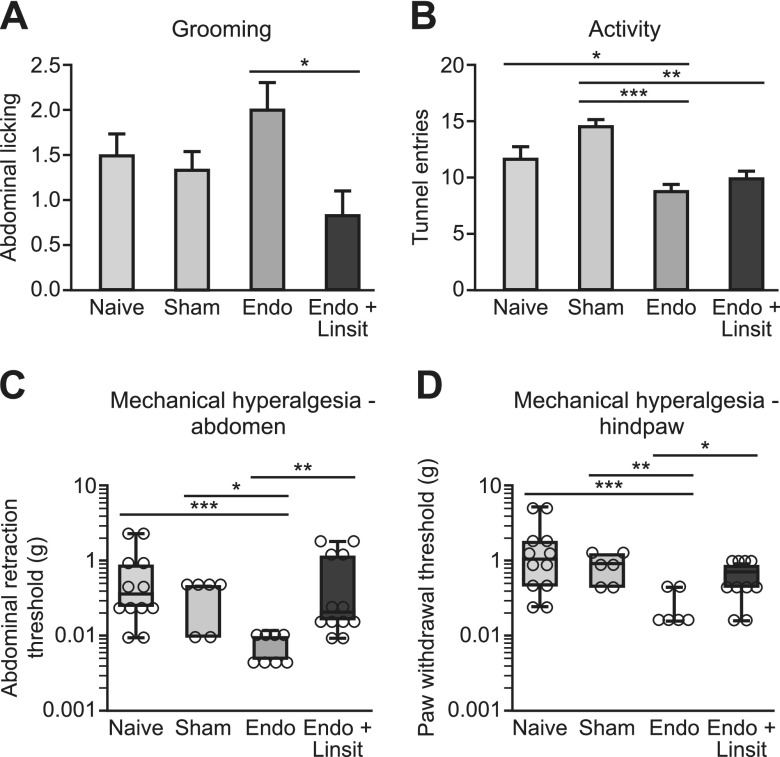
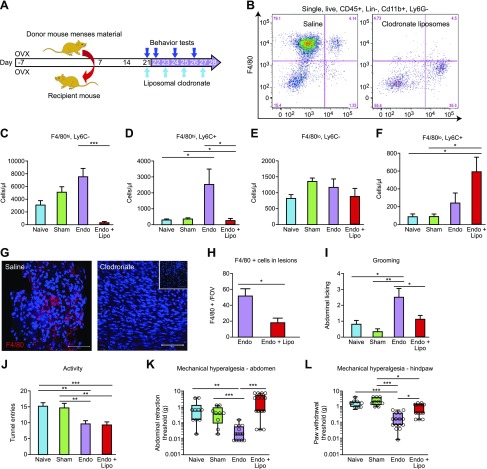
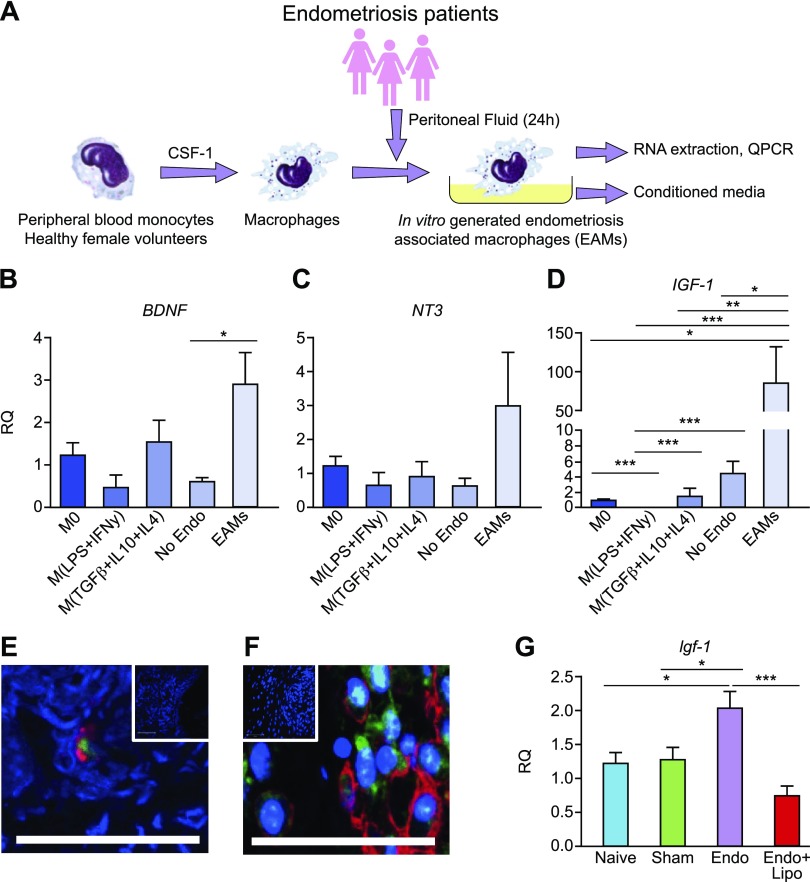
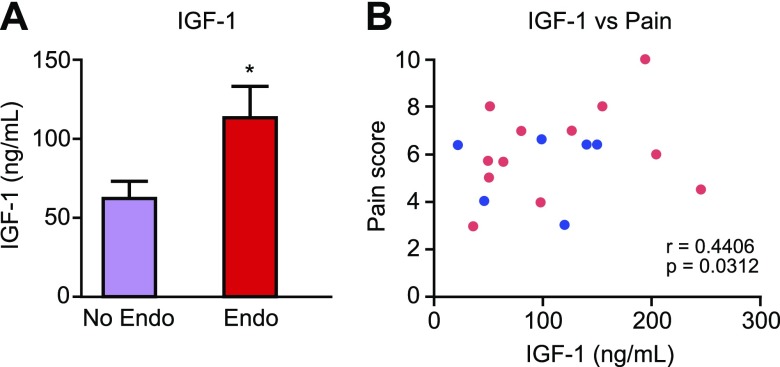
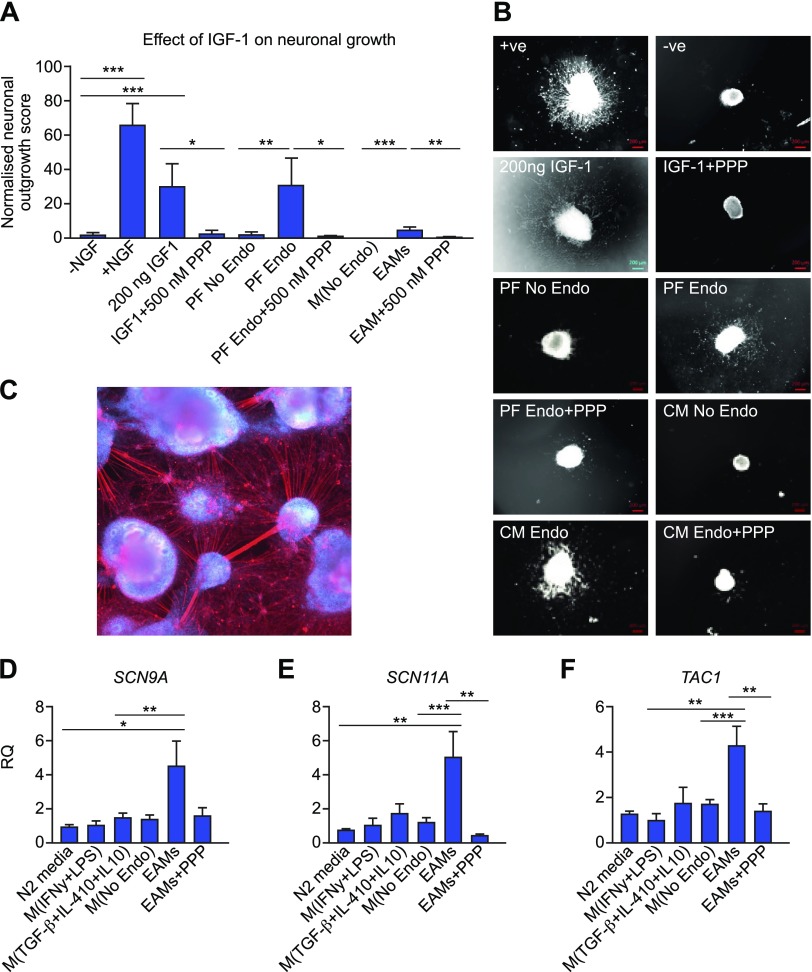
Endometriosis is a common incurable inflammatory disorder that is associated with debilitating pelvic pain in women. Macrophages are central to the pathophysiology of endometriosis: they dictate the growth and vascularization of endometriosis lesions and more recently have been shown to promote lesion innervation. The aim of this study was to determine the mechanistic role of macrophages in producing pain associated with endometriosis. Herein, we show that macrophage depletion in a mouse model of endometriosis can reverse abnormal changes in pain behavior. We identified that disease-modified macrophages exhibit increased expression of IGF-1 in an model of endometriosis-associated macrophages and confirmed expression by lesion-resident macrophages in mice and women. Concentrations of IGF-1 were elevated in peritoneal fluid from women with endometriosis and positively correlate with their pain scores. Mechanistically, we demonstrate that macrophage-derived IGF-1 promotes sprouting neurogenesis and nerve sensitization . Finally, we show that the Igf-1 receptor inhibitor linsitinib reverses the pain behavior observed in mice with endometriosis. Our data support a role for macrophage-derived IGF-1 as a key neurotrophic and sensitizing factor in endometriosis, and we propose that therapies that modify macrophage phenotype may be attractive therapeutic options for the treatment of women with endometriosis-associated pain.-Forster, R., Sarginson, A., Velichkova, A., Hogg, C., Dorning, A., Horne, A. W., Saunders, P. T. K., Greaves, E. Macrophage-derived insulin-like growth factor-1 is a key neurotrophic and nerve-sensitizing factor in pain associated with endometriosis.
子宫内膜异位症是一种常见的无法治愈的炎症性疾病,与女性的衰弱性盆腔疼痛有关。巨噬细胞是子宫内膜异位症病理生理学的核心:它们决定了子宫内膜异位症病变的生长和血管生成,最近还被证明可以促进病变神经支配。本研究旨在确定巨噬细胞在产生与子宫内膜异位症相关疼痛中的机制作用。在此,我们表明,在子宫内膜异位症的小鼠模型中耗尽巨噬细胞可以逆转疼痛行为的异常变化。我们发现,疾病修饰的巨噬细胞在子宫内膜异位症相关巨噬细胞模型中表现出 IGF-1 的表达增加,并在小鼠和女性的病变驻留巨噬细胞中证实了表达。来自子宫内膜异位症女性的腹腔液中 IGF-1 浓度升高,并与她们的疼痛评分呈正相关。从机制上讲,我们证明巨噬细胞衍生的 IGF-1 促进了发芽神经发生和神经敏化。最后,我们表明 Igf-1 受体抑制剂 linsitinib 逆转了子宫内膜异位症小鼠观察到的疼痛行为。我们的数据支持巨噬细胞衍生的 IGF-1 作为子宫内膜异位症中关键的神经营养和敏化因子的作用,我们提出修饰巨噬细胞表型的疗法可能是治疗子宫内膜异位症相关疼痛的女性的有吸引力的治疗选择。