European Cancer Stem Cell Research Institute, Cardiff University School of Biosciences, Hadyn Ellis Building, Maindy, Road, Cardiff, CF24 4HQ, UK.
Hormones Evaluation Department, National Organization for Drug Control and Research (NODCAR), Giza, Egypt.
BMC Cancer. 2019 Jul 10;19(1):677. doi: 10.1186/s12885-019-5867-y.
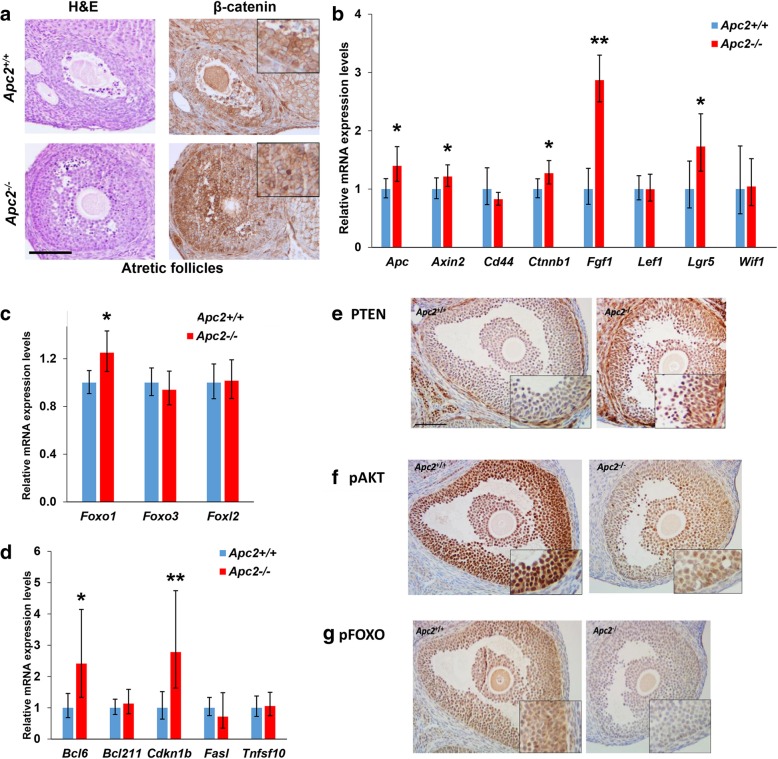
Canonical WNT signalling plays a critical role in the regulation of ovarian development; mis-regulation of this key pathway in the adult ovary is associated with subfertility and tumourigenesis. The roles of Adenomatous polyposis coli 2 (APC2), a little-studied WNT signalling pathway regulator, in ovarian homeostasis, fertility and tumourigenesis have not previously been explored. Here, we demonstrate essential roles of APC2 in regulating ovarian WNT signalling and ovarian homeostasis.
A detailed analysis of ovarian histology, gene expression, ovulation and hormone levels was carried out in 10 week old and in aged constitutive APC2-knockout (Apc2) mice (mixed background). Statistical significance for qRT-PCR data was determined from 95% confidence intervals. Significance testing was performed using 2-tailed Student's t-test, when 2 experimental cohorts were compared. When more were compared, ANOVA test was used, followed by a post-hoc test (LSD or Games-Howell). P-values of < 0.05 were considered statistically significant.
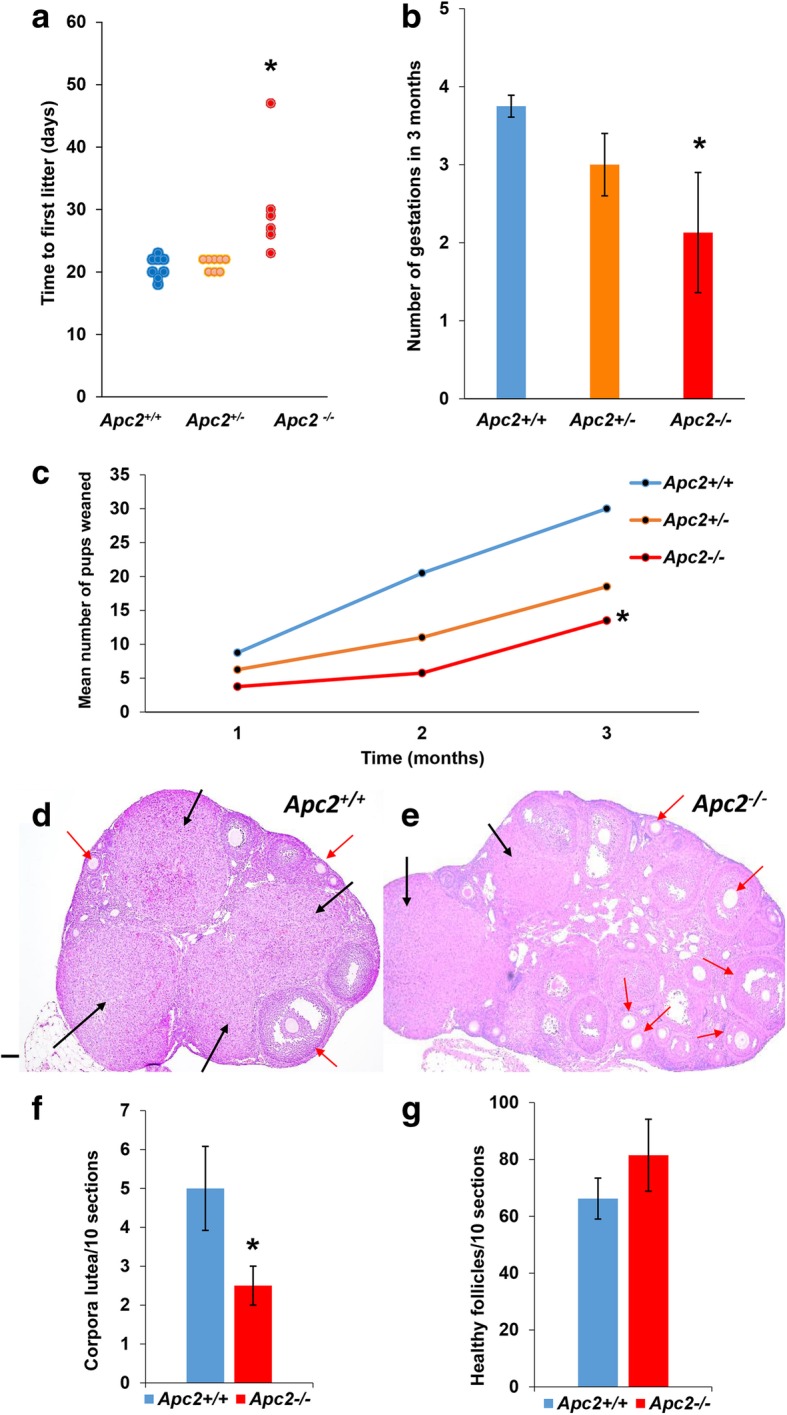
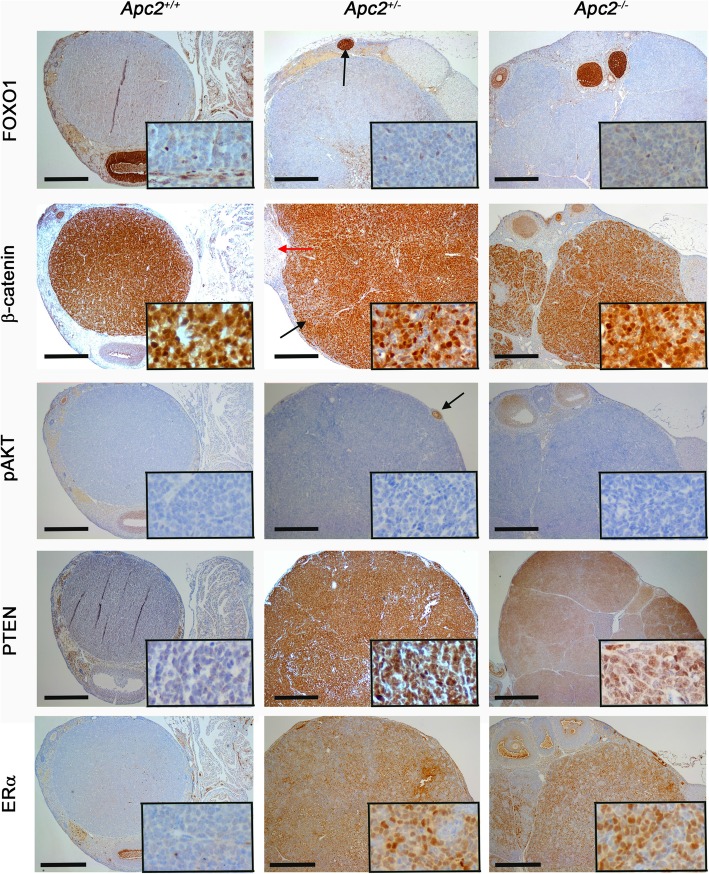
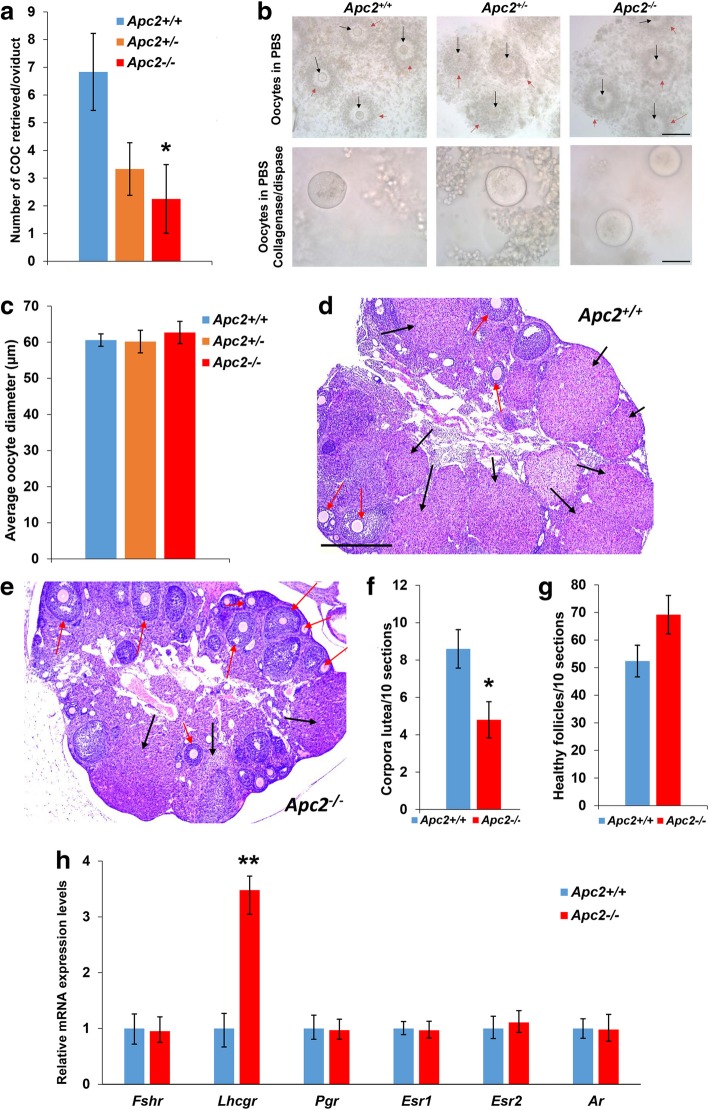
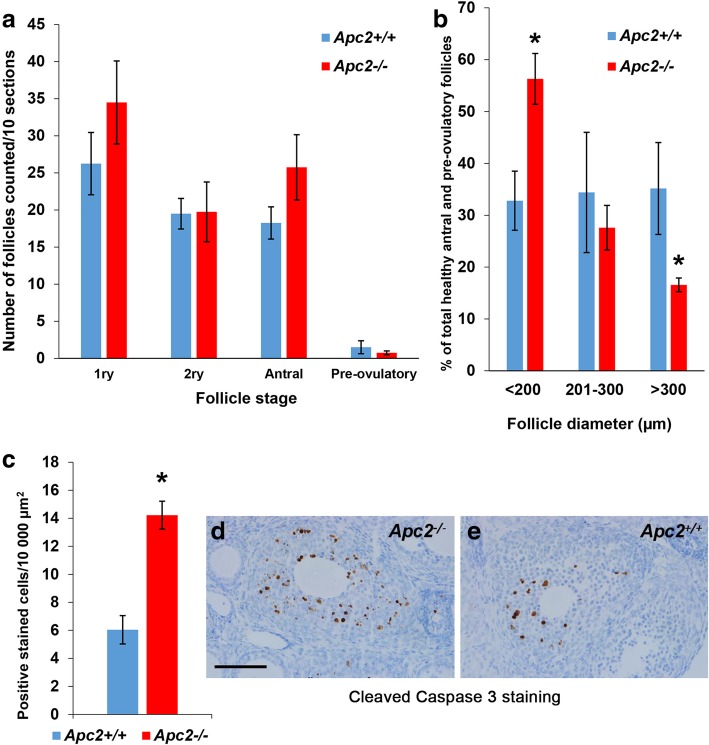
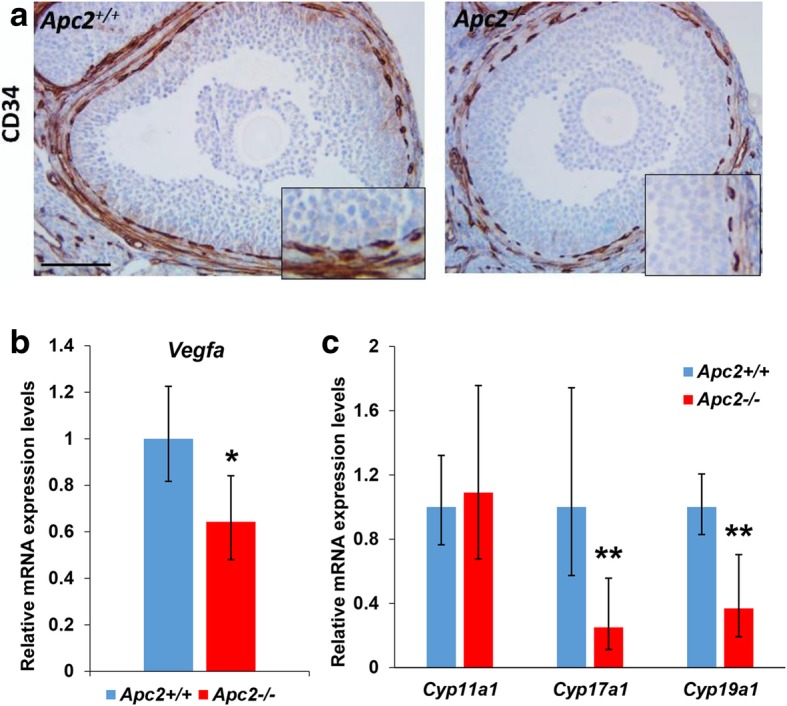
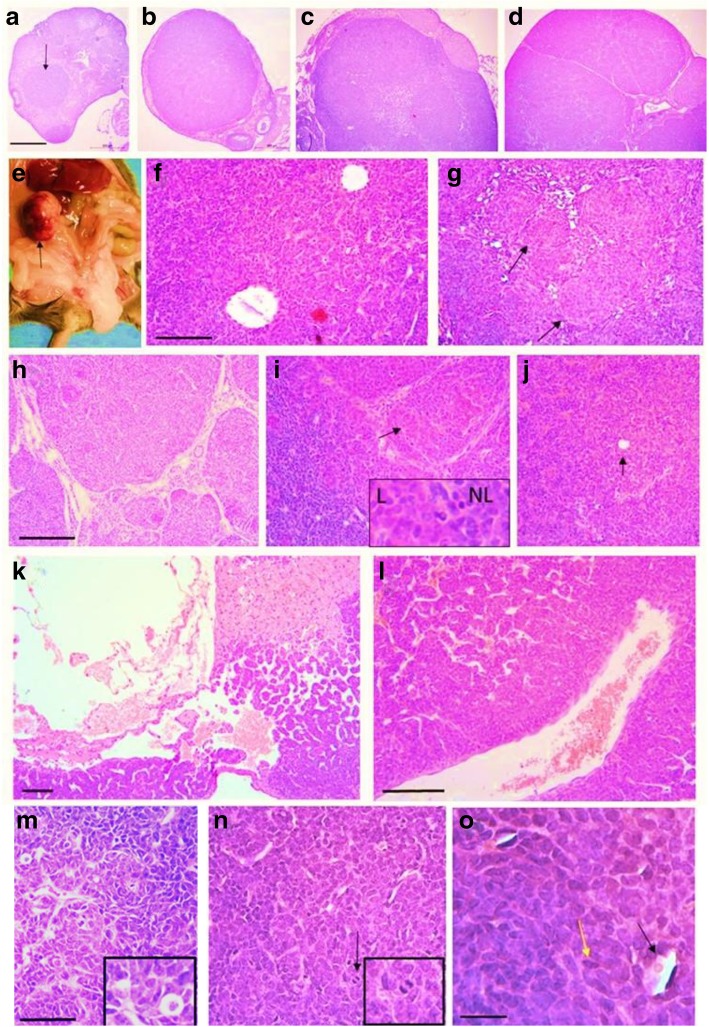
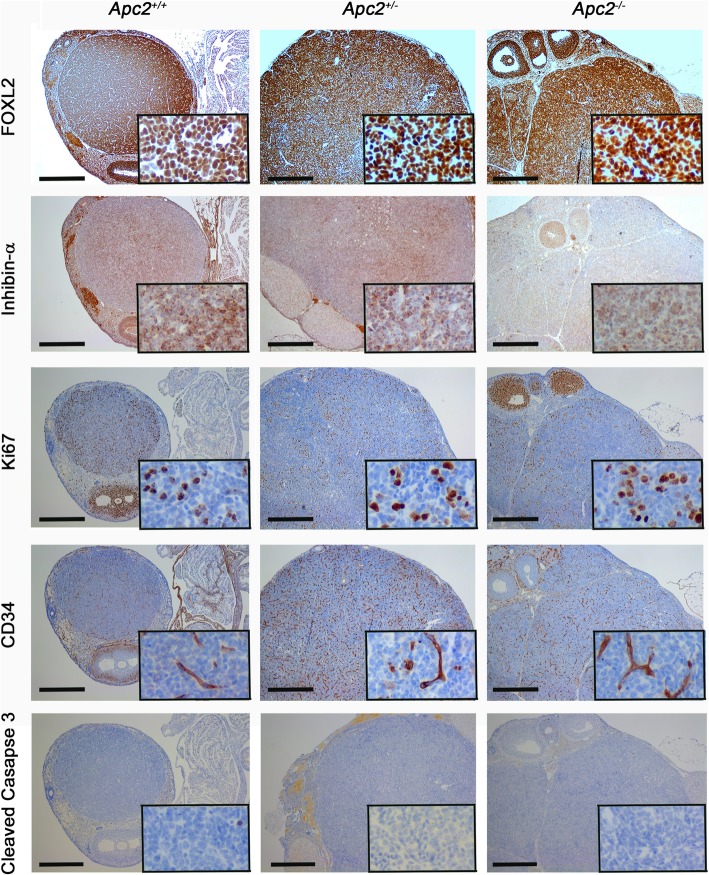
APC2-deficiency resulted in activation of ovarian WNT signalling and sub-fertility driven by intra-ovarian defects. Follicular growth was perturbed, resulting in a reduced rate of ovulation and corpora lutea formation, which could not be rescued by administration of gonadotrophins. Defects in steroidogenesis and follicular vascularity contributed to the subfertility phenotype. Tumour incidence was assessed in aged APC2-deficient mice, which also carried a hypomorphic Apc allele. APC2-deficiency in these mice resulted in predisposition to granulosa cell tumour (GCT) formation, accompanied by acute tumour-associated WNT-signalling activation and a histologic pattern and molecular signature seen in human adult GCTs.
Our work adds APC2 to the growing list of WNT-signalling members that regulate ovarian homeostasis, fertility and suppress GCT formation. Importantly, given that the APC2-deficient mouse develops tumours that recapitulate the molecular signature and histological features of human adult GCTs, this mouse has excellent potential as a pre-clinical model to study ovarian subfertility and transitioning to GCT, tumour biology and for therapeutic testing.
经典 WNT 信号通路在卵巢发育的调控中起着关键作用;成年卵巢中该关键通路的失调与生育能力下降和肿瘤发生有关。腺瘤性结肠息肉病 2(APC2)是一种研究较少的 WNT 信号通路调节剂,其在卵巢稳态、生育能力和肿瘤发生中的作用以前尚未被探索过。在这里,我们证明了 APC2 在调节卵巢 WNT 信号和卵巢稳态中的重要作用。
对 10 周龄和老年 APC2 敲除(Apc2)小鼠(混合背景)的卵巢组织学、基因表达、排卵和激素水平进行了详细分析。使用 95%置信区间确定 qRT-PCR 数据的统计显著性。当比较两个实验组时,使用双侧学生 t 检验进行显著性检验。当比较更多时,使用 ANOVA 检验,然后进行事后检验(LSD 或 Games-Howell)。P 值<0.05 被认为具有统计学意义。
APC2 缺陷导致卵巢 WNT 信号激活和由卵巢内缺陷引起的生育力下降。卵泡生长受到干扰,导致排卵和黄体形成率降低,而给予促性腺激素不能挽救这种情况。类固醇生成和卵泡血管生成缺陷导致生育力下降表型。在老年 APC2 缺陷小鼠中评估了肿瘤发生率,这些小鼠还携带一个功能降低的 Apc 等位基因。这些小鼠中的 APC2 缺陷导致颗粒细胞瘤(GCT)形成的易感性增加,伴随着急性肿瘤相关 WNT 信号激活以及在人类成年 GCT 中看到的组织学模式和分子特征。
我们的工作将 APC2 添加到越来越多的调节卵巢稳态、生育能力和抑制 GCT 形成的 WNT 信号成员中。重要的是,鉴于 APC2 缺陷小鼠形成的肿瘤再现了人类成年 GCT 的分子特征和组织学特征,这种小鼠具有作为研究卵巢生育能力下降和向 GCT 转化、肿瘤生物学和治疗测试的临床前模型的巨大潜力。