Centre for Brain Development and Repair (CBDR), Institute for Stem Cell Science and Regenerative Medicine (inStem), Bangalore, 560065, India.
School of Chemical and Biotechnology, Shanmugha Arts, Science and Technology & Research Academy (SASTRA) University, Thanjavur, 613401, India.
Mol Brain. 2019 Jul 10;12(1):65. doi: 10.1186/s13041-019-0473-0.
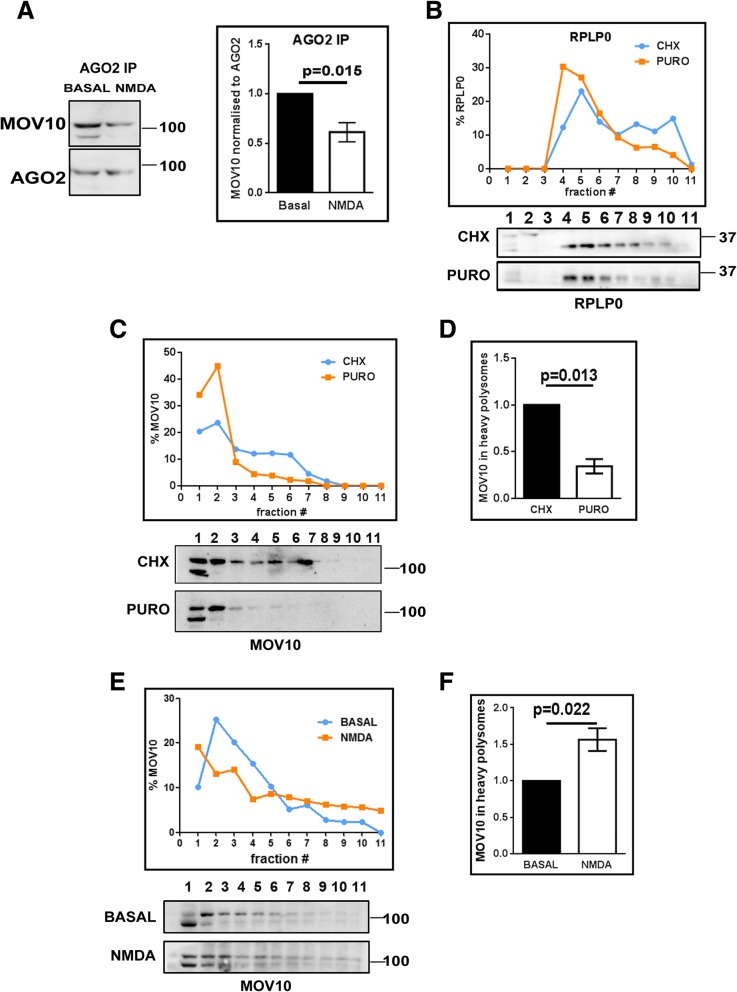
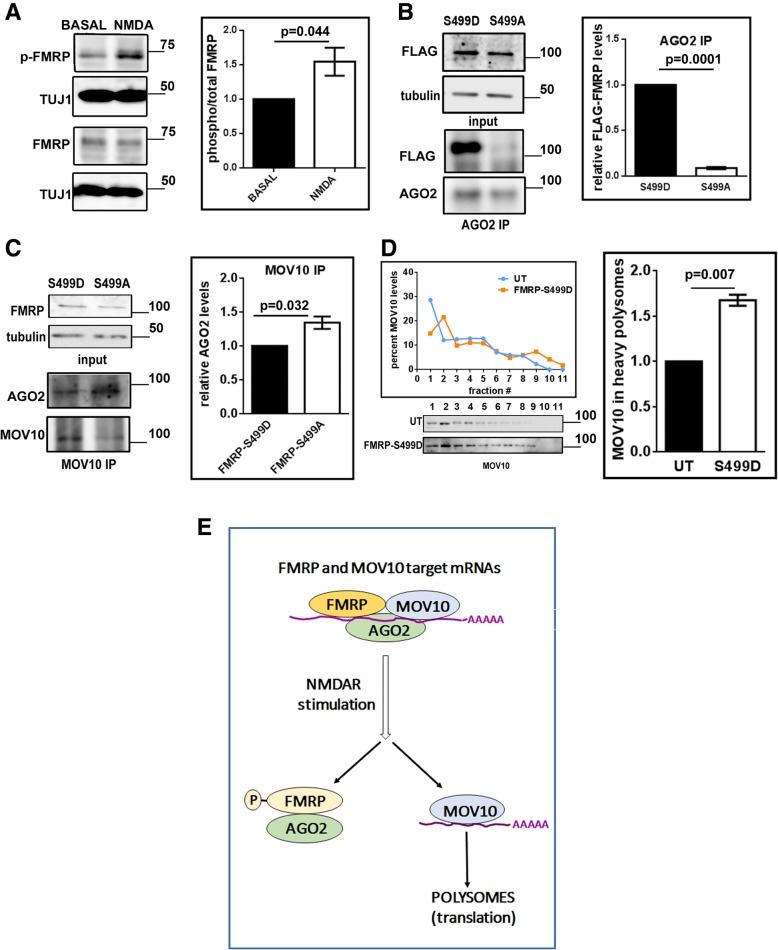
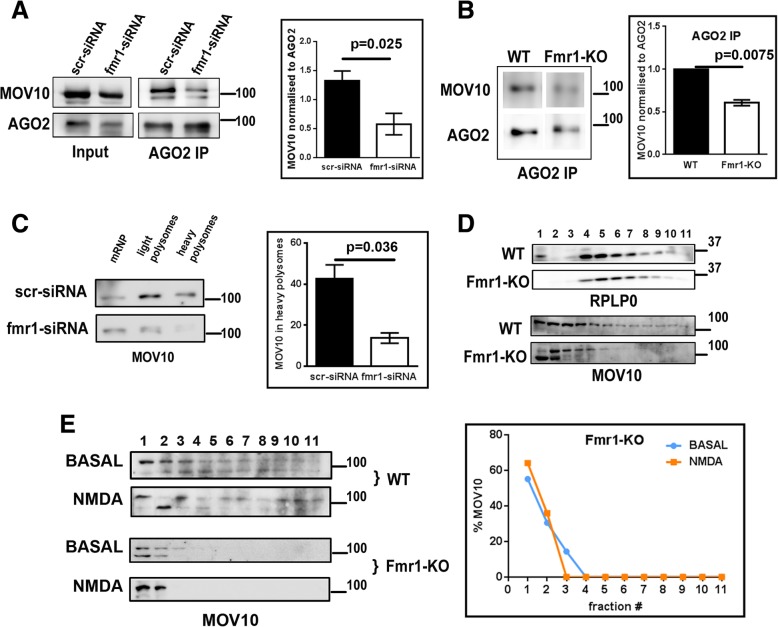
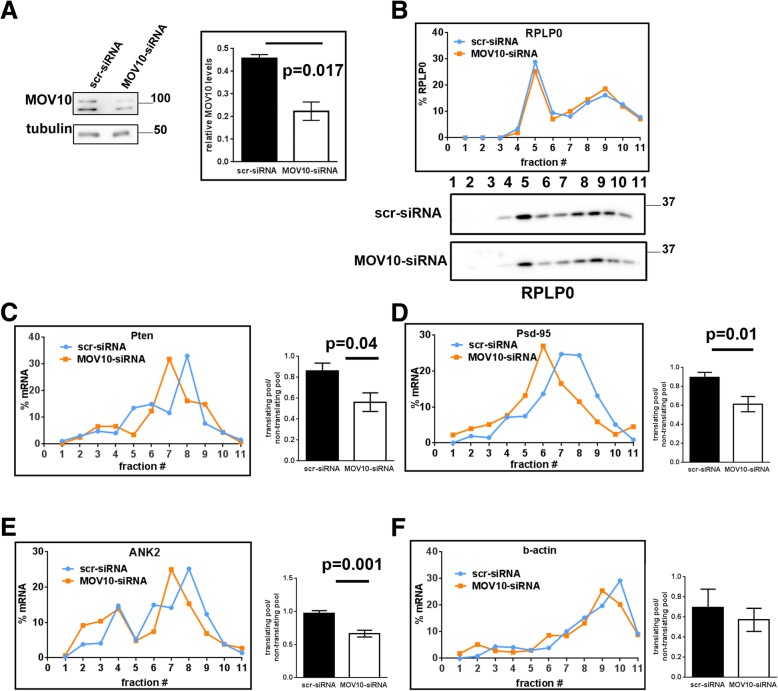
Protein synthesis is crucial for maintaining synaptic plasticity and synaptic signalling. Here we have attempted to understand the role of RNA binding proteins, Fragile X Mental Retardation Protein (FMRP) and Moloney Leukemia Virus 10 (MOV10) protein in N-Methyl-D-Aspartate Receptor (NMDAR) mediated translation regulation. We show that FMRP is required for translation downstream of NMDAR stimulation and MOV10 is the key specificity factor in this process. In rat cortical synaptoneurosomes, MOV10 in association with FMRP and Argonaute 2 (AGO2) forms the inhibitory complex on a subset of NMDAR responsive mRNAs. On NMDAR stimulation, MOV10 dissociates from AGO2 and promotes the translation of its target mRNAs. FMRP is required to form MOV10-AGO2 inhibitory complex and to promote translation of MOV10 associated mRNAs. Phosphorylation of FMRP appears to be the potential switch for NMDAR mediated translation and in the absence of FMRP, the distinct translation response to NMDAR stimulation is lost. Thus, FMRP and MOV10 have an important regulatory role in NMDAR mediated translation at the synapse.
蛋白质合成对于维持突触可塑性和突触信号至关重要。在这里,我们试图了解 RNA 结合蛋白 Fragile X 智力迟钝蛋白 (FMRP) 和 Moloney 白血病病毒 10 (MOV10) 蛋白在 N-甲基-D-天冬氨酸受体 (NMDAR) 介导的翻译调控中的作用。我们表明,FMRP 是 NMDAR 刺激下游翻译所必需的,MOV10 是该过程中的关键特异性因子。在大鼠皮质突触体中,MOV10 与 FMRP 和 Argonaute 2 (AGO2) 形成抑制复合物,作用于一组 NMDAR 反应性 mRNAs。在 NMDAR 刺激下,MOV10 从 AGO2 解离,并促进其靶 mRNA 的翻译。FMRP 是形成 MOV10-AGO2 抑制复合物和促进 MOV10 相关 mRNA 翻译所必需的。FMRP 的磷酸化似乎是 NMDAR 介导的翻译的潜在开关,并且在没有 FMRP 的情况下,NMDAR 刺激的独特翻译反应会丢失。因此,FMRP 和 MOV10 在突触处的 NMDAR 介导的翻译中具有重要的调节作用。