Campion Daniela, Giovo Ilaria, Ponzo Paola, Saracco Giorgio M, Balzola Federico, Alessandria Carlo
Division of Gastroenterology and Hepatology, Città della Salute e della Scienza di Torino Hospital, University of Turin, 10126 Turin, Italy.
World J Hepatol. 2019 Jun 27;11(6):489-512. doi: 10.4254/wjh.v11.i6.489.
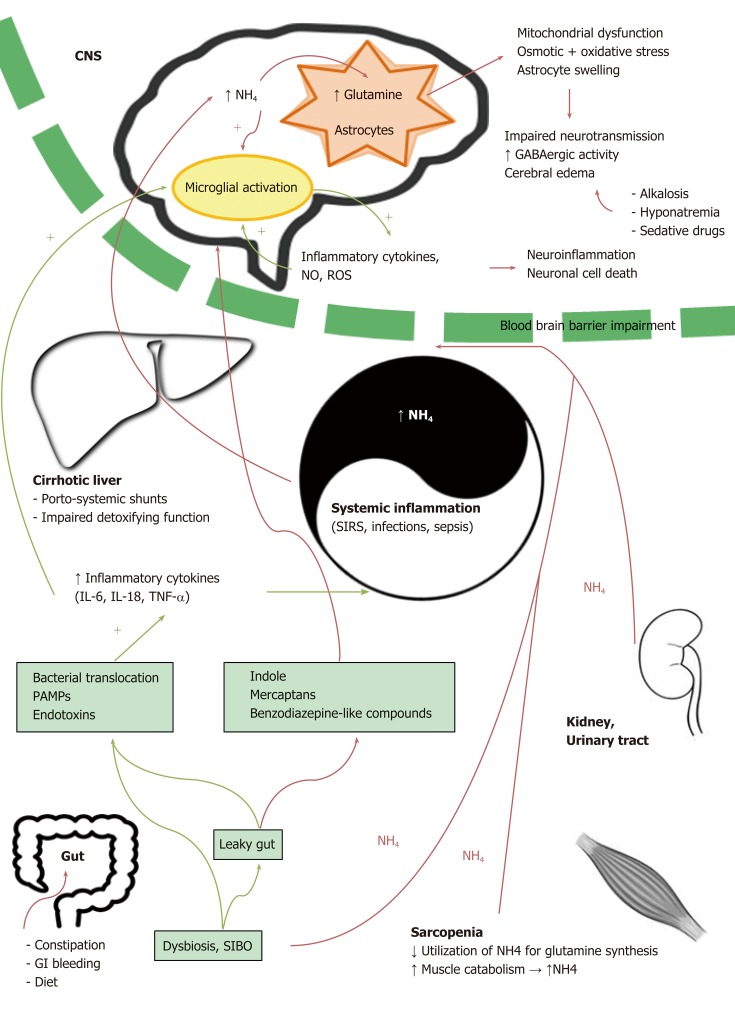
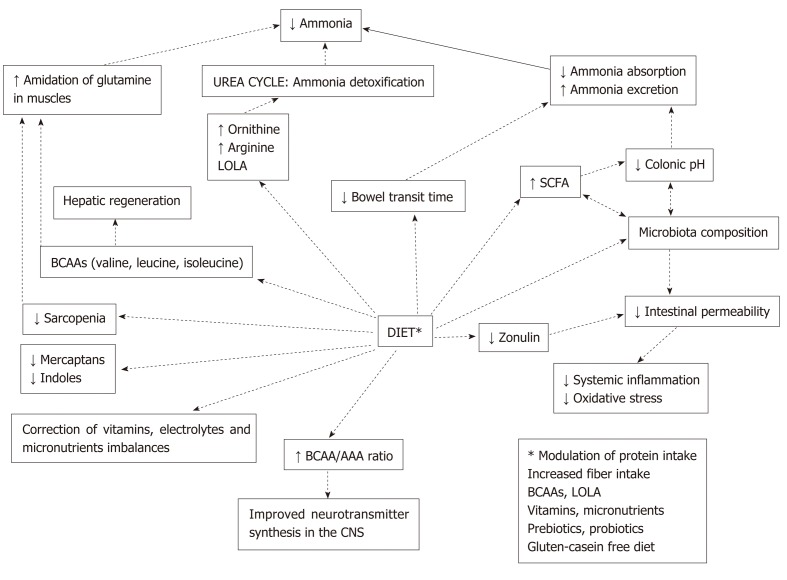
Hepatic encephalopathy (HE) is a common and serious neuropsychiatric complication of cirrhosis, acute liver failure, and porto-systemic shunting. HE largely contributes to the morbidity of patients with liver disease, severely affecting the quality of life of both patients and their relatives and being associated with poor prognosis. Its presentation is largely variable, manifesting with a broad spectrum of cognitive abnormalities ranging from subtle cognitive impairment to coma. The pathogenesis of HE is complex and has historically been linked with hyperammonemia. However, in the last years, it has become evident that the interplay of multiple actors, such as intestinal dysbiosis, gut hyperpermeability, and neuroinflammation, is of crucial importance in its genesis. Therefore, HE can be considered a result of a dysregulated gut-liver-brain axis function, where cognitive impairment can be reversed or prevented by the beneficial effects induced by "gut-centric" therapies, such as non-absorbable disaccharides, non-absorbable antibiotics, probiotics, prebiotics, and fecal microbiota transplantation. In this context dietary modifications, by modulating the intestinal milieu, can also provide significant benefit to cirrhotic patients with HE. This review will provide a comprehensive insight into the mechanisms responsible for gut-liver-brain axis dysregulation leading to HE in cirrhosis. Furthermore, it will explore the currently available therapies and the most promising future treatments for the management of patients with HE, with a special focus on the dietary approach.
肝性脑病(HE)是肝硬化、急性肝衰竭和门体分流常见且严重的神经精神并发症。HE在很大程度上导致了肝病患者的发病,严重影响患者及其亲属的生活质量,并与不良预后相关。其表现差异很大,表现为从轻微认知障碍到昏迷的广泛认知异常。HE的发病机制复杂,历史上一直与高氨血症有关。然而,近年来,很明显,多种因素的相互作用,如肠道菌群失调、肠道通透性增加和神经炎症,在其发病过程中至关重要。因此,HE可被视为肠-肝-脑轴功能失调的结果,其中认知障碍可通过“以肠道为中心”的疗法(如不可吸收的二糖、不可吸收的抗生素、益生菌、益生元及粪便微生物群移植)诱导的有益作用得到逆转或预防。在此背景下,通过调节肠道环境,饮食调整也可为肝硬化合并HE的患者带来显著益处。本综述将全面深入探讨导致肝硬化患者发生HE的肠-肝-脑轴失调的机制。此外,还将探讨目前可用的治疗方法以及治疗HE患者最有前景的未来疗法,特别关注饮食方法。