Kodali Saranya, Holmes Chris E, Tipirneni Eswar, Cahill Christina R, Goodwin Andrew J, Cushman Mary
Division of Hematology Oncology, Department of Medicine Larner College of Medicine at the University of Vermont Burlington Vermont.
Larner College of Medicine at the University of Vermont Burlington Vermont.
Res Pract Thromb Haemost. 2019 Apr 26;3(3):424-428. doi: 10.1002/rth2.12203. eCollection 2019 Jul.
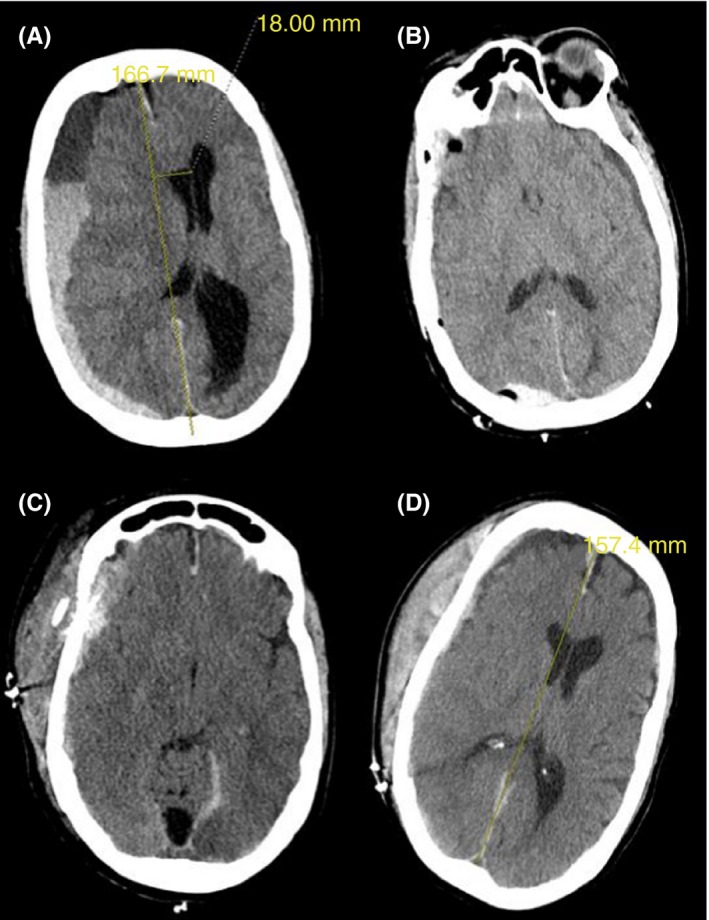
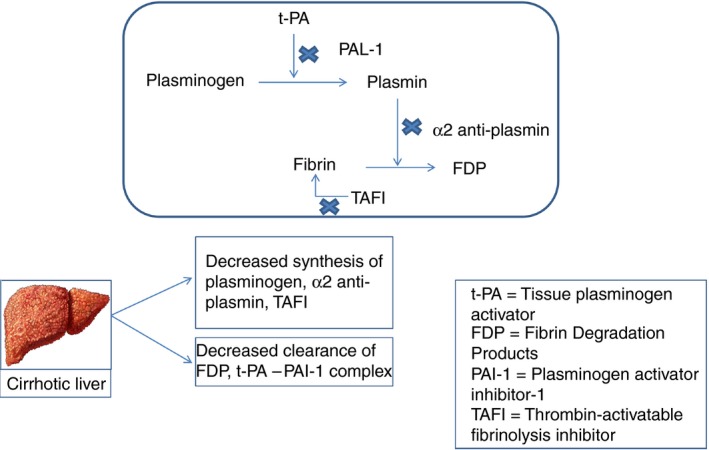
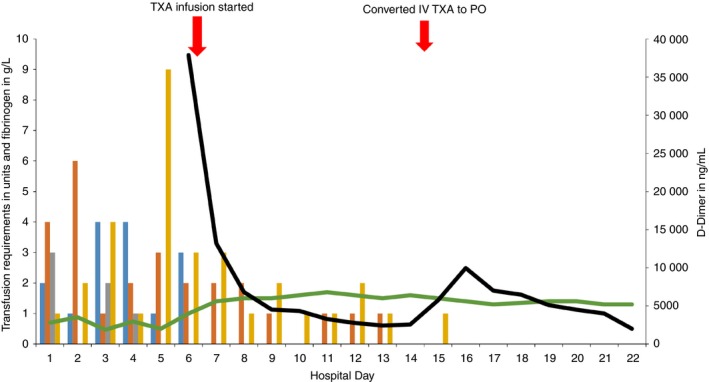
A 50-year-old woman with advanced cirrhosis presented with spontaneous subdural hematoma. She had a worsening clinical course following craniotomy despite administration of multiple blood products. With elevation in D-dimer, persistently low fibrinogen and poor response to factor/fibrinogen replacement therapies, we had a suspicion for uncontrolled fibrinolysis. A literature review was conducted on treatment of hyperfibrinolysis in cirrhosis, finding 4 reports in which antifibrinolytics were used to control bleeding with different outcomes. The dose of tranexamic acid used in our patient was employed from previous experience in trauma patients. We transitioned from intravenous to oral administration based on expected pharmacokinetics. Our patient had a successful outcome with resolution of bleeding.
一名患有晚期肝硬化的50岁女性出现自发性硬膜下血肿。尽管输注了多种血液制品,但开颅术后她的临床病程仍在恶化。由于D-二聚体升高、纤维蛋白原持续降低且对因子/纤维蛋白原替代疗法反应不佳,我们怀疑存在纤溶未控的情况。我们对肝硬化患者高纤溶状态的治疗进行了文献综述,发现有4篇报告使用抗纤溶药物控制出血,结果各异。我们患者使用的氨甲环酸剂量是根据以往创伤患者的经验确定的。基于预期的药代动力学,我们从静脉给药转为口服给药。我们的患者出血情况得到缓解,治疗取得了成功。