Department of Biological Sciences, University of Calgary, Calgary, AB, Canada.
Department of Biological Sciences, The University of Queensland, St. Lucia, Qld, Australia.
Mol Ecol. 2019 Aug;28(16):3629-3641. doi: 10.1111/mec.15173. Epub 2019 Aug 10.
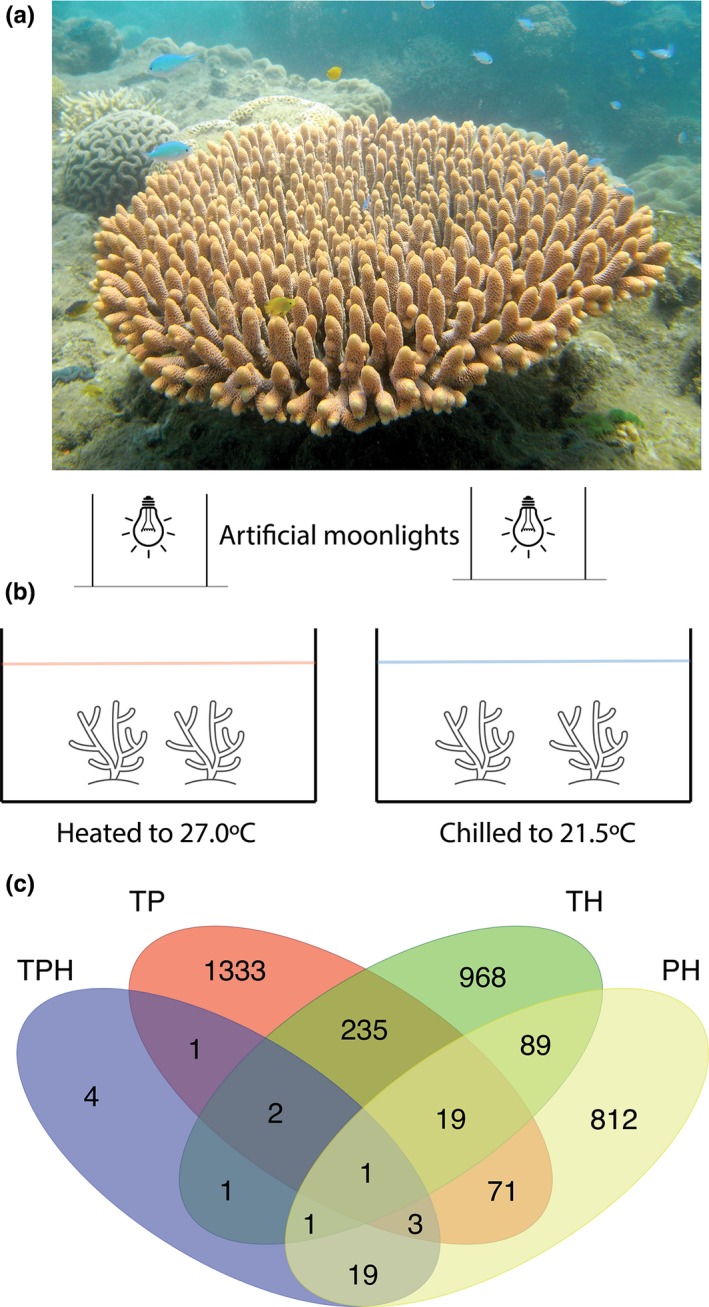
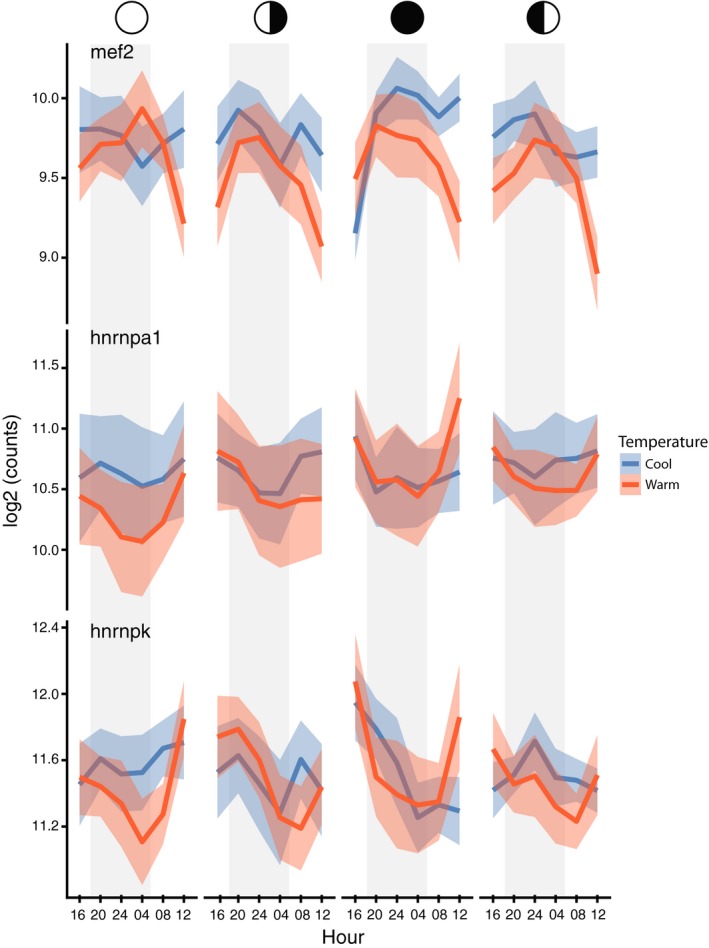
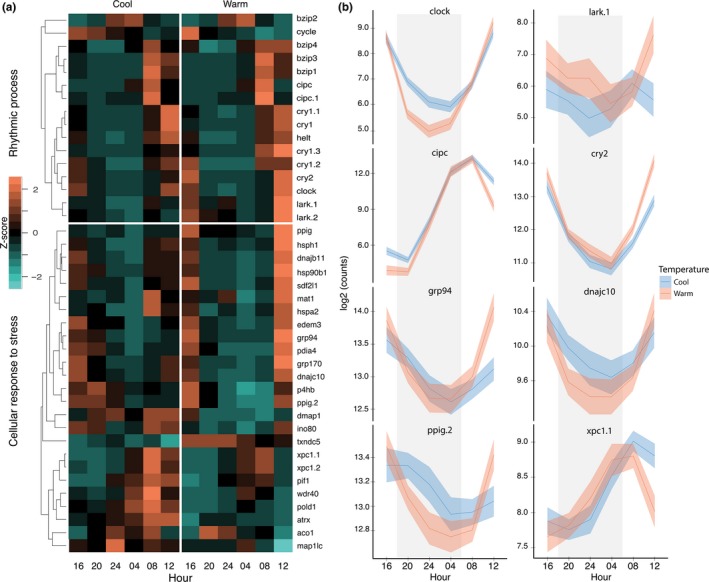
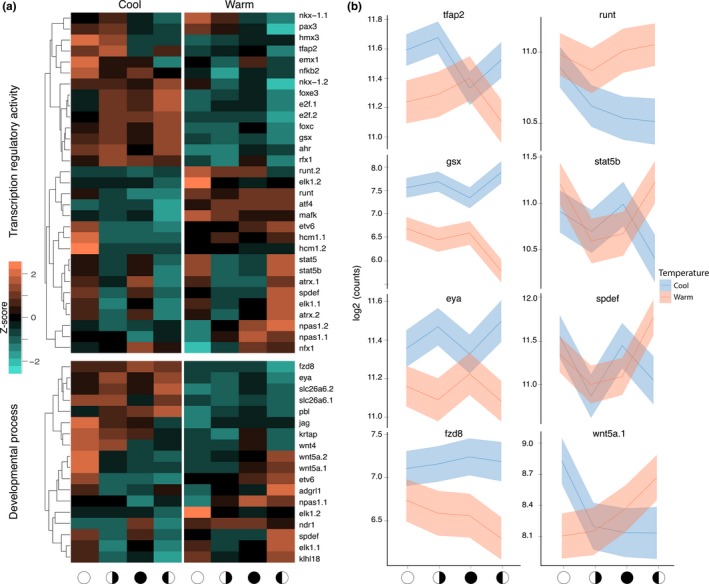
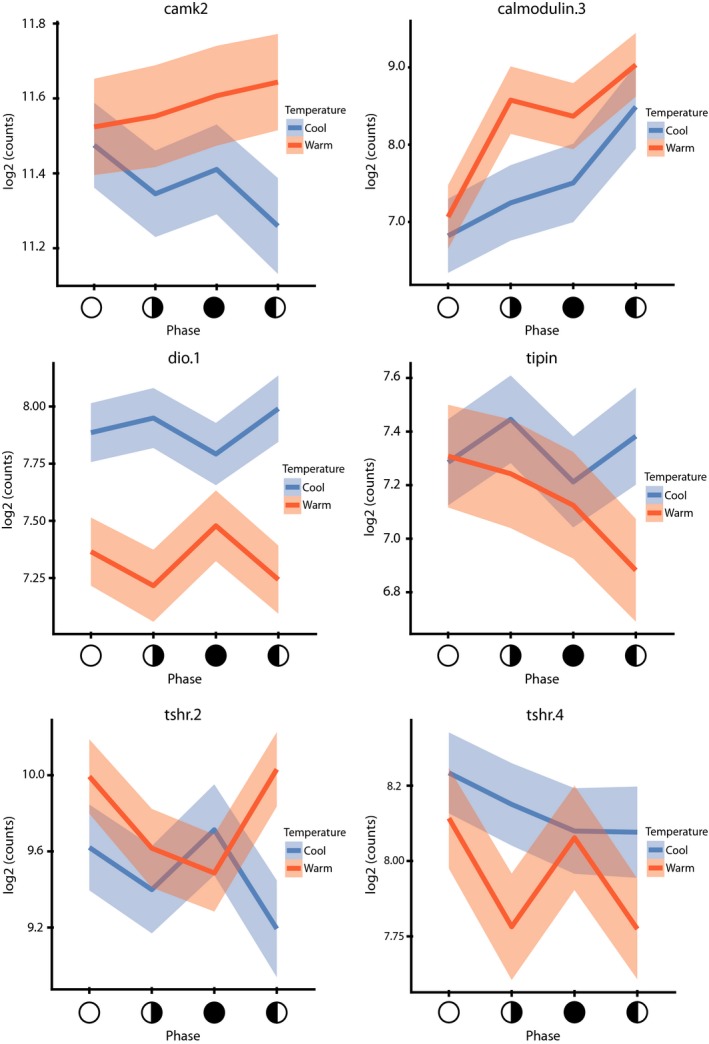
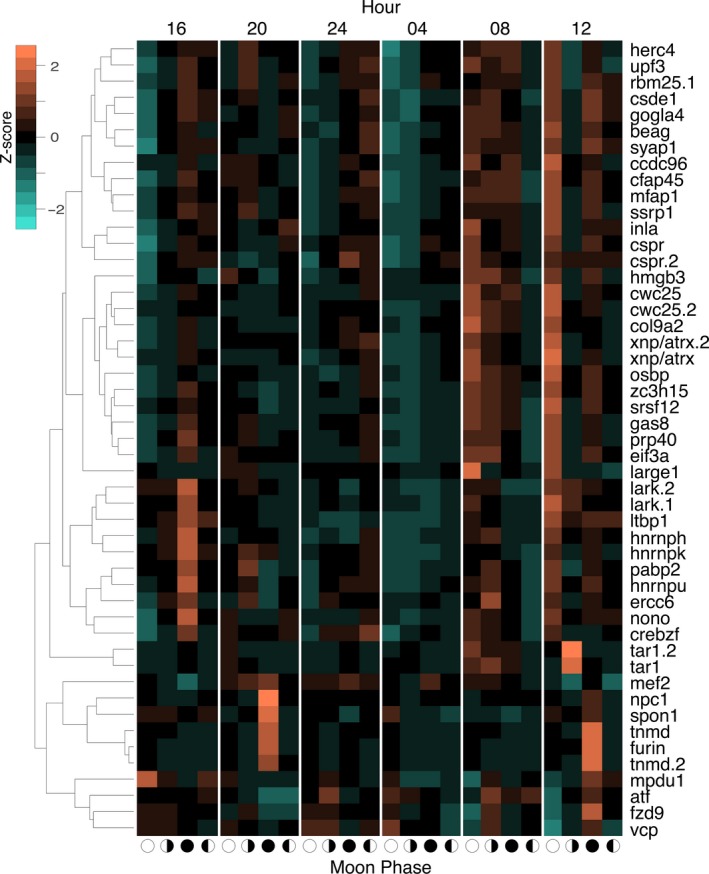
Rhythms of various periodicities drive cyclical processes in organisms ranging from single cells to the largest mammals on earth, and on scales from cellular physiology to global migrations. The molecular mechanisms that generate circadian behaviours in model organisms have been well studied, but longer phase cycles and interactions between cycles with different periodicities remain poorly understood. Broadcast spawning corals are one of the best examples of an organism integrating inputs from multiple environmental parameters, including seasonal temperature, the lunar phase and hour of the day, to calibrate their annual reproductive event. We present a deep RNA-sequencing experiment utilizing multiple analyses to differentiate transcriptomic responses modulated by the interactions between the three aforementioned environmental parameters. Acropora millepora was sampled over multiple 24-hr periods throughout a full lunar month and at two seasonal temperatures. Temperature, lunar and diurnal cycles produce distinct transcriptomic responses, with interactions between all three variables identifying a core set of genes. These core genes include mef2, a developmental master regulator, and two heterogeneous nuclear ribonucleoproteins, one of which is known to post-transcriptionally interact with mef2 and with biological clock-regulating mRNAs. Interactions between diurnal and temperature differences impacted a range of core processes ranging from biological clocks to stress responses. Genes involved with developmental processes and transcriptional regulation were impacted by the lunar phase and seasonal temperature differences. Lastly, there was a diurnal and lunar phase interaction in which genes involved with RNA-processing and translational regulation were differentially regulated. These data illustrate the extraordinary levels of transcriptional variation across time in a simple radial cnidarian in response to the environment under normal conditions.
各种周期性节律驱动着从单细胞生物到地球上最大的哺乳动物等生物体的周期性过程,其规模从细胞生理学到全球迁徙不等。在模式生物中产生昼夜节律行为的分子机制已经得到了很好的研究,但更长的相位周期和不同周期之间的相互作用仍然知之甚少。广播产卵珊瑚是一种整合来自多个环境参数输入的生物体的最佳例子,这些环境参数包括季节性温度、月相和一天中的时间,以校准它们的年度繁殖事件。我们提出了一个深度 RNA 测序实验,利用多种分析方法来区分由上述三个环境参数相互作用调节的转录组响应。在两个季节性温度下,在一个完整的月相期间,我们对多个 24 小时时间段进行了多次取样。温度、月相和昼夜节律产生了不同的转录组响应,所有三个变量之间的相互作用确定了一组核心基因。这些核心基因包括 mef2,一种发育主控调节剂,和两种异质核核糖核蛋白,其中一种已知与 mef2 和生物钟调节的 mRNA 进行转录后相互作用。昼夜节律和温度差异之间的相互作用影响了一系列核心过程,从生物钟到应激反应。涉及发育过程和转录调控的基因受到月相和季节性温度差异的影响。最后,存在一个昼夜节律和月相相互作用,其中涉及 RNA 处理和翻译调控的基因被差异调控。这些数据说明了在正常条件下,一种简单的辐射状刺胞动物在环境影响下随时间发生的转录变化水平之高。