Institute of Neural and Sensory Physiology, Medical Faculty, Heinrich Heine University Düsseldorf, 40225, Düsseldorf, Germany.
Institute for Pharmaceutical and Medicinal Chemistry, Heinrich Heine University Düsseldorf, 40225, Düsseldorf, Germany.
Sci Rep. 2019 Jul 11;9(1):10068. doi: 10.1038/s41598-019-46496-y.
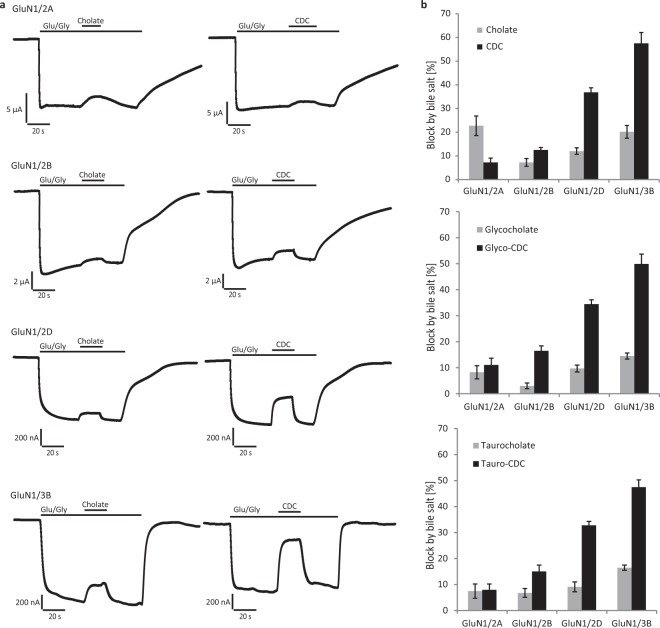
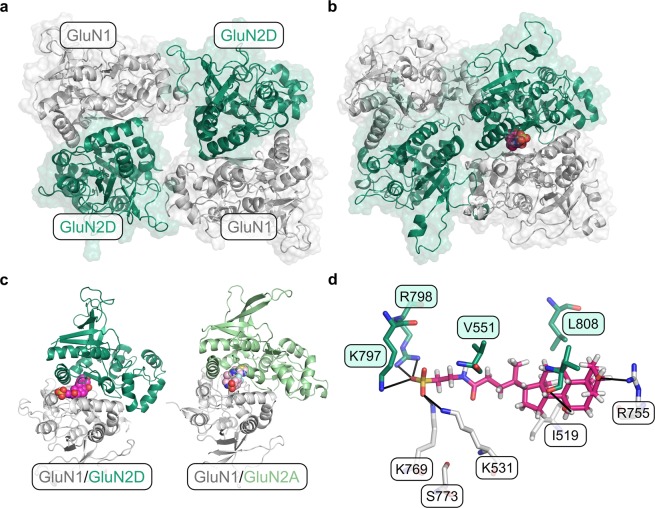
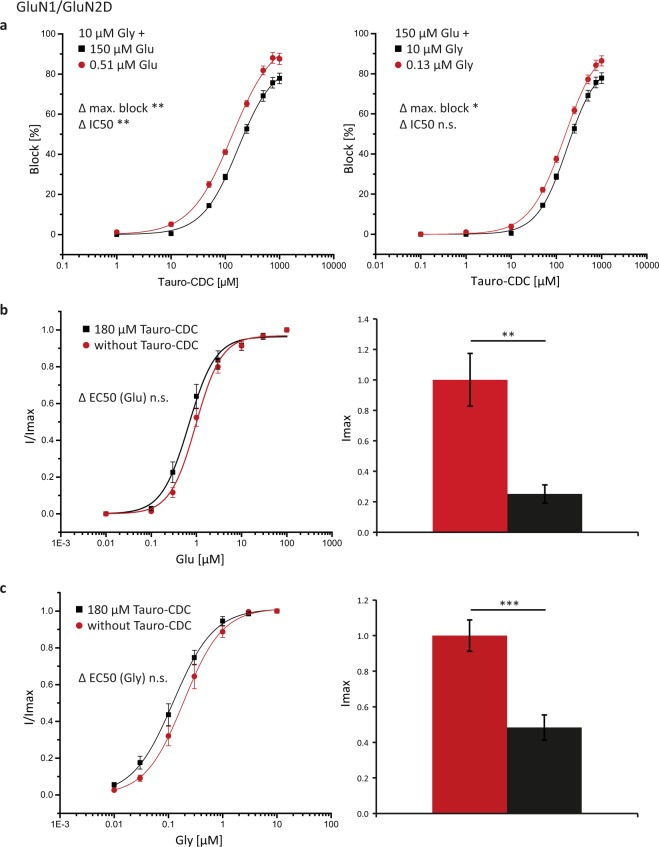
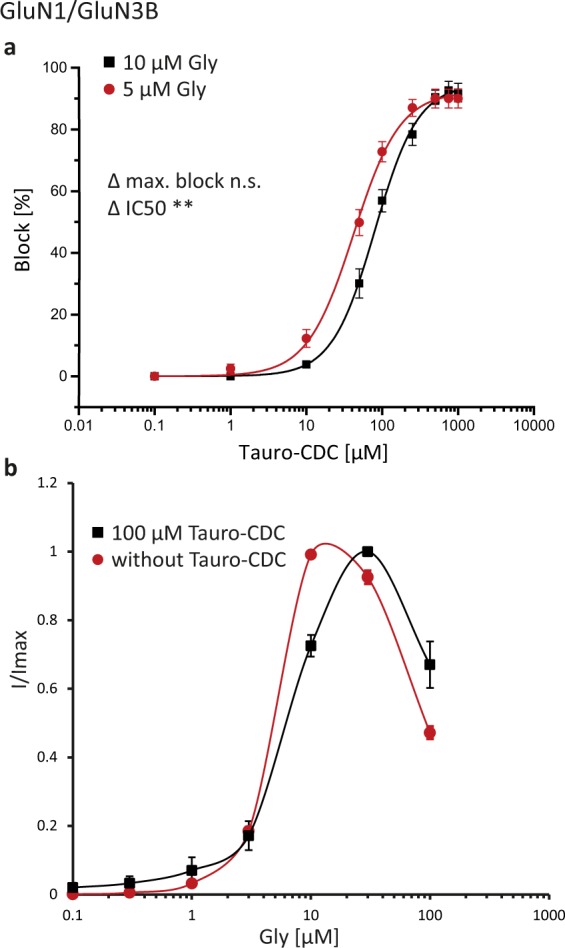
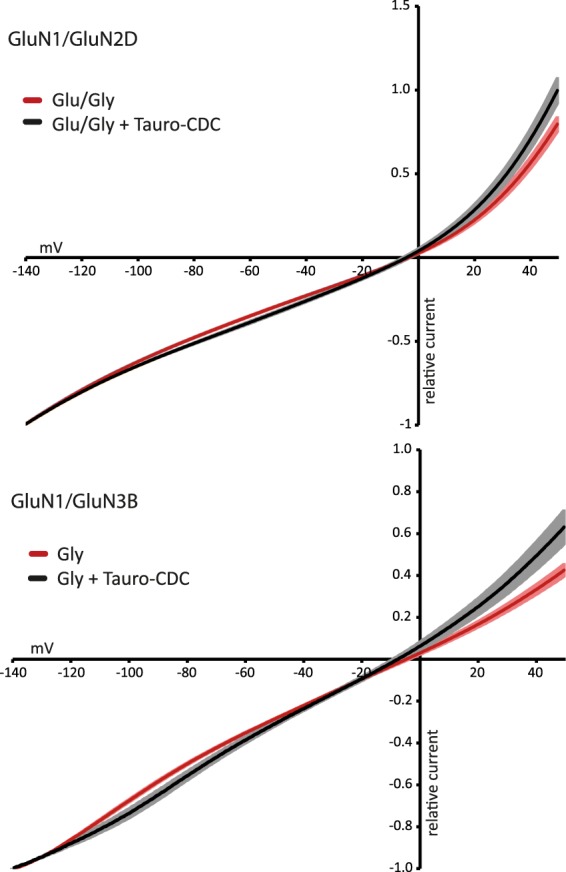
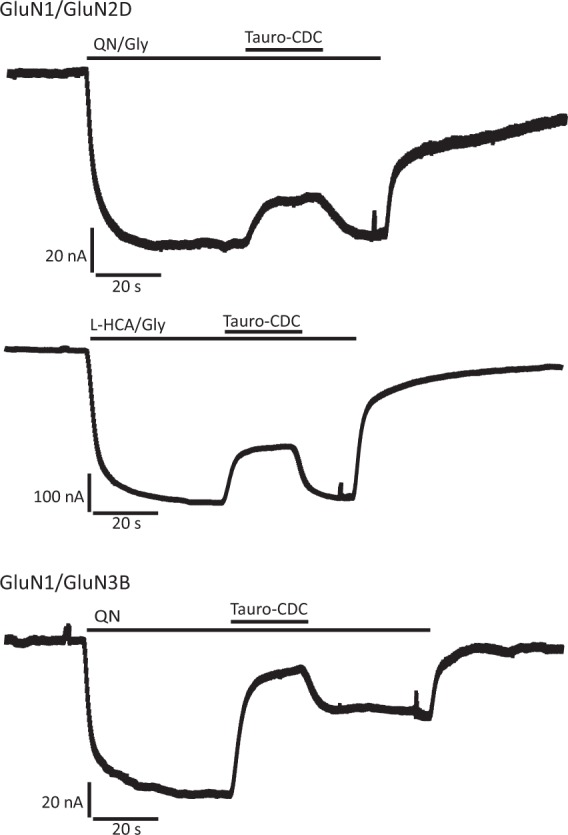
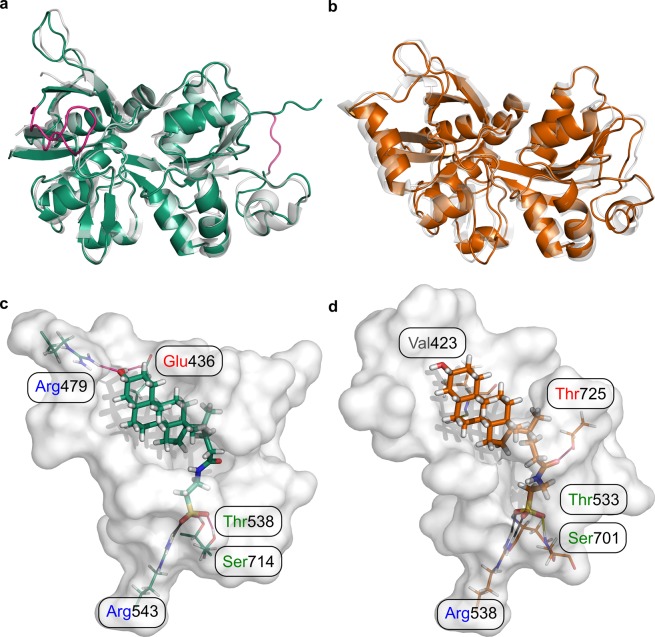
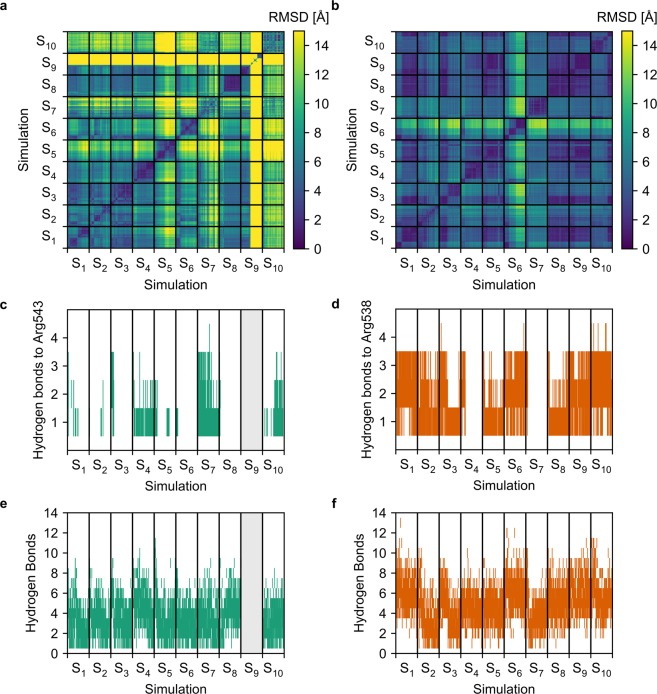
The N-methyl-D-aspartate subfamily of ionotropic glutamate receptors (NMDARs) is well known for its important roles in the central nervous system (CNS), e.g. learning and memory formation. Besides the CNS, NMDARs are also expressed in numerous peripheral tissues including the pancreas, kidney, stomach, and blood cells, where an understanding of their physiological and pathophysiological roles is only evolving. Whereas subunit composition increases functional diversity of NMDARs, a great number of endogenous cues tune receptor signaling. Here, we characterized the effects of the steroid bile salts cholate and chenodeoxycholate (CDC) on recombinantly expressed NMDARs of defined molecular composition. CDC inhibited NMDARs in an isoform-dependent manner, preferring GluN2D and GluN3B over GluN2A and GluN2B receptors. Determined IC values were in the range of bile salt serum concentrations in severe cholestatic disease states, pointing at a putative pathophysiological significance of the identified receptor modulation. Both pharmacological and molecular simulation analyses indicate that CDC acts allosterically on GluN2D, whereas it competes with agonist binding on GluN3B receptors. Such differential modes of inhibition may allow isoform-specific targeted interference with the NMDAR/bile salt interaction. In summary, our study provides further molecular insight into the modulation of NMDARs by endogenous steroids and points at a putative pathophysiological role of the receptors in cholestatic disease.
离子型谷氨酸受体 NMDA 亚家族(NMDARs)在中枢神经系统(CNS)中的作用众所周知,例如学习和记忆形成。除了 CNS,NMDARs 还在许多外周组织中表达,包括胰腺、肾脏、胃和血细胞,其生理和病理生理作用的理解仍在不断发展。虽然亚基组成增加了 NMDARs 的功能多样性,但大量内源性信号调节受体信号。在这里,我们研究了固醇胆汁盐胆酸盐和鹅去氧胆酸盐(CDC)对表达明确分子组成的重组 NMDARs 的影响。CDC 以依赖于亚型的方式抑制 NMDARs,优先作用于 GluN2D 和 GluN3B 而不是 GluN2A 和 GluN2B 受体。确定的 IC 值在严重胆汁淤积疾病状态下的胆汁盐血清浓度范围内,表明鉴定的受体调节具有潜在的病理生理意义。药理学和分子模拟分析均表明,CDC 对 GluN2D 起变构作用,而对 GluN3B 受体起竞争性拮抗作用。这种不同的抑制模式可能允许针对 NMDAR/胆汁盐相互作用的亚型特异性靶向干扰。总之,我们的研究为内源性类固醇对 NMDARs 的调节提供了进一步的分子见解,并指出了受体在胆汁淤积性疾病中的潜在病理生理作用。